
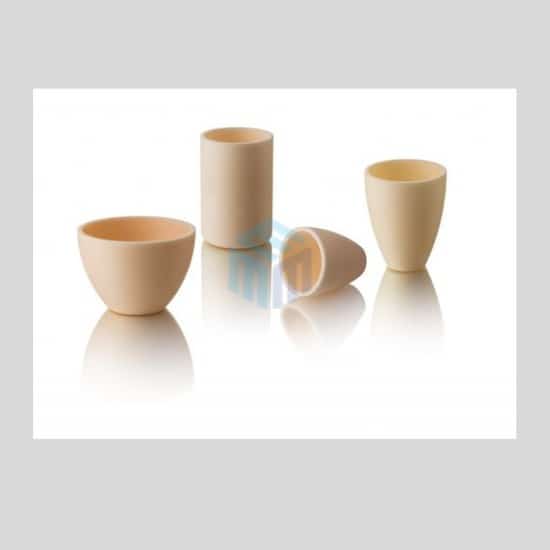
Ceramic crucibles are indispensable tools across a wide spectrum of industries and laboratories, playing a critical role in high-temperature applications. Crafted from advanced ceramic materials such as alumina crucibles, zirconia crucibles, silicon carbide crucibles, and porcelain crucibles, are engineered to withstand extreme heat, corrosive environments, and rapid temperature changes. But beyond their robust nature, each type of ceramic crucible brings unique properties that make it suitable for specific uses — from precise metallurgical assays to crystal growth and chemical analysis. In this blog, we’ll explore the different types of ceramic crucibles and delve into how their distinctive characteristics make them the go-to choice for a variety of processes in laboratories, manufacturing, and beyond. Whether you’re a materials scientist, a jeweler, or a researcher, understanding these applications will help you choose the right crucible for your needs.
Ceramic crucibles are versatile and find applications in various industries due to their high-temperature resistance and chemical stability. Here are some common uses of ceramic crucibles across different fields:
Metallurgy: Ceramic crucibles are widely used in metallurgical processes for melting and casting metals and alloys. They can withstand high temperatures required for melting metals like gold, silver, copper, aluminum, and other non-ferrous materials.
Laboratory and Research: In laboratories, ceramic crucibles are used for a range of purposes such as:
Heating and evaporating liquids or chemicals.
Conducting high-temperature experiments.
Calcining, melting, or fusing materials for analysis.
Creating controlled atmospheres for reactions.
Glass and Ceramics Industry: Ceramic crucibles are essential in glass and ceramics manufacturing processes for:
Melting and refining raw materials like silica, feldspar, and various oxides.
Forming glass or ceramic samples for testing and production.
Chemical Industry: Ceramic crucibles are utilized in chemical processing for:
Heating and reacting chemicals in controlled environments.
Synthesizing and processing compounds at high temperatures.
Conducting experiments in harsh chemical environments.
Pharmaceuticals: In pharmaceutical research and production, ceramic crucibles are used for:
Synthesizing and processing drug compounds.
Conducting thermal analysis of pharmaceutical ingredients.
Heating and evaporating solvents or reagents.
Powder Metallurgy: Ceramic crucibles play a role in powder metallurgy processes by:
Sintering metal powders to form solid components.
Heating and compacting metal powders in molds.
Electronics and Semiconductor Industry: Ceramic crucibles are used in the production of electronic components and semiconductors for:
Melting and casting metals are used in electronic devices.
Growing single crystals for semiconductor materials.
Heat treatment and annealing of electronic components.
Art and Jewelry Making: Ceramic crucibles are also utilized by artists and jewelry makers for:
Melting and casting precious metals like gold and silver.
Creating custom alloys and metal compositions.
Experimenting with metalworking techniques.
Overall, ceramic crucibles are indispensable in industries and applications that require high-temperature processing, chemical resistance, and precise control over material properties.
Read also: How to Select the Appropriate Crucibles for Your Applications Based on its Features and Uses
In conclusion, ceramic crucibles are far more than simple containers — they are essential enablers of countless processes that demand high purity, thermal stability, and resistance to corrosion. Whether it’s alumina crucibles driving precise chemical analyses, silicon carbide crucibles tackling demanding metal melting tasks, or porcelain crucibles serving in routine laboratory work, each type brings distinct advantages tailored to specific applications. By understanding the unique properties and uses of these various ceramic crucibles, industries and laboratories can make informed choices that enhance efficiency, ensure safety, and uphold the integrity of their results. Ultimately, selecting the right crucible is not just about handling heat — it’s about optimizing performance across critical scientific and industrial operations.
M-Kube Enterprise is an Australian company catering customized laboratory products, laboratory consumables, and laboratory solutions in Australia, USA, India, New Zealand, Singapore, Malaysia, South Korea, Dubai, the Philippines, Indonesia, and Vietnam.