
Accurate UV-Vis spectrophotometry depends on more than the instrument itself. The sample cell or cuvette is a critical part of the optical measurement path, and selecting the wrong material, path length, volume, or cell configuration can affect measurement accuracy and repeatability.
For laboratories performing routine absorbance and transmission measurements, standard spectrophotometer cuvettes are among the most commonly used options. However, applications ranging from visible spectroscopy to deep-UV analysis may require different optical materials and configurations.
This guide explains how to select the right spectrophotometer cuvettes for your application and when to consider UV Vis quartz cuvette, UV quartz cuvette, standard cells, and specialised configurations.
What Is a Spectrophotometer Cuvette?
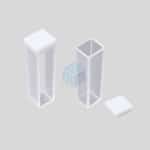
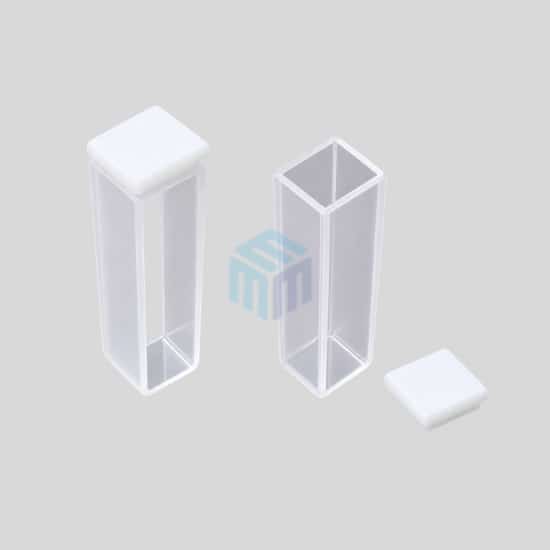
A cuvette, also known as a sample cell or optical cell, is a transparent container designed to hold a sample while light passes through it during spectrophotometric analysis.
Spectrophotometer cells are available in different:
- Optical materials
- Path lengths
- Sample volumes
- Shapes
- Window configurations
- Closure types
For routine UV-Vis measurements, rectangular cells with a 10 mm path length are particularly common and are designed to fit standard cell holders used by many instruments.
1. Choosing the Right Cuvette Material
Material is one of the most important factors when selecting a cuvette.
The optical material determines the wavelength range over which the sample can be measured effectively.
Quartz Cuvettes
Quartz is the preferred material for applications requiring transmission into the ultraviolet region.
A uv quartz cuvette or quartz cuvettes for spectrophotometer applications is suitable when measurements extend into the UV range. Quartz cells can provide transmission from the far UV through visible and into much of the infrared, depending on the specific quartz grade and cell design.
Optical Glass Cuvettes
Optical glass is commonly used for routine measurements in the visible region and applications where deep-UV transmission is not required.
Glass cuvettes can be a practical choice for:
- Colour measurements
- Visible absorbance testing
- Routine laboratory analysis
- Educational laboratories
- General chemical testing
The exact usable wavelength range depends on the type of glass used.
2. Understanding Quartz Cuvette Path Length
Path length is the distance that light travels through the sample.
The most common standard path length is 10 mm (1 cm).
A standard 10 mm cuvette is compatible with many conventional UV-Vis spectrophotometers.
However, different sample concentrations may require different path lengths.
When Should You Use a Shorter Path Length?
Highly concentrated samples can produce very high absorbance readings.
In such cases, a shorter path length such as:
- 1 mm
- 2 mm
- 5 mm
can reduce the measured absorbance.
Agilent notes that concentrated samples with absorbance above approximately 3 Abs may require a path length of 5 mm or less, or alternatively dilution of the sample.
When Should You Use a Longer Path Length?
Very dilute samples may produce extremely low absorbance values.
Increasing the path length can increase the measured absorbance and improve measurement sensitivity.
Longer path lengths such as:
- 20 mm
- 50 mm
- 100 mm
are available for specialised applications, although longer cells may require an appropriate cell holder or adaptor.
3. Choosing the Right Sample Volume
The required sample volume depends on the internal dimensions of the cuvette.
A conventional macro or standard rectangular cell typically requires more samples than a semi-micro or micro cell.
For example, a standard 10 mm rectangular quartz cell can have a nominal volume of approximately 3.5 mL, while semi-micro and micro designs can reduce the required sample volume considerably.
If sample availability is a major concern, selecting a smaller-volume cell can significantly reduce sample consumption.
4. Standard Spectrophotometer Cuvettes
Standard spectrophotometer cuvettes are generally rectangular cells designed around internationally common dimensions and are widely compatible with standard UV-Vis cell holders.
A typical standard cell features:
- 10 mm path length
- Two polished optical windows
- Approximately 3.5 mL nominal volume
- Standard external dimensions
- Clear optical faces
- Frosted or textured surfaces for handling
The optical windows should be kept clean and should not be touched because fingerprints and contamination can affect measurements.
These characteristics make standard cells a practical choice for routine analytical laboratories.
5. Standard Cell with Lid
A standard cell with lid is useful when the sample needs additional protection during measurement.
The lid can help:
- Reduce contamination
- Minimise evaporation
- Protect the sample from dust
- Reduce accidental spills
- Improve handling
PTFE lids are available for many standard cuvette configurations.
This type of configuration can be particularly useful when working with volatile or sensitive samples.
6. Standard Cell with PTFE Stopper
A standard cell with PTFE stopper provides a more secure closure than an open cell.
PTFE is widely used because of its chemical resistance and suitability for laboratory applications.
A stopper can help:
- Reduce evaporation
- Prevent contamination
- Maintain sample integrity
- Support sealed-sample measurements
PTFE stopper configurations are available for various path lengths and specialised cell designs.
For samples requiring controlled handling or additional protection, a stopped cell can be a useful alternative to an open standard cuvette.
7. Round Bottom Standard Cell
A round bottom standard cell is a specialised configuration designed for applications where the sample geometry or instrument requirements make a cylindrical or round-bottom design more suitable.
Cylindrical spectrophotometer cells are available in multiple materials and path lengths, including quartz and optical glass, with specialised configurations incorporating PTFE stoppers.
Before selecting a round-bottom design, always check the spectrophotometer’s cell-holder geometry and optical beam requirements.
8. Matching the Cuvette to Your Application
Different applications require different combinations of material, path length, and volume.
Pharmaceutical Analysis
Pharmaceutical laboratories frequently require:
- High optical quality
- Quartz for UV measurements
- Accurate 10 mm path length
- Good chemical resistance
A high-quality UV Vis quartz cuvette is often appropriate for UV-based pharmaceutical analysis.
DNA and Protein Analysis
Biological samples can be available in very small quantities.
Micro or semi-micro quartz cells can therefore help reduce sample consumption while maintaining suitable optical performance.
Environmental Analysis
Water and environmental samples may be measured across UV and visible wavelengths.
The appropriate cell depends on:
- Measurement wavelength
- Sample concentration
- Required sensitivity
- Chemical compatibility
Chemical Research
Chemical laboratories may require different path lengths and specialised closures depending on the solvent and experimental conditions.
For aggressive or sensitive samples, material compatibility and cell construction become especially important.
9. How to Choose Between 1 mm, 5 mm, and 10 mm Quartz Cuvettes
A simple approach is to consider the sample’s absorbance.
| Sample Condition | Suggested Path Length |
|---|---|
| Very concentrated | 1–2 mm |
| Moderately concentrated | 5 mm |
| Routine concentration | 10 mm |
| Very dilute | 20–100 mm |
Long path-length cells require suitable instrument holders and should be selected according to the spectrophotometer design.
The goal is to obtain an absorbance value within the useful measurement range of the instrument rather than simply choosing the longest or shortest path length.
10. Common Mistakes When Selecting Spectrophotometer Cuvettes
Choosing Glass for UV Measurements
Ignoring Path Length
.Using Too Much Sample
Selecting an Incompatible Cell Holder
Touching the Optical Windows
Using Chemically Incompatible Materials
Quartz is resistant to many solvents and acidic solutions, but it should not be exposed to hydrofluoric acid, and strong alkaline solutions can degrade its surface over time.
Conclusion
Selecting the right cuvette is an important part of achieving reliable UV-Vis spectrophotometric measurements. The ideal cell depends on four primary considerations: material, path length, sample volume, and application.
For UV measurements, a UV quartz cuvette or uv vis quartz cuvette can provide the optical transmission required for reliable analysis. Standard 10 mm cells remain an excellent choice for routine measurements, while shorter-path, micro, semi-micro, stopped, and round-bottom configurations provide solutions for specialised applications.
By selecting the correct spectrophotometer cells and working with an experienced spectrophotometer cuvettes supplier, laboratories can improve measurement consistency, reduce sample consumption, and ensure compatibility with their analytical instruments.
Looking for high-quality standard spectrophotometer cuvettes, UV quartz cuvette, standard cell with lid, or standard cell with PTFE stopper?
📞 Contact +61-478-594-746 or 📧 email info@mkube.com.au for reliable quartz cuvettes for spectrophotometer applications, available in different materials, path lengths, volumes, and configurations to suit laboratory and research requirements.