
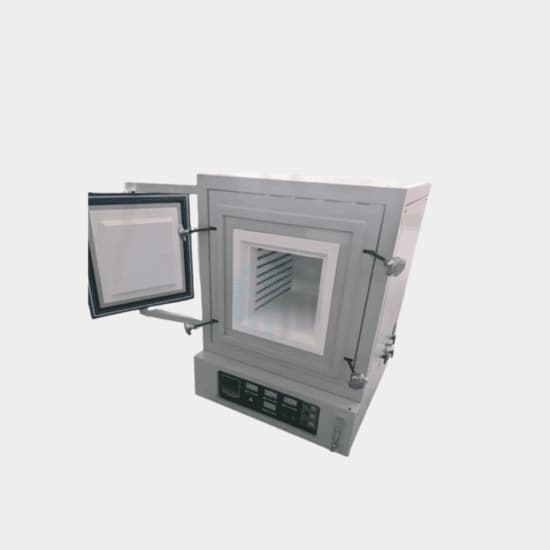
Atmosphere Furnace
Inquiry NowProduct Description
M-Kube’s Atmosphere Furnaces are designed to provide precise and reliable heat treatment under controlled atmospheres, including nitrogen, argon, or nitrogen-hydrogen mixtures. These furnaces minimize oxygen content, protecting materials from oxidation while achieving uniform heating. Widely used in material laboratories, small batch production of semiconductors, silicon nitride, ceramics, and other advanced materials, they ensure consistent quality and repeatable results.
Types of Atmosphere Furnaces
M-Kube offers different types of atmosphere furnaces:
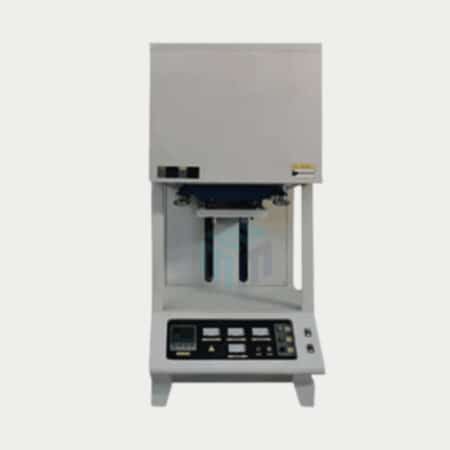
1. Box-Type Atmosphere Furnace
The Box-Type Atmosphere Furnace is pre-vacuumed to minimize oxygen content and ensure heating under protective atmospheres. Its compact design makes it ideal for laboratories and small-scale production of high-value materials.
Key Features:
- Temperature range up to 1700°C
- Made of alumina polycrystalline fiber for a balanced and pollution-free temperature field
- Fully enclosed, double-layer thickened steel plate structure, supporting up to 0.02 MPa pressure
- Reinforced 12 mm solid square steel frame; maximum vacuum up to -0.08 MPa
- PID-controlled temperature system with 0.2-level precision, 50-segment programming
- Furnace door with excellent sealing, four hand wheels, and silicone ring
Typical Technical Specifications of Box-Type Atmosphere Furnace
| Model | Max temp (0C) | Work temp
(0C) |
Chamber size (mm) | Voltage (V) | Power (kW) |
| MK-12AN-2-64 | 1200 | 1100 | 120-400 | 220-380 | 1.2-16 |
| MK-14AS-64 | 1400 | 1300 | 100-400 | 220-380 | 1-18 |
| MK-17AM-1-64 | 1700 | 1600 | 100-400 | 220-380 | 1-20 |
2. External Heating Atmosphere Furnace
This furnace operates at up to 1000°C and is ideal for sintering and heat treatment in inert or oxidizing atmospheres. Its external heating ensures precise thermal control, making it perfect for ceramics, electronic materials, rare earth powders, and functional ceramics.
Key Features:
- Advanced alarm function with safety interlock
- Multiple anti-oxidation and gas emission control methods
- High-performance, reliable electrical components
- Low-load heater design for longer equipment life
Typical Technical Specifications of External Heating Atmosphere Furnace
| Model | Max temp (0C) | Work Temp
(0C) |
Chamber size (Dia*D)mm | Voltage (V) | Power (kW) |
| MK-4060AN | 1000 | 900 | Ø400 x 600 | 380 | 30 |
| MK-6010AN | 1000 | 900 | Ø600 x 1000 | 380 | 60 |
3. Atmosphere Hot Press Furnace
The Atmosphere Hot Press Furnace combines pressure, temperature, and controlled atmosphere for hot-press molding and high-temperature sintering. Suitable for new material formation, functional ceramics, metals, and powders, it allows vacuum sintering and metallurgical bonding for enhanced material strength.
Key Features:
- Controlled atmosphere ensures oxidation-free processing
- Vertical structure suitable for annealing, brazing, sintering, and degassing
- Ideal for laboratories and research applications
Typical Technical Specifications of Atmosphere Hot Press Furnace
| Model | Max temp (0C) | Work Temp
(0C) |
Dia * Displacement (mm) | Chamber size (WxHxD)mm | Power (kW) |
| MK-AP-2 | 1700 | 1600 | Ø80 x 100 | 150*150*200 | 4 |
| MK-AP-5 | 1700 | 1600 | Ø150 x 200 | 250*250*300 | 10 |
| MK-AP-12 | 1700 | 1600 | Ø200 x 300 | 350*350*450 | 22 |
Applications of Atmosphere Furnace
- Material laboratories and research institutes
- Sintering of ceramics and electronic materials
- Heat treatment of metals, powders, and composites
- High-temperature oxidation-free processes
Why Choose M-Kube Atmosphere Furnaces?
- Designed for high-performance and reliability
- Suitable for diverse applications: ceramics, semiconductors, functional materials
- Precision temperature and vacuum control for consistent results
- Compact, durable, and easy to operate
All M-Kube ceramic and refractory products are manufactured in ISO-certified facilities and tested in accordance with relevant ASTM standards. This ensures each component meets global benchmarks for quality, consistency, and material performance.
Buy Atmosphere Furnace in Australia – Request a Quote
Looking for an Atmosphere furnace for your laboratory or production line?
📞 Call +61-478-594-746
📧 Email info@mkube.com.au
👉 For expert assistance or to discuss your Atmosphere furnace requirements, contact M-Kube today.
Product FAQ's
What are the differences between atmospheric and sealed furnaces?
Atmospheric Furnace:
- Operates in open air or simple gas flow.
- Suitable for general heating, ceramics, and metal treatments.
- More affordable and easier to maintain.
- Higher risk of oxidation and contamination.
Sealed Furnace:
- Fully enclosed with vacuum or inert gas environment.
- Ideal for oxidation-sensitive or high-purity materials.
- Offers better atmosphere control and uniformity.
- Typically more expensive and complex.
How does an atmospheric furnace work?
An atmospheric furnace operates by:
- Heating materials inside a chamber exposed to ambient air or a controlled atmosphere (e.g., nitrogen, oxygen, or hydrogen).
- Heating elements (like Kanthal or silicon carbide) transfer heat to the materials via conduction and convection.
- Often used for ceramics, glass, metal heat treatment, or sintering.
Some models allow gas flow control to reduce oxidation or modify material properties during the process.
What are some common issues with atmospheric furnaces?
- Oxidation of sensitive materials due to air exposure
- Contamination from open air particles
- Non-uniform heating in older models or poor insulation
- Scale formation on metals during high-temp exposure
- Limited atmosphere control, affecting material purity
Routine maintenance and using gas flushing can help reduce some of these issues.
Is there an atmospheric furnace supplier in Australia?
Yes. Atmospheric furnaces are available in Australia from various sources, including:
- M-Kube Enterprise – A global supplier that ships custom and standard atmospheric furnaces to laboratories and industries in Australia.
M-Kube Enterprise offers:
- Lab-scale and industrial models
- 1200°C, 1400°C, 1600°C atmospheric furnaces
- Custom sizes, programmable temperature profiles, and gas inlet options.
How do I maintain an atmospheric furnace for long-term performance?
To maintain an atmospheric furnace for long-term performance:
- Clean the chamber regularly – Remove debris, spills, and residues after each use to prevent contamination and damage.
- Inspect heating elements – Check for signs of wear, cracking, or uneven heating; replace if necessary.
- Monitor thermocouples – Calibrate or replace them to ensure accurate temperature control.
- Check insulation and seals – Examine the refractory lining and door gaskets for damage to avoid heat loss.
- Maintain gas lines (if applicable) – Inspect valves, connectors, and regulators if you’re using inert or reactive gases.
- Keep electronics in good condition – Check power cords, relays, and controllers regularly.
- Avoid overloading – Do not exceed recommended material volume or temperature ratings.
Follow the manufacturer’s maintenance schedule – Use approved spare parts and service procedures.
Regular maintenance enhances efficiency, safety, and furnace lifespan, and reduces unexpected downtime.
What safety features should I look for in an atmospheric furnace?
Look for over-temperature protection, door safety interlock, thermocouple failure detection, gas flow controls (if applicable), circuit breakers, emergency stop, programmable controller alarms, and a well-insulated exterior. These features ensure safe and reliable furnace operation.
Can an atmospheric furnace be upgraded to handle inert gases?
Yes, many atmospheric furnaces can be upgraded with gas inlet ports, flow controllers, and sealing improvements to handle inert gases like argon or nitrogen. However, full sealing and uniform gas flow may be limited compared to a true vacuum or sealed furnace. Always consult the manufacturer before modifying.
Related products

- Phone: +61-478-901-616
- Address:
8 Adaluma Ave,
Pooraka SA 5095,
Australia - Email: info@mkube.com.au