
Diamond wires have revolutionized the precision cutting industry by combining the unmatched hardness of diamonds with the flexibility and efficiency of wire-based cutting systems. Whether slicing through hard crystalline materials, semiconductor wafers, ceramics, or even reinforced concrete, diamond wires deliver exceptional accuracy, minimal material loss, and longer operational lifespans compared to conventional blades. In this guide, we’ll explore the different types of diamond wires, the performance advantages they offer, and their diverse industrial applications — helping you choose the right wire for your operational needs.
Diamond wires are cutting tools made by embedding small diamond particles onto the surface of a wire. These wires are used for cutting a wide range of materials, particularly those that are hard, abrasive, or difficult to cut with conventional tools.
What is a Diamond Wire?
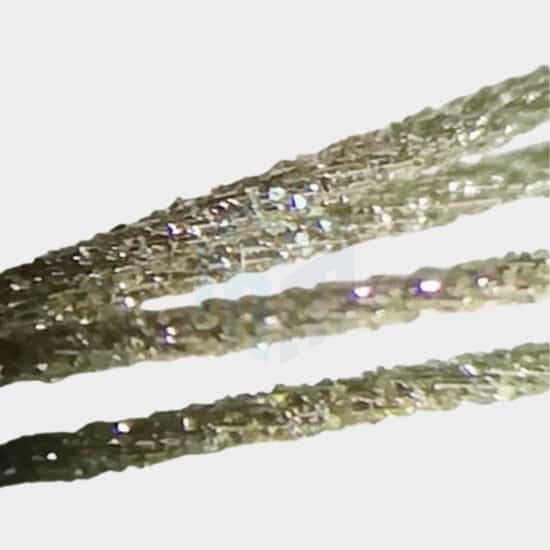
A diamond wire is a flexible steel or tungsten wire embedded or coated with industrial-grade diamond particles, used for precision cutting of hard and brittle materials. The diamonds act as abrasive cutting points, gradually grinding through the workpiece with minimal force. Diamond wires are manufactured in various diameters (typically 0.1–1 mm) and grit sizes, with the selection depending on the material hardness, thickness, and desired surface finish.
-
Key Components: Core wire, diamond abrasive layer, bonding material.
-
Function: Cuts via micro-abrasion rather than mechanical tearing, reducing stress on the material.
-
Common Materials Cut: Silicon ingots, sapphire crystals, ceramics, marble, glass, composites, and reinforced concrete.
Types of Diamond Wires and Their Applications
Diamond wires are available in different constructions and bonding methods to suit specific cutting requirements.
- Electroplated Diamond Wire – Diamond particles are fixed to the wire surface using a metal coating. It provides fast cutting and is commonly used for glass, ceramics, silicon, and other brittle materials.
- Resin-Bonded Diamond Wire – Diamond particles are embedded in a resin matrix, providing controlled cutting and good surface finish. It is suitable for precision cutting of semiconductor and advanced ceramic materials.
- Sintered Diamond Wire – Diamond particles are incorporated into a bonded segment or layer, providing good durability for demanding cutting applications.
- Loop Diamond Wire – A continuous loop design is commonly used with precision wire saws for laboratory and industrial sample preparation.
- Continuous Diamond Wire – Designed for long, uninterrupted cutting operations where consistent performance and material recovery are important.
The right diamond wire depends on the material hardness, required cutting precision, workpiece size, and desired surface finish.
How Does Diamond Wire Cutting Work?
Diamond wire cutting uses a flexible wire coated or impregnated with diamond abrasive particles to remove material through controlled abrasive action.
- The diamond wire moves continuously across or through the workpiece.
- Diamond particles act as cutting abrasives, gradually removing material.
- Controlled wire tension maintains cutting stability.
- Feed speed determines how quickly the wire penetrates the material.
- Coolant may be used to reduce heat, remove debris, and improve cutting performance.
- The relatively small kerf helps minimise material loss compared with many conventional cutting methods.
This process is particularly useful for hard, brittle, and valuable materials where precise cutting and low material waste are important.
Diamond Wire Specifications: Diameter, Grit Size and Bond Type
Selecting the correct diamond wire specifications is important for achieving the required cutting speed, precision, and surface quality.
- Wire Diameter – Smaller diameters generally provide a narrower kerf and lower material loss, while larger diameters can offer greater stability and durability.
- Diamond Grit Size – Fine grit is typically preferred for precision cutting and smoother surfaces, while coarser grit can provide faster material removal.
- Bond Type – Electroplated, resin-bonded, and sintered constructions offer different combinations of cutting speed, durability, and surface finish.
- Diamond Concentration – Higher diamond concentration can improve cutting durability, while the optimum level depends on the material and cutting conditions.
- Core Material – The wire core must provide suitable strength and flexibility for the cutting equipment and application.
- Wire Length – The required length depends on the wire saw design and workpiece dimensions.
Always match the wire specifications with the material being cut and the manufacturer’s recommended operating conditions.
Key Advantages of Diamond Wires Over Conventional Cutting Tools
Diamond wires offer several advantages and find applications in various industries. Here are some of the key aspects of diamond wires:
- Precision Cutting: Diamond wires provide highly precise and accurate cuts, making them suitable for applications where cutting quality and tight tolerances are critical.
- Versatility: Diamond wires can cut through a wide range of materials, including but not limited to natural stone, concrete, glass, ceramics, metals, composites, and more.
- Reduced Waste: Diamond wire cutting generates minimal waste, which is essential in applications where material conservation and cost-effectiveness are significant considerations.
- Speed and Efficiency: Diamond wires are known for their high cutting speed, enabling faster work completion and reducing project lead times.
- Low Vibration and Noise: Compared to other cutting methods, diamond wires produce less vibration and noise, contributing to improved working conditions and reduced risk of damage to delicate structures or materials.
- Longevity: The diamond-coated beads or grains on the wire provide a long service life, reducing the frequency of replacement and maintenance.
- Remote Operation: Many diamond wire cutting systems can be operated remotely, enhancing safety and accessibility in challenging or hazardous environments.
- Eco-Friendly: Diamond wire cutting generates fewer emissions and has a smaller environmental footprint compared to some alternative cutting methods.
Diamond Wire Cutting Performance Comparison
Diamond wire offers several advantages compared with conventional cutting methods, particularly when precision and material recovery are important.
| Performance Factor | Diamond Wire | Conventional Blade | Abrasive Wire |
|---|---|---|---|
| Cutting Precision | High | Moderate to High | Moderate |
| Kerf Loss | Low | Higher | Low to Moderate |
| Material Waste | Low | Higher | Low |
| Hard Materials | Excellent | Good | Moderate to Good |
| Thin Sections | Excellent | Limited | Good |
| Complex Shapes | Excellent | Limited | Moderate |
| Surface Finish | Good to Excellent | Good | Moderate |
| Vibration | Generally Low | Higher | Low to Moderate |
| Typical Applications | Semiconductors, ceramics, glass, crystals | Metals, ceramics, general cutting | Laboratory and precision cutting |
Overall, diamond wire is particularly suitable when low material loss, precise cutting, and processing of hard or brittle materials are key priorities. The best cutting method should still be selected based on the workpiece material, thickness, required accuracy, and production requirements.
How to Choose the Right Diamond Wire for Your Application
The correct diamond wire depends on the material, cutting equipment, and desired result. Consider these factors before selecting a wire:
- Material Hardness – Hard ceramics, glass, silicon, gemstones, and composites may require different diamond specifications.
- Workpiece Thickness – Thicker materials may require a more robust wire and suitable cutting parameters.
- Required Precision – Choose a finer wire and appropriate grit when dimensional accuracy and low kerf loss are priorities.
- Surface Finish – Fine diamond grit and controlled cutting conditions can help achieve smoother surfaces.
- Cutting Speed – Select the appropriate grit, bond type, and wire diameter based on the required production rate.
- Material Recovery – For expensive or fragile materials, a smaller kerf can help minimise material waste.
- Cooling Requirements – Consider whether wet cutting or coolant is required to control heat and remove cutting debris.
- Equipment Compatibility – Verify that the wire diameter, length, tension, and connection method are compatible with your wire saw.
For specialised applications, consult the wire manufacturer or supplier to select the appropriate diamond specification and cutting parameters.
Diamond Wire Applications Across Different Industries
- Stone Cutting: Diamond wires are commonly used in the quarrying and processing of natural stones, such as granite, marble, and limestone, for the production of slabs, tiles, and architectural elements.
- Construction: Diamond wires are used for cutting concrete, reinforced concrete, and masonry in various construction applications, including bridge demolition, renovation, and concrete profiling.
- Metal Cutting: Diamond wires can be used to cut metals like stainless steel and aluminum, especially in situations where other methods are less effective.
- Glass and Ceramic Cutting: Diamond wires are used for precision cutting of glass and ceramics in industries such as glass manufacturing and electronic component production.
- Electronics and Semiconductor: Diamond wires are used in the semiconductor industry to cut and slice silicon wafers with high precision.
- Mining: Diamond wire saws are utilized in mining operations for cutting and extracting blocks of natural stone and minerals.
- Environmental Remediation: Diamond wire cutting is applied in the removal and disposal of hazardous materials, such as nuclear fuel rods and contaminated components.
- Research and Development: Diamond wires are used in research and development projects that require precision cutting of various materials.
- Architectural and Artistic Projects: Diamond wire saws are used to create intricate designs and sculptures from hard materials like stone and metal.
Diamond wires have proven to be valuable tools in industries where precise, efficient, and versatile cutting is essential. Their ability to cut through a wide array of materials and provide high-quality results has made them a go-to choice in various applications.
Diamond Wire Cutting Safety Precautions
While diamond wires are efficient, safe handling is critical:
-
Proper Tension Control: Over-tensioning can cause wire breakage, while under-tensioning may reduce cutting quality.
-
Protective Barriers: Prevent accidental contact with moving wires.
-
Wear Monitoring: Regularly inspect for uneven wear or grit loss to avoid unexpected failures.
-
Coolant Management: Maintain correct coolant flow to reduce heat buildup and improve cut life.
-
Operator Training: Ensure staff understand optimal feed rates, tensioning methods, and emergency protocols.
Future Trends and Innovations in Diamond Wire Technology
The diamond wire market is rapidly evolving with advancements in:
-
Nano-Coating Techniques: Improving grit adhesion for longer tool life.
-
Hybrid Bonding Systems: Combining electroplating with resin bonds for better wear resistance.
-
Smart Cutting Systems: Integration with AI and IoT for automated tension monitoring and real-time wear analysis.
-
Eco-Friendly Abrasive Technologies: Reducing reliance on hazardous coolants and improving recyclability of worn wires.
Conclusion
Diamond wires are redefining the possibilities in precision cutting — delivering unmatched accuracy, material efficiency, and operational flexibility across industries. From semiconductor manufacturing to large-scale construction, their ability to work with minimal waste, lower mechanical stress, and higher productivity makes them the preferred choice over conventional tools. As innovations in bonding methods, grit technology, and automation continue, diamond wire cutting will only become faster, cleaner, and more cost-efficient — setting new standards for precision manufacturing.
M-Kube Enterprise is an Australian company catering customized laboratory products, laboratory consumables and laboratory solutions in Australia, New Zealand, Singapore, Malaysia, South Korea, India, Dubai, Philippines, Indonesia and Vietnam.