
Frying oil is exposed to high temperatures, oxygen, moisture, and food residues throughout repeated frying cycles. Over time, these conditions cause the oil to undergo oxidation, hydrolysis, and thermal degradation, which can affect food quality, frying performance, flavour, and oil usability.
For restaurants, food manufacturers, commercial kitchens, and quality-control laboratories, regular oil quality testing is therefore essential. Two commonly discussed indicators are Total Polar Materials (TPM) and Free Fatty Acids (FFA).
But which one provides a better indication of frying oil condition?
The answer depends on what you want to measure. TPM provides a broader indication of overall thermal and oxidative deterioration, while FFA primarily indicates hydrolytic breakdown. For routine monitoring of actively used frying oil, TPM is often more useful as a practical overall indicator, while FFA can provide valuable complementary information.
This article compares TPM and FFA and explains how a TPM oil tester, cooking oil test kit, or other cooking oil testing equipment can help food businesses make better oil-management decisions.
What Happens to Oil During Frying?
During repeated frying, oil is exposed to temperatures that can approach or exceed 180°C, along with oxygen and moisture from the food.
Several chemical reactions take place, including:
- Oxidation
- Hydrolysis
- Polymerisation
- Thermal decomposition
These reactions generate different degradation products, including free fatty acids, oxidised compounds, partial glycerides, and polymerised materials. TPM represents a broader group of polar degradation products formed during frying.
As degradation progresses, frying oil may show changes in:
- Colour
- Odour
- Taste
- Viscosity
- Foaming behaviour
- Frying performance
Regular cooking oil quality testing helps identify when oil should be filtered, replenished, or replaced.
What Is TPM in Cooking Oil?
TPM stands for Total Polar Materials, sometimes referred to as Total Polar Compounds (TPC).
It represents a group of polar substances that accumulate as frying oil deteriorates. These include various oxidation products, hydrolysis products, and polymerised compounds.
Because TPM reflects several forms of degradation rather than just one reaction, it is widely used as an indicator for assessing the condition of repeatedly heated frying oil.
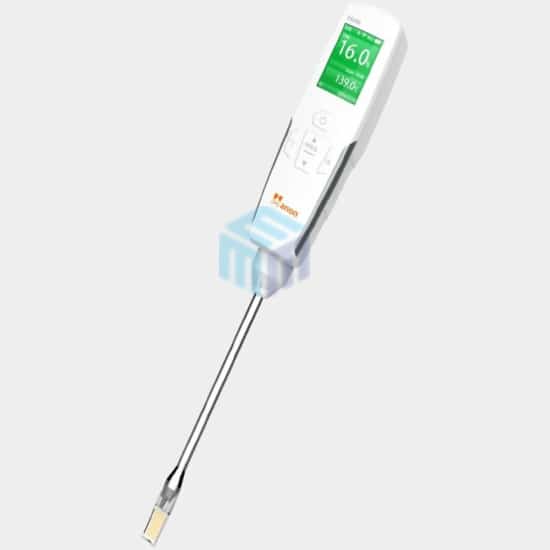
A tpm cooking oil tester provides a rapid way to estimate TPM levels directly in used frying oil.
How Does a TPM Oil Tester Work?
A modern tpm oil tester generally measures the electrical properties of the oil, which change as polar degradation products accumulate.
This provides a rapid, practical measurement that can be performed directly in a fryer or oil container without sending every sample to a laboratory.
A digital cooking oil tester can provide an easy-to-read numerical result, allowing operators to monitor oil condition during normal frying operations.
Research has found that rapid dielectric-property measurements can correlate with conventional laboratory determination of total polar compounds, although factors such as oil composition, moisture, temperature, calibration, and measurement range can affect results.
Read more: Cooking Oil Tester: How to Measure Quality of Frying Oil?
What Are Free Fatty Acids (FFA)?
Free Fatty Acids are released when triglycerides in the oil undergo hydrolysis.
Water from food is an important contributor to this reaction.
FFA measurement can therefore provide useful information about the hydrolytic degradation of frying oil.
However, FFA does not represent every type of degradation occurring during frying.
A study evaluating rapid frying-oil test kits noted that FFA is useful as a chemical parameter but is not necessarily a complete indicator of overall frying-oil quality.
Why TPM Is Often Preferred for Routine Frying Oil Monitoring
- TPM Reflects Multiple Degradation Processes
Frying oil doesn’t deteriorate through a single chemical reaction.
Oxidation, hydrolysis, and polymerisation occur simultaneously.
Because TPM includes multiple classes of polar degradation products, it can provide a broader picture of oil deterioration than FFA alone.
- TPM Testing Is Practical for Commercial Kitchens
A cooking oil quality tester designed for TPM measurement can allow staff to check oil directly during normal frying operations.
This means operators can establish an internal monitoring routine rather than relying only on visual inspection.
A simple testing schedule can help kitchens:
- Measure fresh oil as a baseline.
- Monitor oil during frying.
- Record TPM results.
- Compare readings against the business’s established limits.
- Replace or manage the oil when the defined threshold is reached.
- TPM Testing Can Support Consistent Frying Quality
As frying oil deteriorates, its physical and chemical characteristics change.
Routine measurements using a frying oil quality tester can help businesses maintain more consistent frying conditions.
This can contribute to:
- Consistent food colour
- Better flavour
- Improved frying performance
- Reduced unnecessary oil replacement
- Better process control
When Is FFA Testing Useful?
Although TPM can provide a broader indication of frying-oil degradation, FFA remains an important analytical parameter.
FFA testing can be useful when:
- Investigating hydrolytic degradation
- Comparing different oils
- Performing laboratory analysis
- Studying the effect of food moisture
- Conducting research and development
- Supporting detailed quality-control programs
Research has specifically investigated FFA as an indicator for determining the discard point of frying oils, demonstrating its continued relevance in oil-quality assessment.
For advanced quality-control programs, TPM and FFA can therefore be used together rather than treating one as a complete replacement for the other.
TPM Cooking Oil Tester vs Laboratory Testing
A tpm cooking oil tester is designed for rapid routine monitoring, whereas laboratory methods can provide more detailed chemical characterisation.
TPM Tester
Advantages include:
- Rapid measurement
- Simple operation
- On-site testing
- Minimal sample preparation
- Digital readings
- Convenient routine monitoring
Laboratory Analysis
Laboratory methods may provide:
- Detailed chemical information
- Higher analytical specificity
- FFA measurement
- Peroxide value
- Anisidine value
- Chromatographic analysis
- Detailed research data
For everyday restaurant and commercial frying operations, a rapid digital cooking oil tester can provide an efficient first-line monitoring tool.
For investigation, validation, or research, laboratory testing can provide more comprehensive information.
Choosing a Cooking Oil Test Kit
A cooking oil test kit should be selected according to the testing objective.
If you need quick routine monitoring, look for:
- TPM measurement capability
- Digital display
- Fast measurement
- Easy operation
- Temperature compensation or appropriate operating procedure
- Durable probe construction
- Repeatable results
A cooking oil testing kit based on chemical indicators may be appropriate when a specific parameter such as FFA needs to be measured.
For commercial kitchens, however, an instrument-based approach can simplify repeated measurements and record keeping.
What Is the Best Cooking Oil Quality Tester?
There isn’t one universal instrument that is ideal for every application.
The best cooking oil quality tester depends on:
- Type of oil
- Frying temperature
- Frying frequency
- Food being fried
- Required testing frequency
- Regulatory requirements
- Whether on-site or laboratory testing is required
For routine monitoring of repeatedly used frying oil, a tpm oil tester can be particularly useful because TPM provides a broader measure of accumulated polar degradation.
For detailed laboratory quality analysis, TPM can be combined with FFA and other analytical parameters.
Conclusion
Maintaining frying oil quality is essential for consistent food production, efficient oil usage, and good quality control. Both TPM and FFA provide valuable information, but they measure different aspects of oil deterioration.
For routine commercial monitoring, a tpm oil tester or tpm cooking oil tester offers a convenient way to track overall polar degradation directly at the fryer. FFA testing remains valuable when hydrolytic degradation needs to be investigated in greater detail.
Ultimately, the most effective cooking oil testing equipment is the one that matches your process, testing frequency, and quality requirements. By combining regular oil quality testing with good frying practices, food businesses can make more informed decisions about oil replacement and maintain consistent frying performance.
Looking for reliable cooking oil testing equipment, a cooking oil quality tester, or a digital cooking oil tester for commercial and food-processing applications?
📞 Contact +61-478-594-746 or 📧 email info@mkube.com.au to explore practical solutions for monitoring tpm cooking oil quality and improving frying-oil management.