
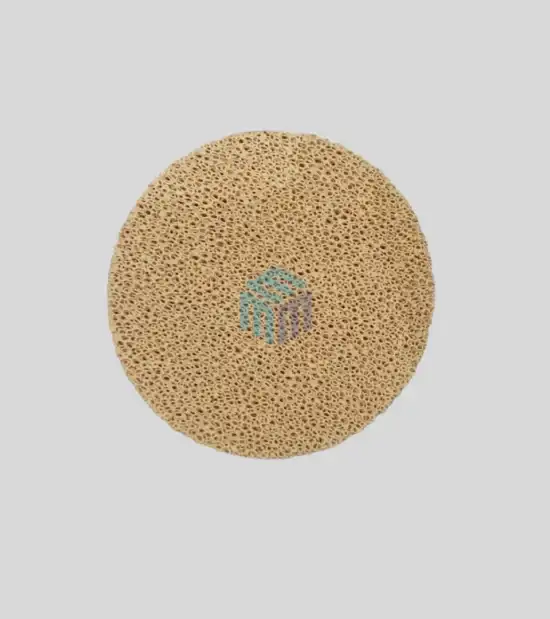
Steel casting is one of the most demanding foundry processes, requiring precise control over molten metal quality to produce defect-free components. Non-metallic inclusions, slag, and impurities can significantly reduce the mechanical properties, surface finish, and reliability of cast steel products. One of the most effective methods for improving steel cleanliness is the use of Zirconia foam filters. Designed to withstand extremely high temperatures while efficiently trapping impurities, these advanced ceramic filters have become an essential part of modern foundry operations.
However, selecting the correct pore density (PPI – Pores Per Inch) is just as important as choosing the right filter material. In this guide, we’ll explain how to select the ideal Zirconia filter for steel casting, compare zirconia with other ceramic foam filters, and discuss why zirconia remains the preferred solution for high-temperature foundry applications.
What Is a Zirconia Foam Filter?
A zirconia ceramic foam filter is a porous ceramic filtration medium manufactured from zirconium dioxide (ZrO₂). The three-dimensional open-cell structure allows molten steel to flow smoothly while capturing slag, oxide inclusions, and other contaminants before they enter the mould cavity.
A ZrO₂ ceramic foam filter offers:
- Excellent thermal stability
- High refractoriness
- Superior chemical resistance
- Excellent filtration efficiency
- Minimal thermal shock failure
These properties make it the preferred High temperature zirconia filter for steel foundries.
Why Does PPI Matter in Steel Casting?
PPI (Pores Per Inch) indicates the number of pores within one linear inch of the filter.
The pore size directly affects:
- Filtration efficiency
- Metal flow rate
- Inclusion removal
- Casting surface quality
- Yield and productivity
Choosing the correct PPI ensures optimal filtration without unnecessarily restricting molten metal flow.
Zirconia Foam Filter PPI Selection Guide for Steel Casting
Choosing the right PPI (Pores Per Inch) is essential for balancing filtration efficiency and molten steel flow. Lower PPI filters provide higher flow rates for large castings, while higher PPI filters offer finer inclusion removal for precision and critical castings.
10–15 PPI
Recommended for:
- Large steel castings
- Heavy engineering components
- High pouring rates
Advantages:
- High metal flow
- Reduced flow restriction
- Effective removal of large inclusions
20 PPI
The most commonly used option for general Zirconia filters for foundry applications.
Suitable for:
- Carbon steel
- Alloy steel
- Stainless steel
- Medium-sized castings
Advantages:
- Excellent balance between flow rate and filtration efficiency
- Improved casting quality
- Reduced inclusion defects
30 PPI
Recommended when higher cleanliness is required.
Applications include:
- Precision steel castings
- Automotive components
- Valve bodies
- Pump components
Benefits:
- Improved removal of fine inclusions
- Better surface finish
- Enhanced mechanical properties
40–60 PPI
Used for:
- High-precision castings
- Aerospace components
- Critical industrial applications
Advantages:
- Maximum filtration efficiency
- Exceptional steel cleanliness
- Superior casting quality
Because these filters offer smaller pore sizes, careful gating system design is required to maintain proper metal flow.
Zirconia Foam Filter PPI Comparison Table
PPI (Pores Per Inch) directly affects the balance between filtration efficiency and molten-steel flow. Lower PPI provides larger pores and higher flow rates, while higher PPI provides finer filtration for applications requiring greater steel cleanliness.
| Zirconia Filter PPI | Filtration Level | Flow Rate | Typical Applications |
|---|---|---|---|
| 10–15 PPI | Coarse | High | Large steel castings and heavy engineering components |
| 20 PPI | Medium | Balanced | General carbon, alloy, and stainless-steel casting |
| 30 PPI | Fine | Moderate | Precision castings, valve bodies, and pump components |
| 40–60 PPI | Very Fine | Lower | High-precision, aerospace, and critical industrial castings |
Higher PPI is not automatically better. The filter should be selected according to the casting size, required cleanliness, pouring rate, inclusion level, and gating system.
Factors That Affect Zirconia Foam Filter Performance
Several process and filter-design factors determine how effectively a zirconia foam filter removes inclusions while maintaining consistent molten-metal flow:
- PPI: Higher PPI provides finer filtration but can restrict flow if not properly matched to the application.
- Filter Size: A larger filtration area can support higher metal flow and reduce excessive pressure drop.
- Filter Thickness: Thickness influences filtration path length, strength, and flow resistance.
- Molten Steel Temperature: The filter must withstand the actual pouring temperature without structural degradation.
- Pouring Rate: Excessively high flow rates can reduce filtration effectiveness and increase stress on the filter.
- Inclusion Concentration: Higher levels of slag and non-metallic inclusions may require an appropriate PPI and sufficient filter area.
- Gating System Design: Proper positioning and gating help maintain stable metal flow through the filter.
- Thermal Shock: Rapid temperature changes can increase the risk of filter cracking or breakage.
- Filter Installation: Incorrect seating or mechanical damage can compromise filtration performance.
Selecting the right combination of PPI, dimensions, thickness, and gating conditions helps achieve effective filtration without unnecessarily restricting molten-steel flow.
Why Zirconia Is the Preferred Material for Steel Casting
Several ceramic materials are available for molten metal filtration, including silicon carbide, alumina, and zirconia. However, Foundry zirconia foam filter solutions offer significant advantages for steel casting due to their ability to withstand extremely high temperatures.
Refractory zirconia foam filter products provide:
- The highest service temperature
- Superior room-temperature strength
- Excellent structural integrity during steel pouring
- Better resistance to thermal shock and molten steel attack
These characteristics make zirconia the preferred material for steel foundries.
Benefits of Using Zirconia Filters for Steel Casting
Superior High-Temperature Resistance
Steel pouring temperatures often exceed 1550°C.
A High temperature zirconia filter can safely withstand service temperatures up to 1700°C without structural degradation.
Better Mechanical Properties
Removing inclusions improves:
- Tensile strength
- Fatigue resistance
- Impact strength
- Pressure tightness
This is particularly important for safety-critical castings.
Reduced Casting Defects
Using Zirconia filters for foundry applications helps minimise:
- Blowholes
- Inclusions
- Surface defects
- Shrinkage-related imperfections
- Rework and scrap rates
How Zirconia Foam Filters Improve Steel Casting Quality
Zirconia foam filters use a three-dimensional open-cell structure to allow molten steel to pass through while trapping slag, oxide inclusions, and other contaminants before they reach the mould cavity.
- Reduce Non-Metallic Inclusions: The porous structure helps capture unwanted inclusions from molten steel.
- Improve Surface Quality: Cleaner metal can help reduce inclusion-related surface defects.
- Improve Mechanical Performance: Reducing inclusions can support better tensile strength, fatigue resistance, and impact performance.
- Reduce Casting Defects: Effective filtration can help minimise inclusions, blowholes, and other contamination-related defects.
- Improve Casting Consistency: More consistent molten-metal cleanliness can contribute to more reliable production results.
- Reduce Rework and Scrap: Fewer filtration-related defects can help reduce rejected or reworked castings.
- Withstand High Temperatures: Zirconia offers high refractoriness and strong thermal stability for demanding steel-pouring conditions.
How to Choose the Right Zirconia Foam Filter PPI
The correct PPI depends on the required level of steel cleanliness and the flow requirements of the casting. Use the following factors when selecting a filter:
- Choose 10–15 PPI for large or heavy castings where high molten-metal flow is important.
- Choose around 20 PPI for general carbon, alloy, and stainless-steel casting where a balance between flow and filtration is required.
- Choose around 30 PPI for precision castings that require improved removal of finer inclusions.
- Choose 40–60 PPI for high-precision or critical castings requiring very fine filtration, provided the gating system can accommodate the increased flow restriction.
- Consider Casting Size: Larger castings and higher pouring rates may require greater filter area or lower PPI.
- Consider Required Cleanliness: More demanding applications may benefit from finer filtration.
- Match Filter Dimensions: The filter should be appropriately sized for the gating system and expected metal flow.
- Consider Steel Grade: Carbon, alloy, and stainless steels may have different cleanliness and filtration requirements.
The goal is to achieve the required inclusion removal without creating excessive flow restriction.
Common Causes of Zirconia Foam Filter Failure
Zirconia foam filters are designed for demanding foundry conditions, but incorrect selection or handling can lead to premature failure.
- Incorrect PPI Selection: A filter that is too fine for the required flow rate can cause excessive flow restriction.
- Insufficient Filter Area: An undersized filter may not provide adequate flow capacity for the casting.
- Excessive Pouring Rate: Very high molten-metal flow can increase pressure and thermal stress on the filter.
- Thermal Shock: Rapid temperature changes can cause cracking or structural failure.
- Mechanical Damage: Dropping, impact, or improper handling can damage the fragile ceramic structure.
- Incorrect Installation: Poor seating or misalignment can cause leakage, uneven flow, or mechanical stress.
- Blocked Pores: Excessive slag and inclusions can restrict flow through the filter.
- Gating-System Mismatch: An unsuitable gating design can create unstable flow or excessive pressure across the filter.
- Incorrect Filter Dimensions: Poor dimensional matching can reduce filtration efficiency or create installation problems.
Proper PPI selection, adequate filter sizing, careful handling, and compatible gating design are essential for reliable zirconia foam filter performance.
Custom Zirconia Foam Filters for Foundry Applications
Every foundry has unique mould designs and gating systems.
A Custom size zirconia foam filter can be manufactured in various:
- Shapes
- Thicknesses
- Diameters
- Rectangular sizes
- Circular configurations
Custom-engineered filters help optimize metal flow while improving filtration performance.
Conclusion
Producing clean, high-quality steel castings begins with selecting the right filtration system. By choosing the correct PPI and using a premium zirconia ceramic foam filter, foundries can significantly reduce inclusions, improve casting integrity, and enhance overall production efficiency.
Compared with silicon carbide and alumina filters, Zirconia foam filters offer the highest temperature resistance, superior mechanical strength, and outstanding reliability under extreme casting conditions. Whether you require standard products or a Custom size zirconia foam filter, working with experienced Zirconia ceramic filter suppliers ensures consistent performance and long-term value for your foundry operations.
Looking for premium Zirconia foam filters, High temperature zirconia filter solutions, or Custom size zirconia foam filter products for steel casting?
📞 Contact +61-478-594-746 or 📧 email info@mkube.com.au today for high-performance Zirconia filters for foundry applications engineered to improve molten metal cleanliness, casting quality, and production efficiency.