
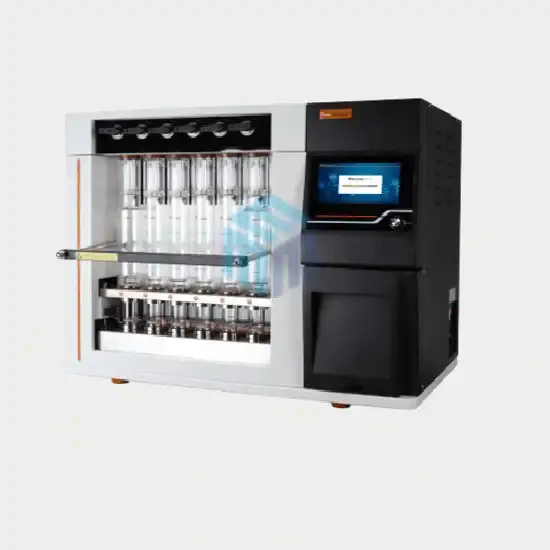
Fiber testing plays a critical role in modern food, feed, and agricultural laboratories. Whether you’re evaluating livestock nutrition, verifying food labels, or conducting quality control, selecting the right fiber analyzer can directly impact testing accuracy and laboratory efficiency.
But many labs face the same question:
Should you choose a system for crude fiber analysis or dietary fiber analysis?
While the terms sound similar, they measure different components and require different testing approaches. In this guide, we’ll break down the differences and help you determine which laboratory fiber analyzer is best suited for your application.
Understanding Crude Fiber Analysis
Crude fiber analysis is one of the oldest and most widely used methods in feed and agricultural testing.
The process measures the indigestible portion of plant material after acid and alkali digestion. It primarily estimates:
- Cellulose
- Some lignin
However, it does not fully measure all dietary fiber components.
Common Applications
- Animal feed testing
- Agricultural quality control
- Grain and forage analysis
Many feed laboratories still rely on fiber analysers designed specifically for crude fiber methods because of their simplicity and industry acceptance.
How Crude Fiber Testing Works
Crude fiber testing measures the indigestible fiber portion of food, feed, and agricultural samples. During the analysis, the sample is treated with dilute acid and alkali solutions to remove digestible components such as proteins, sugars, and starches. The remaining residue is then filtered, dried, weighed, and incinerated to determine its fiber content.
This method is widely used in feed and agricultural laboratories for quality control, nutritional evaluation, and regulatory testing. Modern automated fiber analyzers help improve accuracy, reduce manual effort, and increase testing efficiency.
What Is Dietary Fiber Analysis?
Unlike crude fiber testing, dietary fiber analysis provides a more complete measurement of total fiber content in foods.
This includes:
- Soluble fiber
- Insoluble fiber
- Resistant starch components
A dietary fiber analyzer is commonly used in:
- Food manufacturing
- Nutritional labeling
- Functional food development
- Regulatory compliance testing
As consumer demand for high-fiber foods increases in Australia, accurate dietary fiber testing has become more important than ever.
How Dietary Fiber Testing Works
Dietary fiber testing measures the total fiber content in food products, including both soluble and insoluble fiber fractions. Unlike crude fiber analysis, this method uses enzymatic and gravimetric procedures to remove digestible components such as proteins and starches, leaving behind the dietary fiber for measurement.
The remaining fiber is filtered, dried, and weighed to determine its concentration in the sample. Because it provides a more complete assessment of fiber content, dietary fiber testing is widely used in food manufacturing, nutritional research, and regulatory food labeling applications.
Crude Fiber vs Dietary Fiber: What’s the Difference?
Here’s the simplest way to understand it:
- Crude fiber analysis in food provides limited nutritional insight.
- Crude fiber and dietary fiber testing serve different industries and regulatory needs.
While both methods are used to evaluate fiber content, they differ significantly in scope, accuracy, and application. The table below highlights the key differences between crude fiber and dietary fiber analysis.
| Feature | Crude Fiber Analysis | Dietary Fiber Analysis |
|---|---|---|
| Measures | Primarily cellulose, lignin, and some hemicellulose | Total dietary fiber, including soluble and insoluble fractions |
| Accuracy | Provides an estimate of fiber content | Provides a comprehensive fiber measurement |
| Testing Method | Acid and alkali digestion | Enzymatic and gravimetric analysis |
| Fiber Components Detected | Limited | Broad range of dietary fibers |
| Primary Applications | Animal feed, forage, and agricultural products | Food products, nutrition studies, and food labeling |
| Regulatory Compliance | Common in feed analysis | Required for nutritional labeling in many markets |
| Testing Complexity | Simpler and faster | More detailed and comprehensive |
| Nutritional Relevance | Moderate | High |
In general, crude fiber analysis is suitable for routine feed and agricultural testing, while dietary fiber analysis is preferred when accurate nutritional information and regulatory compliance are required.
What Is Acid Detergent Fiber Analysis?
Another commonly used method is acid detergent fiber analysis (ADF).
ADF measures:
- Cellulose
- Lignin
It is especially important in:
- Forage quality testing
- Livestock nutrition evaluation
Combined with detergent fiber analysis, laboratories can better predict digestibility and feed value.
For agricultural labs, choosing a fiber analyzer that supports both crude and detergent fiber methods offers greater flexibility.
When Should You Choose a Crude Fiber Analyzer?
- Animal feed
- Grain testing
- Agricultural products
- Routine feed QC
Advantages:
- Faster testing workflow
- Lower operating cost
- Widely accepted standard methods
A standard laboratory fiber analyzer for crude fiber is ideal for high-throughput agricultural labs.
When Should You Choose a Dietary Fiber Analyzer?
- Food manufacturing
- Nutritional analysis
- Regulatory labeling
- Functional foods
Advantages:
- More comprehensive fiber measurement
- Better nutritional accuracy
- Supports modern food compliance standards
For food laboratories, investing in a dietary fiber analyzer provides more relevant consumer nutrition data.
Manual or Automated Fiber Analysis: Which Workflow Fits Your Lab?
Manual fiber analysis can be suitable for laboratories with lower sample volumes and basic testing requirements, but it requires more operator involvement during digestion, filtration, washing, drying, and weighing. Automated fiber analyzers can reduce repetitive handling, improve workflow consistency, and make routine testing easier to manage.
For laboratories processing frequent or multiple fiber methods, automation can provide better throughput and reduce operator workload. The right choice depends on sample volume, required methods, available staff, testing frequency, and the level of repeatability required.
How Many Samples Will Your Fiber Analyzer Need to Process?
Analyzer capacity should match your laboratory’s daily testing workload rather than simply choosing the largest available system. Consider the number of samples tested per batch, tests performed per day, digestion positions, operator availability, and whether multiple fiber methods need to be run.
For low-volume testing, a compact analyzer may be sufficient. High-throughput food, feed, and agricultural laboratories may benefit from higher sample capacity and automated workflows to reduce processing time and prevent testing backlogs. Choosing capacity based on actual workload helps balance equipment cost, productivity, and future testing requirements.
Fiber Analyzer Price: What Should Laboratories Consider?
Before investing in a fiber analyzer, consider:
- Initial equipment purchase cost.
- Supported testing methods (Crude Fiber, ADF, NDF, Dietary Fiber).
- Automation level and labor-saving benefits.
- Sample capacity and throughput requirements.
- Maintenance and service costs.
- Availability and cost of consumables.
- Compliance with industry standards and regulations.
- Ease of operation and user training requirements.
- Long-term reliability and equipment lifespan.
- Return on investment through improved productivity.
Conclusion: Choose Based on Your Testing Goals
When selecting a fiber analyzer, there is no one-size-fits-all solution. The right system depends on whether your laboratory focuses on:
- Feed analysis
- Food nutrition
- Agricultural testing
- Regulatory compliance
For feed labs, crude and detergent fiber methods remain highly valuable. For food and nutritional applications, dietary fiber analysis provides a more complete picture.
The key is choosing equipment that aligns with both your current workflow and future laboratory requirements.
Looking for a reliable fiber analyzer for food, feed, or agricultural testing?.
👉 📞 Contact +61-478-594-746 or 📧 email info@mkube.com.au for expert guidance and tailored solutions across Australia.