
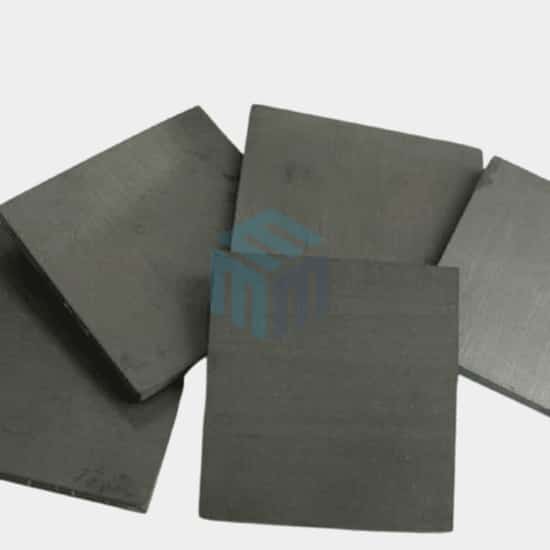
The semiconductor industry demands exceptional precision at every stage of manufacturing. From wafer fabrication to crystal growth and thermal processing, maintaining consistent temperatures is essential for producing high-quality semiconductor devices. Even minor temperature fluctuations can lead to wafer defects, reduced yields, and increased production costs. This is why advanced ceramic materials have become indispensable in modern semiconductor furnaces. Among them, SiC Plates have emerged as one of the most reliable solutions due to their outstanding thermal conductivity, high-temperature stability, and exceptional resistance to thermal shock.
In this article, we’ll explore how Silicon Carbide Plates for Semiconductor applications improve process stability, enhance furnace performance, and contribute to higher manufacturing efficiency.
The Importance of Thermal Conductivity in Furnace Performance
Thermal conductivity refers to a material’s ability to transfer heat efficiently.
In semiconductor furnaces, efficient heat transfer enables:
- Faster temperature stabilization
- Uniform heat distribution
- Reduced thermal gradients
- Improved process repeatability
Because silicon carbide has significantly higher thermal conductivity than many conventional ceramic materials, SiC Plates help create a more stable thermal environment throughout the furnace.
How SiC Plates Improve Process Stability
Uniform Heat Distribution
One of the greatest advantages of SIC Plates is their ability to distribute heat evenly across the furnace chamber.
Uniform heating minimizes:
- Localized hot spots
- Cold zones
- Uneven wafer processing
- Material distortion
As a result, semiconductor manufacturers achieve more consistent production quality.
Excellent Thermal Shock Resistance
Semiconductor furnaces frequently undergo rapid heating and cooling cycles.
Conventional materials may develop:
- Cracks
- Warping
- Surface degradation
A high-quality Sic Ceramic Plate withstands these temperature fluctuations with minimal structural damage, ensuring long-term operational reliability.
Improved Energy Efficiency
Efficient heat transfer allows furnaces to reach operating temperatures more quickly while reducing energy losses.
Benefits include:
- Lower power consumption
- Reduced operating costs
- Faster production cycles
- Improved furnace efficiency
This makes Silicon Carbide Plates for Semiconductor processing an excellent investment for high-volume manufacturing facilities.
Enhanced Dimensional Stability
Semiconductor manufacturing demands micron-level precision.
At temperatures exceeding 1000°C, furnace components must retain their original dimensions.
SiC Plates exhibit very low thermal expansion, helping maintain:
- Accurate wafer positioning
- Consistent furnace geometry
- Improved process repeatability
Superior Chemical Resistance
Semiconductor processing often involves aggressive atmospheres containing:
- Hydrogen
- Nitrogen
- Argon
- Reactive process gases
- Corrosive chemicals
Silicon carbide offers outstanding chemical resistance, allowing SIC Plates to maintain their performance even in harsh processing environments.
Choosing the Right SiC Plate Supplier
Selecting an experienced SIC plate supplier is essential for ensuring long-term furnace performance.
A reliable supplier should offer:
- High-purity silicon carbide materials
- Precision machining
- Custom dimensions
- Tight dimensional tolerances
- Consistent product quality
- Technical support
- Fast delivery
For specialized furnace designs, many manufacturers also provide custom-engineered SiC Plates tailored to specific process requirements.
Silicon Carbide Plate Price: What Affects the Cost?
The Silicon carbide plate price depends on several factors, including:
- Material purity
- Plate dimensions
- Thickness
- Surface finish
- Machining complexity
- Production volume
- Customization requirements
Although premium silicon carbide components generally have a higher initial cost than conventional ceramics, their longer service life and improved furnace efficiency often provide significant long-term savings.
When evaluating SiC Plate for Sale, manufacturers should consider lifecycle cost rather than purchase price alone.
Why Semiconductor Manufacturers Prefer SiC Plates
Modern semiconductor fabrication facilities increasingly choose Silicon Carbide Plates for Semiconductor applications because they offer:
- Excellent thermal conductivity
- High mechanical strength
- Superior thermal shock resistance
- Outstanding corrosion resistance
- Long operational life
- Stable performance at temperatures above 1500°C
- Improved process consistency
These advantages contribute directly to higher wafer yields, reduced maintenance, and improved production efficiency.
Conclusion
As semiconductor manufacturing continues to advance, maintaining precise thermal control has become increasingly important. High-performance SiC Plates play a vital role in achieving this objective by providing superior thermal conductivity, excellent dimensional stability, and outstanding resistance to thermal shock and chemical attack.
Whether used as wafer support plates, furnace shelves, or structural furnace components, Silicon Carbide Plates for Semiconductor applications help manufacturers improve process stability, increase production yields, and reduce equipment downtime.
By partnering with a trusted SIC plate supplier, manufacturers can obtain precision-engineered Sic Ceramic Plate solutions that deliver reliable performance even under the most demanding high-temperature processing conditions.
Looking for premium-quality SiC Plates, Sic Ceramic Plate, or Silicon Carbide Plates for Semiconductor applications?
📞 Contact +61-478-594-746 or 📧 email info@mkube.com.au today for precision-engineered silicon carbide solutions designed to deliver exceptional thermal performance, durability, and reliability for semiconductor furnaces and high-temperature industrial processes.