

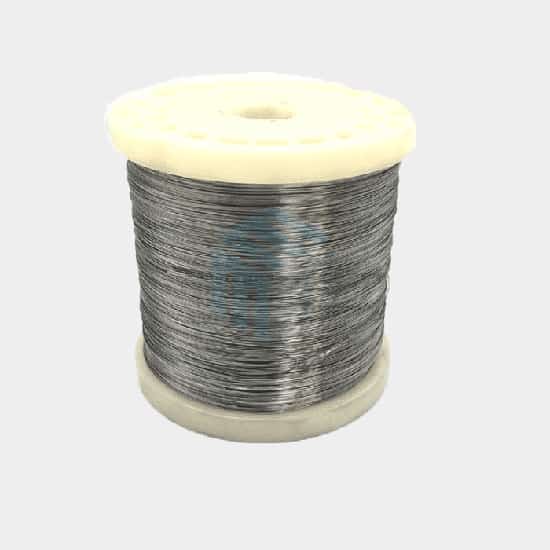
Titanium has become one of the most trusted materials in the medical industry due to its exceptional strength, corrosion resistance, lightweight properties, and biocompatibility. From surgical implants and orthopedic devices to dental applications and medical instruments, Titanium wire plays a critical role in manufacturing reliable and long-lasting medical components.
However, selecting the right grade of titanium is essential. The two most commonly used grades are Grade 2 (Commercially Pure Titanium) and Grade 5 (Ti-6Al-4V Titanium Alloy). While both offer outstanding performance, they are designed for different applications and operating requirements.
In this article, we’ll compare Grade 2 and Grade 5 Titanium wire, helping medical device manufacturers choose the right material for their specific applications.
Why Titanium Wire Is Widely Used in Medical Devices
Titanium offers a unique combination of properties that few engineering materials can match.
Some of the key advantages of pure titanium wire and titanium alloy wire include:
- Excellent biocompatibility
- High corrosion resistance
- Low density and lightweight construction
- High strength-to-weight ratio
- Excellent fatigue resistance
- Non-magnetic properties
- Long service life
These characteristics make titanium ideal for medical implants and precision surgical equipment.
Understanding Grade 2 Titanium Wire
Grade 2 is known as commercially pure titanium.
It contains approximately 99% titanium with small amounts of oxygen, nitrogen, carbon, and iron.
Key Characteristics
- Excellent corrosion resistance
- Outstanding biocompatibility
- Good ductility
- Easy fabrication and forming
- Excellent weldability
Because of its high purity, pure titanium wire is widely used where corrosion resistance and formability are more important than maximum strength.
Common Medical Applications
Grade 2 Titanium wire is commonly used for:
- Surgical instruments
- Dental equipment
- Medical laboratory devices
- Catheter components
- Medical fasteners
- Wire mesh filters
It is also frequently supplied in titanium wire spool form for precision manufacturing processes.
Understanding Grade 5 Titanium Wire
Grade 5 is a titanium alloy containing approximately:
- 90% Titanium
- 6% Aluminum
- 4% Vanadium
This alloy significantly increases mechanical strength while maintaining excellent corrosion resistance.
Key Characteristics
- Very high tensile strength
- Excellent fatigue resistance
- Superior wear resistance
- Good corrosion resistance
- Excellent strength-to-weight ratio
Because of these properties, titanium alloy wire is one of the most widely used engineering materials in the medical implant industry.
Common Medical Applications
Grade 5 Titanium wire is used for:
- Orthopedic implants
- Bone fixation devices
- Surgical screws
- Trauma implants
- Spinal implants
- Prosthetic components
Grade 2 vs Grade 5 Titanium Wire: Comparison
| Property | Grade 2 Titanium | Grade 5 Titanium |
| Material Type | Commercially Pure Titanium | Titanium Alloy |
| Strength | Moderate | Very High |
| Corrosion Resistance | Excellent | Excellent |
| Biocompatibility | Excellent | Excellent |
| Formability | Excellent | Good |
| Weldability | Excellent | Good |
| Fatigue Resistance | Good | Excellent |
| Medical Applications | Instruments & Equipment | Load-Bearing Implants |
Which Grade Should You Choose?
Choose Grade 2 Titanium Wire When:
Your application requires:
- Maximum corrosion resistance
- Excellent formability
- High ductility
- Precision fabrication
- Non-load-bearing medical devices
Grade 2 is particularly suitable for medical instruments, laboratory equipment, and various healthcare components.
Choose Grade 5 Titanium Wire When:
Your application requires:
- High mechanical strength
- Load-bearing capability
- Excellent fatigue resistance
- Long-term structural performance
- Implant-grade durability
For orthopedic implants and surgical fixation systems, Grade 5 is generally the preferred choice.
Other Forms of Titanium Wire Available
Medical manufacturers often require titanium in different configurations.
Titanium TIG Wire
Although titanium TIG wire is primarily used for precision welding, it is also valuable during the fabrication of titanium medical equipment and specialized components.
18 Gauge Titanium Wire
18 gauge titanium wire is commonly selected for:
- Medical prototypes
- Laboratory applications
- Precision assemblies
- Research and development projects
Titanium Wire Mesh
Titanium wire mesh is widely used in:
- Medical filtration systems
- Implant support structures
- Biomedical research
- Tissue engineering applications
Titanium Wire Rope
Although titanium wire rope is more common in aerospace and marine industries, specialized medical lifting and positioning systems may also utilize lightweight titanium cable assemblies.
Titanium Wire Price: What Affects Cost?
The titanium wire price depends on several factors, including:
- Material grade (Grade 2 or Grade 5)
- Wire diameter
- Production process
- Surface finish
- Order quantity
- Certification requirements.
Manufacturers looking for titanium wire for sale should evaluate both material quality and supplier expertise rather than focusing solely on purchase price.
Choosing the Right Titanium Wire Supplier
Reliable titanium wire suppliers provide:
- Certified medical-grade materials
- Custom wire diameters
- Coil and titanium wire spool options
- Technical guidance
- Quality documentation
- Consistent global supply
Conclusion
Selecting the appropriate Titanium wire is critical for ensuring the performance, durability, and safety of medical devices. While Grade 2 provides exceptional corrosion resistance and formability for surgical instruments and laboratory equipment, Grade 5 offers the superior strength and fatigue resistance required for orthopedic implants and structural medical components.
Understanding the differences between pure titanium wire and titanium alloy wire enables manufacturers to choose materials that best meet their application requirements. By sourcing certified products from trusted titanium wire suppliers, medical device manufacturers can achieve reliable performance, regulatory compliance, and long-term product quality.
Looking for premium Titanium wire, titanium wire spool, 18 gauge titanium wire, or custom titanium alloy wire solutions?
📞 Contact +61-478-594-746 or 📧 email info@mkube.com.au today for high-quality titanium materials engineered for medical devices, research laboratories, aerospace, and precision industrial applications.