
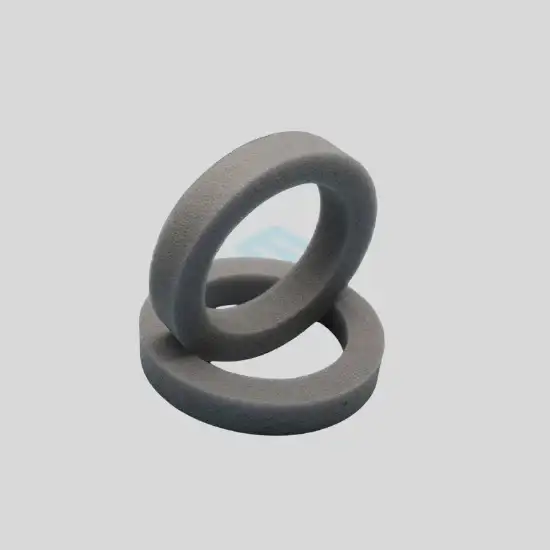
Advanced ceramic materials are widely used in industries where conventional metals cannot withstand extreme temperatures, corrosive environments, or demanding process conditions. Among the most popular engineering ceramics, Aluminum Nitride Rings and Alumina Rings are commonly selected for semiconductor manufacturing, vacuum systems, thermal processing equipment, and other high-temperature industrial applications.
While both materials offer excellent performance, they possess distinct properties that make them suitable for different operating environments. Understanding these differences is essential when selecting the right ceramic component for your application.
In this article, we’ll compare Aluminum Nitride Ceramic rings and Alumina Rings to help engineers, designers, and manufacturers make informed material selection decisions.
Why Ceramic Rings Are Used in High-Temperature Applications
Ceramic rings play a vital role in equipment operating under extreme conditions because they provide:
- Excellent heat resistance
- High mechanical strength
- Electrical insulation
- Chemical stability
- Wear resistance
- Long service life
Applications include:
- Semiconductor furnaces
- Vacuum chambers
- Plasma processing systems
- Thermal processing equipment
- Electronic packaging
- High-temperature laboratory systems
Among today’s advanced ceramics, the AlN Ceramic Ring has gained significant attention due to its unique combination of thermal and electrical properties.
Aluminum Nitride Rings vs Alumina Rings
Thermal Conductivity
One of the biggest differences between these materials is thermal conductivity.
Aluminum Nitride Ceramic rings provide significantly higher thermal conductivity than alumina, allowing heat to dissipate quickly and uniformly.
Benefits include:
- Improved temperature control
- Reduced thermal stress
- Better process stability
- Faster heat transfer
For semiconductor processing and power electronics, this is a major advantage.
Winner: Aluminum Nitride Rings
Electrical Insulation
Both materials provide excellent electrical insulation.
However, AlN Ceramic Ring components offer the unique combination of:
- High thermal conductivity
- Excellent dielectric strength
This combination is particularly valuable in electronic and semiconductor manufacturing.
Winner: Aluminum Nitride Rings
High-Temperature Performance
Both ceramics perform well at elevated temperatures.
Alumina offers excellent resistance to oxidation and chemical attack, while Aluminum Nitride Rings maintain excellent dimensional stability and thermal performance under demanding thermal conditions.
Depending on the application, either material may be appropriate.
Winner: Application dependent
Thermal Shock Resistance
Rapid heating and cooling cycles can damage many ceramic materials.
Because of its higher thermal conductivity, an Aluminum Nitride Ring experiences lower internal thermal gradients, reducing the risk of thermal cracking.
This makes AlN particularly suitable for semiconductor furnaces and rapid thermal processing systems.
Winner: Aluminum Nitride Rings
Mechanical Strength
Both materials possess excellent mechanical properties.
Alumina generally provides:
- High hardness
- Excellent wear resistance
- Good compressive strength
Aluminum nitride also offers good strength while adding superior thermal management capabilities.
Winner: Comparable depending on application.
Cost Considerations
One area where alumina often has an advantage is initial purchase cost.
The Aluminum Nitride Ring price is generally higher because:
- Raw material costs are greater
- Manufacturing is more complex
- High-purity processing is required
However, for applications requiring superior heat dissipation, the long-term performance benefits often justify the additional investment.
When Should You Choose Aluminum Nitride Rings?
An Aluminum Nitride Ring is typically the better choice when your application requires:
- Superior thermal conductivity
- Rapid heat dissipation
- Excellent electrical insulation
- Semiconductor-grade purity
- Thermal shock resistance
- High process stability
These properties make AlN one of the preferred ceramics for advanced semiconductor manufacturing.
When Are Alumina Rings the Better Option?
Alumina remains an excellent solution when:
- Cost is a primary consideration
- Wear resistance is more important than heat transfer
- General furnace applications are involved
- Standard industrial ceramics are sufficient
For many conventional high-temperature applications, alumina continues to provide excellent value.
Choosing the Right Aluminum Nitride Ring Supplier
Selecting an experienced Aluminum Nitride Ring supplier ensures:
- High-purity ceramic materials
- Precision machining
- Tight dimensional tolerances
- Consistent quality
- Technical support
- Custom manufacturing capabilities
An experienced supplier can also produce Aluminum Nitride Ceramic rings in specialized dimensions to suit unique semiconductor or industrial equipment.
Aluminum Nitride Ring Price: What Affects the Cost?
The Aluminum Nitride Ring price depends on several factors:
- Material purity
- Ring dimensions
- Surface finish
- Machining complexity
- Production quantity
- Tolerance requirements
- Customization level
Although aluminum nitride components generally have a higher initial cost than alumina, their improved thermal performance often results in greater equipment efficiency and longer service life.
Conclusion
Both aluminum nitride and alumina rings offer exceptional performance in high-temperature industrial environments. However, the best material depends on your application’s specific requirements.
For applications requiring superior heat dissipation, excellent electrical insulation, and outstanding thermal stability, Aluminum Nitride Rings provide a significant performance advantage. Their high thermal conductivity makes them particularly valuable in semiconductor manufacturing, power electronics, and advanced thermal processing systems.
Alumina rings remain an excellent choice for general industrial applications where wear resistance and cost-effectiveness are the primary considerations.
By working with an experienced Aluminum Nitride Ring supplier, manufacturers can obtain precision-engineered AlN Ceramic Ring solutions that deliver reliable performance, extended service life, and improved process efficiency.
Looking for premium-quality Aluminum Nitride Rings for semiconductor, electronics, or high-temperature industrial applications?
📞 Contact +61-478-594-746 or 📧 email info@mkube.com.au for precision-engineered Aluminum Nitride Ceramic rings designed to deliver exceptional thermal performance, reliability, and long-term durability.