

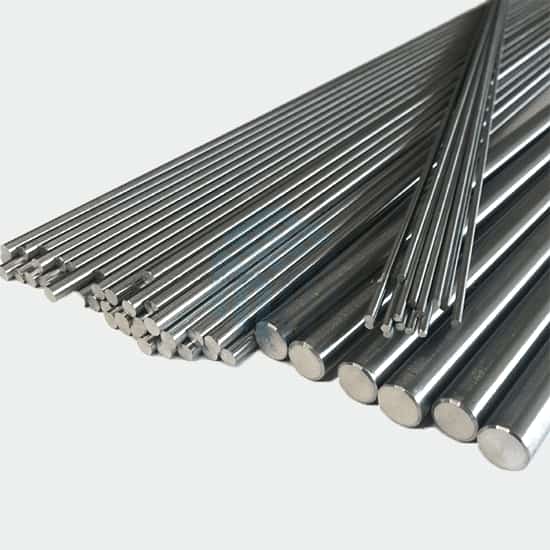
In the field of modern medicine, especially orthopaedics and surgery, implant rods play a crucial role in patient recovery and rehabilitation. These rods provide structural support, promote healing, and restore function. From spinal fusions to dental restorations and bone fracture repairs, the type of rod used can significantly influence outcomes.
But how do we choose the right material? While stainless steel has been widely used for decades, titanium rods are now emerging as the preferred choice in many medical applications due to their advanced performance, biocompatibility, and durability.
Why Material Choice Matters in Medical Implants
The material used in medical implants directly affects patient safety, implant performance, and longevity. Key considerations include:
-
Biocompatibility: Titanium promotes bone bonding; stainless steel may cause allergic reactions in some patients.
-
Mechanical Strength: Titanium is strong yet flexible, reducing stress on bones; stainless steel is rigid and very strong.
-
Corrosion Resistance: Titanium resists corrosion in body fluids; stainless steel can corrode over time.
-
Imaging Compatibility: Titanium is MRI-safe; stainless steel may interfere with imaging.
-
Cost: Titanium is more expensive but offers long-term benefits; stainless steel is cheaper and widely available.
Choosing the right material ensures safe, durable, and effective implants tailored to the patient and surgical requirements.
Titanium Rods: An Overview
Titanium rods are precision-engineered bars of titanium metal or its alloys, valued for their exceptional strength-to-weight ratio, corrosion resistance, and biocompatibility. They are widely used in marine, industrial, and medical sectors, where performance in demanding conditions is critical.
Material Properties of Titanium Rods
Types & Alloys
Titanium used in implants is rarely pure; common biomedical grades include commercially pure (CP) titanium and titanium alloys such as Ti-6Al-4V and Ti-6Al-7Nb.
These alloys improve strength, fatigue life, and corrosion behavior while retaining good biocompatibility.
Density & Strength-to-Weight Ratio
Titanium has a relatively low density (~ 4.5 g/cm³), about half that of steel or cobalt alloys, which gives it a favourable strength-to-weight ratio.
This lower weight is a key advantage in implants, where reducing mass can lessen stress on surrounding bone and tissues.
Elastic Modulus & Stress Shielding
One central mechanical benefit is that titanium’s elastic modulus is closer to that of cortical bone than stainless steel.
Because of this, titanium implants may reduce stress shielding—the problem where a stiff implant “takes” too much load, causing surrounding bone to weaken.
Corrosion Resistance & Passivation
In the human body’s aggressive environment (saline, body fluids, proteins), corrosion resistance is essential. Titanium spontaneously forms a stable oxide (TiO₂) layer, which is chemically inert and helps resist corrosion.
Comparisons show titanium alloys generally exhibit lower corrosion currents and higher electrochemical potential than 316L stainless steel in simulated body environments.
Biocompatibility & Osseointegration
Titanium is well known for its biocompatibility. Its oxide surface supports osseointegration — direct bone-to-metal bonding — a crucial trait for long-term stability in load-bearing implants.
It tends to elicit less inflammation and fibrous encapsulation compared to some stainless steel implants.
Fatigue Strength & Wear Behavior
Because implants face cyclic loads (walking, bending, twisting), fatigue resistance is crucial. Titanium alloys generally perform well under repeated loading.
However, pure titanium has a relatively low elastic modulus (about half that of stainless steel) and lower shear strength, which in certain articulating or sliding-contact scenarios can pose limitations.
Fabrication & Cost Considerations
Titanium is more challenging to machine, form, weld or join compared to stainless steel, increasing manufacturing complexity and cost.
For bulk implants or components (rods, tubes, bars), the extra cost must be weighed against long-term benefits.
What Are Titanium Rods Used For?
Titanium rods are extensively used in:
- Orthopaedic surgeries (bone fracture fixations, spinal implants)
- Dental implants
- Craniofacial reconstructions
- Spinal fusion procedures
Their versatility stems from their exceptional mechanical strength and compatibility with the human body. Titanium rods, including titanium tig rod and titanium round rod, are preferred where long-term implantation is required due to their resistance to bodily fluids and superior healing outcomes.
Types of Titanium Rods and Tubes
Titanium is available in various forms depending on the surgical requirement:
- Titanium round tube: Ideal for precision surgeries where minimal weight is crucial.
- Titanium round bar: Commonly used in orthopaedic applications.
- Titanium alloy tube: Offers enhanced strength and flexibility.
- Titanium square tube: Suitable for applications requiring angular support.
- Titanium seamless tube: Delivers flawless surface finish and consistent strength, essential in medical instruments.
Advantages of Titanium Rods in Medicine
Titanium rods offer exceptional strength, biocompatibility, and corrosion resistance, making them ideal for long-term medical implants and spinal fixation.
- Biocompatibility: Titanium doesn’t trigger immune reactions and integrates naturally with bone.
- Corrosion resistance: Its oxide layer protects it from degradation within the body.
- Osseo integration: Encourages bone to grow around and bond with the implant.
- Lightweight: Lighter than stainless steel, making it ideal for long-term implants and patient comfort.
Stainless Steel Rods in Medical Use
Stainless steel rods are widely utilized in medical and surgical applications due to their combination of mechanical strength, corrosion resistance, sterilizability, and cost-effectiveness. They play a critical role in orthopedic fixation systems, surgical tools, dental prosthetics, and various implantable devices.
Material Properties of Stainless Steel Rods
Common Grades & Composition
In medical implants, the commonly used stainless steel grade is 316L surgical stainless steel (low-carbon).
Typical composition includes iron, chromium, nickel, molybdenum among others.
Mechanical Strength & Stiffness
Stainless steel is generally stiffer (higher elastic modulus) and has high yield and tensile strength.
In fracture fixation contexts, stainless steel can provide a more rigid fixation than titanium of the same geometry.
Corrosion Resistance & Surface Stability
316L stainless steel is fairly corrosion-resistant in many environments and has been used successfully in implantable devices for decades.
However, in the highly aggressive bodily environment, its passive oxide layer is less stable and more prone to pitting, ion leaching or crevice corrosion compared to titanium’s oxide.
Biocompatibility & Biological Response
Stainless steel implants are generally biocompatible, but compared with titanium they may provoke more inflammatory response, fibrous encapsulation, or bacterial adherence in some cases. In fact, modifying stainless steel surfaces—such as coating with titanium or applying microarc oxidation—can enhance biocompatibility by improving osseointegration.
Fatigue & Wear Characteristics
Under cyclic loading, stainless steel is robust. In certain fracture fixation contexts, it may outperform titanium in stiffness.
But stiffness can be a double-edged sword: excessively rigid implants can lead to stress shielding and loss of bone density adjacent to the implant.
Manufacturability & Cost
Stainless steel is easier and cheaper to process, weld, machine and finish than titanium. This makes it a cost-effective choice for many implant types or temporary devices.
For applications where ultimate longevity, biocompatibility, or weight savings are less critical, stainless steel remains attractive.
Below is a comparison and guidance on when titanium or stainless steel rods / tubes may be preferred in medical implants.
When titanium rods / tubes shine:
- Permanent implants intended for longevity (e.g. joint replacements, spinal rods, internal load-bearing bars)
- Where minimizing implant mass is important
- In anatomies or load regimes where stress shielding would be a risk
- Where superior corrosion & biocompatibility are critical
When stainless steel may be appropriate:
- Short-term fixation devices
- Cost-constrained settings
- Applications where high stiffness is desired
- Devices where ease of machining, modification or revision is critical
Clinical Evidence:
Systematic reviews indicate that although stainless steel implants have similar or sometimes superior biomechanical properties, titanium implants tend to demonstrate lower failure rates and fewer complications in certain contexts (e.g. distal femur, locking screws)
Some clinical trials found no significant difference in functional outcomes between titanium and stainless steel in certain fracture types (e.g. distal radius)
Strengths and Weaknesses of Stainless Steel Rods
Stainless steel rods are still used in a variety of procedures due to:
- High tensile strength
- Cost-effectiveness
- Ease of manufacturing and availability
However, they are not without limitations. Stainless steel can corrode over time in the body, especially in saline or acidic environments. Additionally, some patients may develop allergic reactions due to nickel content.
When Are Stainless Steel Rods Used?
Stainless steel is typically selected for:
- Temporary implants
- Trauma surgeries
- Use in developing markets where cost is a primary factor
Titanium vs Stainless Steel in Spinal Implants
Titanium and stainless steel are both widely used in spinal implants, but they offer different advantages depending on the surgical application.
Titanium spinal implants are commonly preferred for long-term procedures such as spinal fusion because they are lightweight, highly biocompatible, corrosion-resistant, and support better bone integration. Their flexibility is also closer to natural bone, helping reduce stress shielding and improve healing outcomes.
Stainless steel spinal implants provide excellent strength and are often used in trauma fixation and cost-sensitive applications. However, they are more rigid, may cause greater stress shielding, and can create imaging interference in MRI and CT scans.
Overall, titanium is generally considered the preferred material for modern spinal implants due to its long-term clinical performance and compatibility with the human body.
| Feature | Titanium Rods | Stainless Steel Rods |
|---|---|---|
| Biocompatibility | Excellent | Good |
| Flexibility (Elastic Modulus) | Closer to natural bone, reducing stress shielding | Higher stiffness, which may increase stress shielding |
| Bone Fusion Support | Promotes successful spinal fusion | Adequate but less favorable for long-term fusion |
| Corrosion Resistance | Excellent in physiological environments | Good, but susceptible to corrosion over time |
| MRI & CT Imaging | Produces fewer imaging artifacts | More imaging interference than titanium |
| Fatigue Strength | Excellent for long-term spinal loading | Good for many applications but lower long-term fatigue performance |
| Weight | Lightweight | Heavier |
| Long-Term Stability | Excellent for permanent spinal implants | Often used where cost is a major consideration |
| Common Applications | Spinal fusion systems, scoliosis correction, vertebral fixation | Temporary spinal fixation and selected spinal procedures |
| Cost | Higher | Lower |
Titanium rods are the preferred choice for most spinal implant procedures due to their excellent biocompatibility, lower imaging artifacts, and better compatibility with bone. Stainless steel rods are still used in selected spinal applications where affordability and high mechanical strength are important considerations.
Titanium vs Stainless Steel Rods for Orthopedic Implants
| Feature | Titanium Rods | Stainless Steel Rods |
|---|---|---|
| Biocompatibility | Excellent; highly compatible with human tissue | Good; may cause allergic reactions in some patients |
| Bone Integration (Osseointegration) | Excellent; promotes bone growth and healing | Limited; does not integrate with bone as effectively |
| Corrosion Resistance | Excellent resistance to body fluids | Good, but lower than titanium in long-term implantation |
| Strength-to-Weight Ratio | High strength with low weight | Strong but significantly heavier |
| Fatigue Resistance | Excellent for long-term cyclic loading | Good, but may fatigue over extended periods |
| MRI Compatibility | Non-magnetic and MRI-friendly | Some grades may interfere with MRI imaging |
| Long-Term Implant Performance | Ideal for permanent orthopedic implants | Suitable for temporary or short-term fixation |
| Common Applications | Joint replacements, bone plates, trauma fixation, orthopedic screws | Fracture fixation, orthopedic plates, temporary implants |
| Cost | Higher initial cost | More economical |
Patient Safety Considerations & Allergic Reactions
Patient safety is crucial when choosing implant materials.
- Titanium: Highly biocompatible, corrosion-resistant, and very low risk of allergic reactions. Ideal for permanent implants.
- Stainless Steel: Generally safe, but contains nickel, which can trigger allergies in sensitive patients. Better for temporary or short-term implants.
- Corrosion & Ion Release: Titanium resists ion release; stainless steel may release small amounts of nickel or chromium over time.
- Infection Risk: Both are inert, but proper sterilization is essential; titanium may slightly reduce bacterial adhesion.
Key takeaway: Titanium is safer for long-term implants and patients with metal sensitivities, while stainless steel is acceptable for temporary use.
Head-to-Head Comparison: Titanium vs. Stainless Steel
Here’s a detailed, data-driven head-to-head comparison between Titanium and Stainless Steel, focusing on engineering, biomedical, and performance aspects.
Biocompatibility and Patient Safety
- Titanium rods are non-reactive and ideal for long-term use.
- Stainless steel may release ions that lead to allergic reactions in sensitive patients.
Corrosion Resistance and Longevity
- Titanium forms a stable oxide layer, making it resistant to corrosion.
- Stainless steel, while durable, may degrade over time in the body.
Mechanical Strength and Weight
- Stainless steel is slightly stronger but significantly heavier.
- Titanium has a better strength-to-weight ratio, reducing patient discomfort.
MRI and Imaging Compatibility
- Titanium is non-magnetic and safe for MRIs.
- Stainless steel may interfere with imaging and pose risks in MRI environments.
Healing and Integration with Bone
- Titanium promotes faster healing due to excellent osseointegration.
- Stainless steel acts as a placeholder rather than integrating with bone.
Medical-Grade Titanium Components Used in Implant Manufacturing
Titanium tubes and pipes are essential components in modern medical and healthcare technology, valued for their biocompatibility, corrosion resistance, and high strength-to-weight ratio. Whether used in surgical implants, medical instrumentation, or hospital equipment, titanium’s performance in body environments and sterilization processes makes it a top choice over many other metals.
Why Titanium Tubes Are Preferred in Surgical Devices
Titanium tube, particularly titanium seamless tube and titanium alloy tube, is used in medical devices due to its cleanliness, high precision, and resistance to high temperatures and corrosion. These properties make it indispensable in instruments for laparoscopic surgeries and robotic systems.
Medical-Grade Titanium Pipes and Their Applications
Titanium pipe products like the 3 inch titanium pipe are used in manufacturing surgical beds, support structures, and even bone scaffolding. With titanium pipe for sale in various sizes, engineers and surgeons can customise applications for patient-specific solutions.
Sourcing Titanium Materials for Implants
When looking for titanium tubing for sale, it’s essential to choose a trusted titanium tube supplier offering medical-grade quality. Considerations such as titanium tube price and titanium rod price will vary based on grade, purity, and compliance with international medical standards.
Cost Considerations: Titanium vs. Stainless Steel Rods
Here’s a detailed cost-focused comparison of Titanium vs. Stainless Steel rods, looking at raw material pricing, manufacturing factors, lifecycle costs, and healthcare-specific economics.
Is Titanium Worth the Higher Price?
- Yes, when long-term outcomes, fewer complications, and superior healing are priorities.
- Though titanium rod price and titanium tube price may be higher upfront, the reduced need for replacement surgeries and post-op care often balances out the investment.
Budget-Friendly Stainless Steel: A Viable Alternative?
- Yes, in short-term or cost-sensitive applications.
- For temporary fixations or in cases where removal is anticipated, stainless steel offers practical advantages.
Use Cases and Surgical Preferences: Titanium vs. Stainless Steel Rods:
Titanium rods are preferred for permanent implants due to their biocompatibility, bone-like flexibility, and lighter weight, while stainless steel rods are often chosen for temporary fixation and cost-sensitive cases. Surgical choice depends on implant duration, patient allergies, and required mechanical properties.
When Do Surgeons Choose Titanium?
Surgeons often choose titanium for:
- Long-term implants
- Dental implants
- Spinal fusion surgeries
- Paediatric orthopaedics where growth and development need support
Where Stainless Steel Still Has a Role
Stainless steel remains relevant for:
- Temporary trauma fixations
- Fractures expected to heal within months
- Budget-constrained healthcare settings
Regulatory Standards & Material Testing
Medical implants must comply with strict regulatory standards and testing protocols to ensure patient safety, biocompatibility, and mechanical reliability. Material selection alone is not enough—verification through standardized testing is critical.
Regulatory Standards
- ISO Standards:
- ISO 5832 series for metallic surgical implants (e.g., 5832-3 for titanium alloys, 5832-1 for stainless steel)
- Defines chemical composition, mechanical properties, and allowable impurities
- ASTM Standards:
- ASTM F67 for unalloyed titanium
- ASTM F138 for stainless steel surgical implants
Material Testing Protocols
- Mechanical Testing:
- Tensile, fatigue, and hardness tests to verify strength and load-bearing capacity
- Elastic modulus and elongation measurements for compatibility with bone
- Chemical & Purity Analysis:
- Trace metal analysis to detect nickel, iron, and other potential allergens
- Hydroxyl content or residual element checks for titanium implants
- Corrosion and Biocompatibility Testing:
- Simulated body fluid tests to evaluate long-term corrosion resistance
- Cytotoxicity and tissue response tests to ensure safe integration
- Imaging Compatibility Checks:
- MRI or CT testing to verify minimal interference and artifact formation
Key Takeaway
Compliance with ISO/ASTM standards and thorough material testing ensures that implants are mechanically reliable, biocompatible, and safe for long-term use. Titanium and stainless steel implants must pass rigorous testing to guarantee clinical performance and regulatory approval.
Final Verdict: Titanium Rod vs Steel Rods for Medical Implants
Final Verdict: For long-term medical implants, titanium is generally the superior choice due to its biocompatibility, corrosion resistance, and compatibility with bone healing. Stainless steel remains valuable for temporary implants and cost-sensitive applications, but titanium offers better patient outcomes in permanent, load-bearing use.
| Feature | Titanium Rods | Stainless Steel Rods |
|---|---|---|
| Biocompatibility | ✅ Excellent | ❌ Risk of allergic reaction |
| Corrosion Resistance | ✅ High | ⚠️ Moderate (can corrode) |
| Osseointegration | ✅ Excellent | ❌ Poor |
| MRI Compatibility | ✅ Safe | ⚠️ Potential hazards |
| Weight | ✅ Lightweight | ❌ Heavier |
| Cost | ❌ Higher upfront | ✅ Lower upfront |
| Long-term Implant Suitability | ✅ Ideal | ⚠️ Limited |
Recommendation: Choose titanium for permanent implants and long-term safety. Opt for stainless steel where temporary usage and cost are more critical.
Conclusion
In conclusion, both titanium and stainless steel rods have their place in medical implants, but the choice ultimately depends on patient needs, implant location, and clinical goals. Titanium rods stand out for their superior biocompatibility, corrosion resistance, and lighter weight, making them the preferred option for long-term implants and spinal fixation. Stainless steel rods, on the other hand, remain a cost-effective choice for temporary or less demanding applications. For surgeons and patients alike, understanding the benefits and limitations of each material ensures better decision-making, improved outcomes, and long-lasting reliability in medical treatments.
Looking for high-quality titanium rods for medical implants? Explore our precision-engineered solutions designed for safety, durability, and trusted performance in healthcare applications.
📞 Need help sourcing titanium rods, tubes, or pipes?
Contact M-Kube at +61-478-594-746 email us at info@mkube.com.au for expert assistance.
Explore our Titanium Product Range to find the right solution for your medical manufacturing needs.