
Superconducting technology is advancing rapidly across industries such as medical imaging, quantum computing, particle physics, aerospace, and advanced energy systems. As these technologies evolve, material selection becomes increasingly important — especially when choosing between niobium sheet and tantalum sheet materials.
Both niobium and tantalum belong to the refractory metal family and offer excellent high-temperature and corrosion-resistant properties. However, when it comes to superconducting applications, their performance differs significantly.
So, which material performs better?
Let’s compare niobium and tantalum sheets from a practical engineering perspective.
Why Niobium Is Widely Used in Superconductors
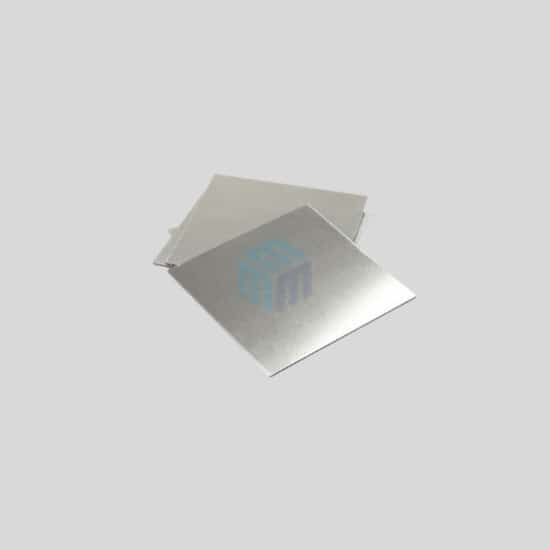
Niobium sheet metal is one of the few elemental metals that exhibits superconductivity at relatively accessible cryogenic temperatures.
Key Advantages of Niobium Sheets
- Excellent superconducting properties
- High critical magnetic field
- Good ductility and formability
- Strong resistance to corrosion
- Compatibility with ultra-high vacuum systems
High-purity niobium foil and nb sheet materials are especially critical in accelerator technology.
What About Tantalum?
Tantalum also offers impressive properties:
- Outstanding corrosion resistance
- High melting point
- Excellent chemical stability
- Good biocompatibility
However, tantalum is not commonly used as the primary superconducting material because its superconducting performance is less favourable compared to niobium in most practical applications.
Instead, tantalum is often used:
- As a protective layer
- In capacitor technology
- In high-corrosion environments
- In specialised cryogenic components
Superconducting Performance: Niobium vs Tantalum
Critical Temperature:
Niobium:
- Superconducting transition temperature ≈ 9.2 K
Tantalum:
- Superconducting transition temperature ≈ 4.5 K
👉 Higher critical temperature makes niobium sheet more practical and efficient for superconducting systems.
Corrosion Resistance Comparison:
Tantalum has superior corrosion resistance overall, especially in aggressive chemical environments.
However, in superconducting systems:
- Extreme corrosion resistance is not always the primary requirement
- Electrical and superconducting performance matter more
For this reason, niobium remains the preferred choice for most superconducting applications.
Cost and Availability Considerations:
When evaluating niobium sheet price, niobium is generally more cost-effective than tantalum for superconducting applications.
Advantages include:
- Wider availability
- Better established supply chains
- Lower overall material cost compared to tantalum
Working with reliable niobium sheet suppliers ensures consistent purity and performance.
Applications of Niobium Sheets in Superconducting Technology
Today, niobium sheet and niobium foil materials are used in:
- MRI Systems
- Particle Accelerators
- Quantum Computing
- Scientific Research Facilities
Where Tantalum Still Has an Advantage
While niobium dominates superconducting applications, tantalum may still be preferred for:
- Highly corrosive chemical processing
- Certain cryogenic shielding applications
- Medical implants and biocompatible components
Each material has strengths depending on the operating environment.
Conclusion: Niobium Remains the Preferred Choice for Superconducting Systems
Both niobium and tantalum are advanced refractory metals with impressive performance characteristics. However, for most superconducting applications, niobium sheet clearly offers the better balance of:
- Superconducting efficiency
- Magnetic field performance
- Fabrication flexibility
- Cost-effectiveness
That’s why niobium continues to be the industry standard for superconducting technologies ranging from MRI systems to particle accelerators.
Looking for high-purity niobium sheets or foils for advanced applications?
👉 📞 Contact +61-478-594-746 or 📧 email info@mkube.com.au for precision-engineered refractory metal solutions across Australia.