

Accurate titration results are essential in industries such as pharmaceuticals, food processing, chemical manufacturing, water treatment, and research laboratories. Even small errors in pH or titration measurements can lead to incorrect formulations, failed quality checks, and inconsistent analytical data. That’s why many Australian laboratories are moving toward advanced automatic titration equipment and modern potentiometric titrator systems to improve precision and repeatability.
In this guide, we’ll explore the most common causes of titration inaccuracies — and practical ways to improve performance in both pH and potentiometric titration.
Why Accuracy Matters in Potentiometric Titration
Potentiometric titration measures the change in electrical potential during a chemical reaction to determine analyte concentration.
This method is widely used for:
- Acid-base titration
- Redox titration
- Karl Fischer moisture analysis
- Pharmaceutical testing
- Food and beverage analysis
Accurate titration ensures:
- Reliable quality control
- Regulatory compliance
- Reduced repeat testing
- Consistent product quality
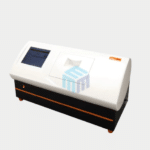
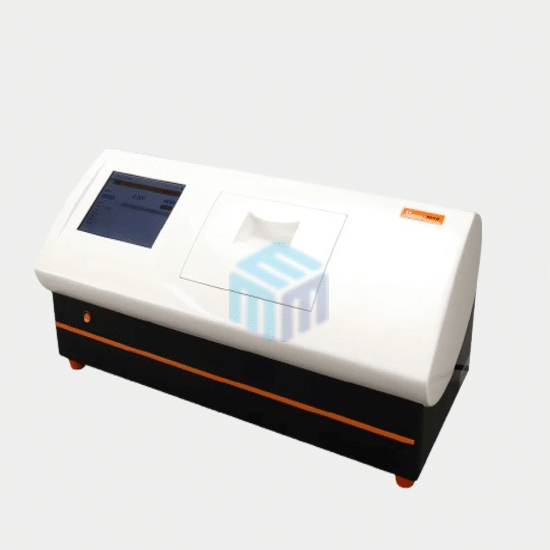
Using the right automatic potentiometric titrator significantly improves analytical reliability compared to manual methods.
Common Causes of Inaccurate Titration Results
Before improving accuracy, it’s important to identify what causes poor titration performance.
- Improper Electrode Maintenance
Dirty or aged electrodes can produce unstable readings and slow response times.
- Calibration Errors
Incorrect calibration directly affects endpoint detection accuracy.
- Inconsistent Sample Preparation
Variations in sample size, temperature, or mixing can alter results.
- Poor Reagent Quality
Expired or contaminated titrants reduce analytical reliability.
- Manual Endpoint Detection Errors
Human interpretation introduces variability, especially in difficult samples.
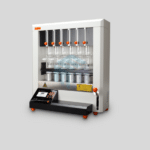
Upgrade to Automatic Titration Equipment
Manual titration methods are more prone to operator-related variability.
Modern automatic titration equipment offers:
- Precise titrant dosing
- Automated endpoint detection
- Digital result recording
- Reduced human error
An advanced automatic potentiometric titrator improves consistency, especially in high-throughput laboratories.
Control Environmental Conditions
Environmental factors can influence pH and potentiometric measurements.
Common issues include:
- Temperature fluctuations
- CO₂ absorption from air
- Electrical interference
Many modern potentiometric titrators include automatic temperature compensation to improve reliability.
Improve Accuracy in Karl Fischer Titration
Moisture determination requires especially high precision.
Karl Fischer Volumetric Titration
Best suited for samples with higher moisture content.
Karl Fischer Coulometric Titration
Ideal for trace moisture analysis.
Using a reliable coulometric KF titrator or system designed for Karl Fischer volumetric titration helps reduce moisture measurement errors.
For sensitive samples, automation significantly improves reproducibility.
Choose the Right Titrator for Your Application
Different laboratories require different systems.
Volumetric Titrator
Suitable for:
- Routine acid-base titration
- Higher concentration samples
- General QC testing
Potentiometric Titrator
Ideal for:
- Precise endpoint determination
- Complex sample matrices
- Automated workflows
Coulometric KF Titrator
Best for:
- Ultra-low moisture analysis
- Pharmaceutical and chemical testing
Selecting the correct system improves both efficiency and analytical accuracy.
Is Price the Most Important Factor?
Many laboratories initially focus on automatic titrator price or potentiometric titrator price, but accuracy and reliability matter far more in the long term.
Investing in high-quality automatic titration equipment often reduces operational costs over time.
Conclusion: Accuracy Starts with the Right System and Good Practices
Improving accuracy in pH and potentiometric titration isn’t just about buying better instruments — it also requires proper maintenance, calibration, and sample handling.
Modern automatic titration equipment, including advanced potentiometric titrators and Karl Fischer systems.
For laboratories focused on precision and compliance, investing in the right titration system is a smart long-term decision.
Looking for reliable automatic titration equipment or potentiometric titrators?
👉 📞 Contact +61-478-594-746 or 📧 email info@mkube.com.au for advanced laboratory solutions across Australia.