
As demand for high-discharge battery packs grows across e-bikes, drones, and electric vehicle (EV) modules, engineers are paying closer attention to something often overlooked—nickel strip layout. While cell chemistry and BMS design get most of the spotlight, the way nickel strips for battery packs are selected and arranged has a direct impact on current flow, heat generation, and overall pack reliability.
In this blog, we’ll explore how nickel strip layout optimisation improves performance in high-current battery systems and what to consider when designing packs using 18650 and 21700 cells.
Why Nickel Strip Layout Matters in High-Discharge Applications
High-discharge battery packs operate under intense electrical and thermal stress. Poor current distribution can lead to:
- Uneven cell loading
- Localised overheating
- Voltage drops under load
- Reduced cycle life
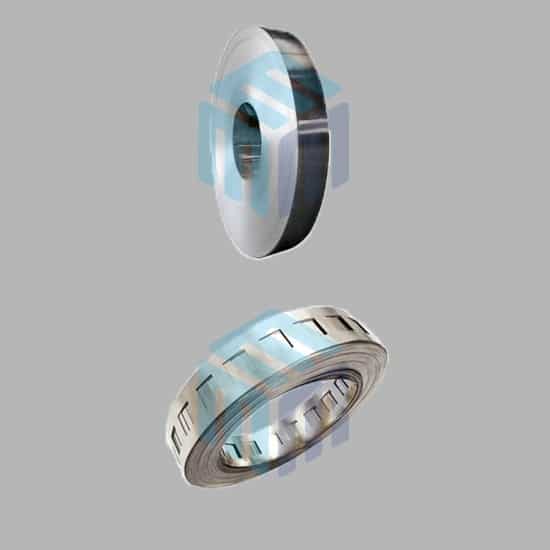
Using the correct nickel strip for battery connection, combined with an optimised layout, ensures current flows evenly across the pack. This is especially critical in applications like drones and EV modules, where rapid power delivery is non-negotiable.
Choosing the Right Nickel Strip Material
Not all nickel strips are created equal. For high-discharge systems, pure nickel strip is strongly preferred over nickel-plated steel.
Pure nickel offers:
- Lower electrical resistance
- Better corrosion resistance
- Stable performance during repeated welding and discharge cycles
For serious applications such as 18650 nickel strip or 21700 nickel strip configurations, pure nickel ensures consistent conductivity and long-term reliability.
Thickness Selection: 0.2 mm vs 0.3 mm Nickel Strip
One of the most common design decisions is selecting the correct strip thickness.
- 0.2 mm nickel strip is typically used for moderate discharge rates, compact packs, or weight-sensitive designs such as drones.
- 0.3 mm nickel strip is better suited for high-current applications like e-bikes and EV modules, where lower resistance and improved heat handling are required.
Choosing the wrong thickness can result in excessive heat buildup or unnecessary material cost, making thickness selection a key part of layout optimisation.
Optimising Nickel Strip Layout for 18650 and 21700 Cells
Cell format plays a major role in layout design.
For 18650 nickel strip for battery welding, engineers often use:
- Parallel strip layouts to balance current
- Wider nickel ribbons for reduced resistance
- Multiple weld points to minimise contact resistance
With 21700 nickel strip, higher capacity and discharge rates demand:
- Wider strip paths
- Shorter current routes
- Symmetrical layouts to prevent hotspot formation
Proper routing of nickel ribbon and nickel tabs ensures that no single cell or strip carries disproportionate load.
Managing Heat Through Smart Strip Design
Heat is the silent killer of battery packs. Even high-quality cells degrade rapidly if thermal management is poor.
Optimised nickel strip for battery packs helps by:
- Reducing resistive heating
- Spreading current more evenly
- Supporting better heat dissipation through the pack structure
In high-power EV modules, layout design often matters as much as cooling systems themselves.
Welding Considerations and Reliability
Spot welding quality directly affects electrical resistance and mechanical stability. Using the correct nickel strip for 18650 battery welding or nickel tab thickness ensures:
- Strong, repeatable welds
- Minimal damage to cell terminals
- Lower long-term contact resistance
Inconsistent layouts can force welds to carry excess current, leading to premature failure—especially under vibration in e-bikes or drones.
Conclusion
In high-discharge battery systems, performance isn’t just about cell chemistry—it’s about how efficiently current moves through the pack. By choosing the right nickel strip, optimising thickness, and designing balanced layouts, manufacturers can significantly improve safety, efficiency, and lifespan.
Whether you’re building battery packs for e-bikes, drones, or EV modules, investing time in nickel strip layout optimisation delivers long-term performance benefits.
Designing high-discharge battery packs?
📞 Contact +61-478-594-746 or 📧 email info@mkube.com.au for reliable pure nickel strip solutions tailored to your application.
References:
1) Impact of Nickel Strip Configurations on Resistance and Voltage Drop in Lithium Ion Battery Packs (ResearchGate / IJISRT)
2) Thermo-electric Modeling and Analysis of Lithium-Ion Battery Pack for E-Mobility (ResearchGate / IJISRT)
3) Degradation in Parallel-Connected Lithium-Ion Battery Packs Under Thermal Gradients (Nature / Communications Engineering)