
If you work in food processing, edible oil refining, confectionery, or quality control labs in Australia, you already know this: fat melting behaviour determines product quality.
Whether it’s margarine spreadability, chocolate snap, or frying oil stability, melting characteristics influence texture, shelf life, and consumer experience. That’s exactly why a melting point apparatus is an essential tool in modern food laboratories.
Let’s break down why melting behaviour matters and how the right melting point instrument improves accuracy and consistency.
What Is the Melting Point of Edible Fats?
The melting point of edible fats is the temperature at which a fat changes from a solid or semi-solid state to a liquid state. Unlike pure substances, most edible fats contain a mixture of different fatty acids and triglycerides, causing them to melt over a temperature range rather than at a single temperature. Understanding the melting point is essential for evaluating product texture, stability, processing performance, and consumer acceptance.
Why Melting Behaviour of Edible Fats Is So Important
Unlike pure chemicals, edible fats don’t have a sharp melting point. Instead, they melt over a temperature range because they contain different triglycerides.
This affects:
- Mouthfeel and texture
- Oxidative stability
- Processing temperature
- Crystallisation behaviour
- Storage performance
For example:
- Cocoa butter must melt near body temperature for proper chocolate texture.
- Frying oils need high thermal stability.
- Bakery shortenings require specific plasticity profiles.
Without precise measurement using reliable melting point equipment, manufacturers risk batch inconsistencies and quality complaints.
What Exactly Does a Melting Point Apparatus Measure?
In food applications, the melting point instrument typically determines:
- Slip melting point (SMP)
- Open capillary melting point
- Clear point
- Dropping point
These values help assess fat purity, blending accuracy, and processing suitability.
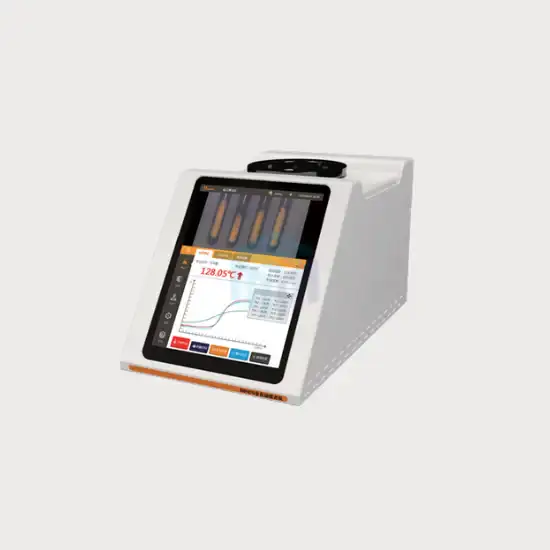
An automatic melting point apparatus improves repeatability by eliminating operator subjectivity especially important in QC labs handling multiple daily samples.
Factors That Affect the Melting Behavior of Edible Fats
Several factors influence how edible fats melt and behave during processing and consumption, including:
- Fatty Acid Composition – Saturated fats generally have higher melting points than unsaturated fats.
- Triglyceride Structure – Different molecular structures affect melting characteristics.
- Degree of Saturation – Higher saturation typically results in a higher melting temperature.
- Processing Conditions – Hydrogenation and fractionation can alter melting behavior.
- Impurities and Additives – Minor components may influence melting performance.
- Storage Conditions – Temperature fluctuations can affect fat crystallization and melting properties.
Melting Points of Common Edible Fats and Oils
The melting point varies significantly depending on the type of fat or oil.
| Edible Fat/Oil | Typical Melting Range |
|---|---|
| Butter | 32–35°C |
| Coconut Oil | 24–26°C |
| Palm Oil | 35–40°C |
| Cocoa Butter | 34–38°C |
| Lard | 30–40°C |
| Margarine | Varies by formulation |
| Sunflower Oil | Below room temperature |
| Olive Oil | Approximately -6 to 6°C |
These melting characteristics play a crucial role in determining product texture, mouthfeel, and processing requirements.
Why Melting Point Testing Matters in Food Manufacturing
Accurate melting point testing helps food manufacturers maintain product quality and consistency throughout production.
Key benefits include:
- Ensuring consistent product texture and mouthfeel.
- Supporting quality control and batch-to-batch consistency.
- Verifying raw material quality.
- Assisting in product formulation and development.
- Evaluating storage and shelf-life performance.
- Meeting industry and regulatory requirements.
- Detecting variations in fat composition.
How to Choose the Right Melting Point Apparatus
Selecting the appropriate melting point apparatus depends on your laboratory’s testing requirements and workflow.
Consider the following factors:
- Temperature Accuracy – Essential for reliable and repeatable results.
- Measurement Range – Ensure compatibility with the fats and oils being tested.
- Automation Features – Automated detection can improve efficiency and reduce operator error.
- Sample Throughput – Important for laboratories processing large numbers of samples.
- Ease of Operation – User-friendly systems help improve productivity.
- Compliance Requirements – Verify support for relevant testing standards and methods.
- Data Recording Capabilities – Useful for quality control documentation and traceability.
Benefits of Using a Melting Point Apparatus for Fat Analysis
A melting point apparatus provides precise and consistent temperature measurements, making it an essential tool for food testing laboratories.
Key benefits include:
- Improved accuracy and repeatability of results.
- Faster and more efficient testing procedures.
- Reduced operator subjectivity and error.
- Enhanced quality control and product consistency.
- Support for food research and product development.
- Better compliance with industry testing standards.
- Increased laboratory productivity and workflow efficiency.
By using a reliable melting point apparatus, food manufacturers and testing laboratories can ensure consistent product quality while streamlining analytical processes.
Challenges in Measuring Edible Fat Melting Points
Fat samples behave differently compared to crystalline chemicals. Common challenges include:
- Gradual softening before full melting
- Polymorphic transitions
- Sample preparation sensitivity
- Operator-dependent interpretation
This is where modern automatic melting point apparatus systems make a difference. They use:
- Digital temperature ramp control
- Optical detection
- High-resolution cameras
- Automated result recording
That means higher precision and reduced human error.
Common Mistakes to Avoid
Using Chemical Melting Protocols for Fats
Fats behave differently and require adapted procedures.
Poor Sample Preparation
Improper filling in capillaries can distort readings.
Ignoring Calibration
Temperature calibration ensures long-term reliability.
Choosing Based Only on Melting Point Apparatus Price
Lower upfront cost may mean lower precision and higher long-term error rates.
Final Thoughts
Understanding the melting behaviour of edible fats isn’t just a laboratory exercise — it directly impacts product quality, consumer satisfaction, and regulatory compliance.
A reliable melting point apparatus allows food manufacturers and research labs to:
- Ensure consistent texture
- Validate oil blending processes
- Maintain export quality standards
- Improve R&D efficiency
If you’re serious about fat analysis accuracy, investing in the right melting point equipment is a smart long-term decision.
Looking to Upgrade Your Fat Testing Lab?
Need a reliable automatic melting point apparatus for edible oil or fat analysis?
👉 📞 Contact +61-478-594-746 or 📧 email info@mkube.com.au today for expert guidance and competitive solutions across Australia.