
Whether in a laboratory, hospital, or manufacturing plant, maintaining spotless equipment is essential for accuracy, safety, and efficiency. Traditional manual scrubbing can be slow, inconsistent, and sometimes damaging. That’s why more facilities are turning to ultrasonic cleaners—advanced machines that deliver deep cleaning with minimal effort.
With options ranging from compact ultrasonic jewellery cleaners to heavy-duty industrial ultrasonic cleaning machines, this technology is changing how Australian industries and labs approach cleaning.
The Science Behind Ultrasonic Cleaning
What Is an Ultrasonic Cleaner?
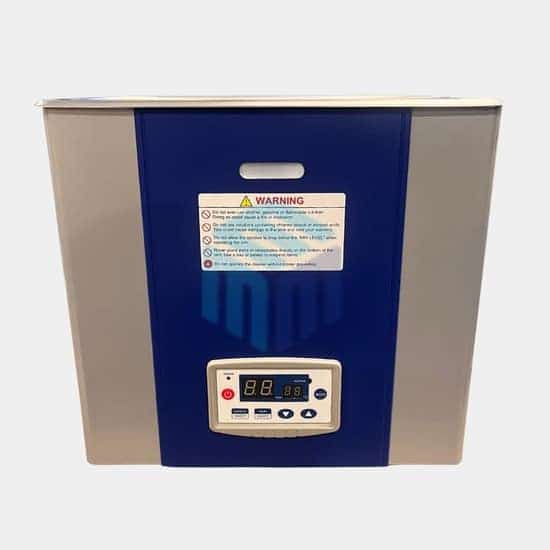
An ultrasonic cleaner is a device that uses high-frequency sound waves to create microscopic bubbles in a liquid solution.
Cavitation: The Key to Deep Cleaning
These bubbles collapse in a process called cavitation, releasing high energy that dislodges dirt, grease, and biological residues—even from hard-to-reach areas where brushes or sprays fail.
Read also: Types of Ultrasonic Cleaners
Key Components of an Ultrasonic Cleaning Machine
- Ultrasonic Generator – produces high-frequency energy.
- Transducers – convert electrical energy into ultrasonic waves.
- Cleaning Tank – often made from stainless steel ultrasonic cleaner chambers to resist corrosion.
- Cleaning Solutions – water-based detergents or solvents tailored to specific contaminants.
Read also: Features of Ultrasonic Cleaners
Ultrasonic Cleaning in Laboratories
Applications in Research and Testing
- Cleaning glassware, pipettes, and flasks.
- Preparing microscope slides without scratches.
- Ensuring analytical instruments are free from residues.
Why Labs Prefer Ultrasonic Cleaners
- Consistent cleaning results.
- Saves staff time compared to manual scrubbing.
- Reduces cross-contamination risk.
If you’re looking for a laboratory ultrasonic cleaning machine, explore our Lab Equipment category.
Ultrasonic Cleaning in Industry
Common Applications
- Automotive – degreasing engine parts, fuel injectors, and carburetors.
- Medical & Dental – pre-sterilization cleaning of surgical tools using ultrasonic cleaners for medical instruments.
- Electronics – safe removal of solder flux and oils.
- Jewellery & Optics – restoring brilliance with ultrasonic jewellery cleaners or a professional jewellery cleaner machine.
Why Industries Use Industrial Ultrasonic Cleaning Machines
- Handles both large and intricate parts.
- Eco-friendly, using fewer chemicals.
- Faster turnaround time compared to manual or chemical cleaning.
If your business needs a commercial ultrasonic cleaner or industrial ultrasonic cleaner, check our Industrial Solutions.
Advantages of Ultrasonic Cleaners
- Deep Cleaning – reaches microscopic crevices.
- Time Efficiency – cleans multiple items simultaneously.
- Cost Savings – reduces labour costs.
- Eco-Friendly – requires less detergent and water.
- Versatility – suitable for glass, ceramics, plastics, and metals
Read also: Benefits and Application of Ultrasonic Cleaner
Limitations and Considerations: Ultrasonic Cleaners
- Not ideal for all materials (e.g., pearls, soft gemstones, porous items).
- Requires periodic maintenance.
- Higher upfront cost compared to manual methods.
Choosing the Right Ultrasonic Cleaner
Factors to Consider
- Tank Size & Capacity – small benchtop vs. large-capacity units.
- Heating Options – improve grease removal.
- Material Compatibility – choose a stainless steel ultrasonic cleaner for durability.
Lab vs. Industrial Cleaners
- Lab Cleaners – compact, programmable, easy to use.
- Industrial Ultrasonic Cleaning Machines – large tanks, heavy-duty operation, higher throughput.
Buying Ultrasonic Cleaners in Australia
If you’re searching for an ultrasonic cleaner for sale, M-Kube makes it easy to buy ultrasonic cleaners online with reliable customer support. Whether you need a professional ultrasonic cleaner for a lab, an industrial ultrasonic cleaner for manufacturing, or a jewellery cleaner machine for precision work, we can help you select the right system.
👉 Explore our https://mkube.com.au/product/ultrasonic-cleaner/
Maintenance & Best Practices
- Replace cleaning solution regularly.
- Avoid overloading the cleaning tank.
- Use baskets for delicate instruments.
- Monitor transducer and generator performance.
Read also: Tips on Checking the Performance of your Ultrasonic Cleaner
Conclusion
Ultrasonic cleaning is no longer just an option—it’s a necessity for modern labs and industries across Australia. With industrial ultrasonic cleaners for heavy-duty applications and compact ultrasonic jewellery cleaners for precision cleaning, these machines deliver efficiency, cost savings, and unmatched cleaning quality.
For Australian labs and industries looking to improve workflows, an ultrasonic cleaner offers the perfect balance of performance, reliability, and return on investment.