
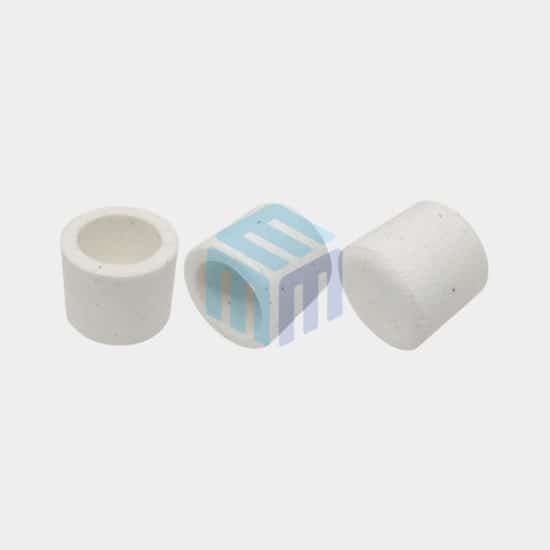
Selecting the right magnesia crucible is essential for ensuring accuracy, durability, and safety in high-temperature and corrosive environments. Whether you’re working in a research lab, metallurgy, or ceramics, the choice of crucible directly affects the performance and purity of your results. In this blog, we’ll guide you through the critical factors to consider—such as temperature range, chemical compatibility, and size—to help you choose the most suitable magnesia crucible for your specific needs.
Why Magnesia Crucible Selection Matters
Selecting the right magnesia crucible is important for achieving reliable performance in high-temperature applications. The correct crucible improves thermal stability, chemical compatibility, and process efficiency while reducing contamination and premature failure risks.
Magnesia crucibles are widely used in metal melting, refractory testing, and laboratory processes because of their excellent resistance to basic slags and high-temperature environments. Choosing the appropriate size, purity, and material compatibility helps improve crucible life and operational performance.
Key Properties of Magnesia Crucibles
Magnesia crucibles offer several properties that make them suitable for demanding thermal applications.
Key properties include:
- High melting point: Suitable for high-temperature operations and metal processing
- Excellent thermal stability: Maintains performance under elevated temperatures
- Good resistance to basic slags: Ideal for steel and refractory applications
- Chemical compatibility: Suitable for specific metal and oxide processing environments
- High refractoriness: Provides durability in severe thermal conditions
These properties make magnesia crucibles a preferred choice for laboratory and industrial high-temperature applications.
Factors to Consider When Selecting a Magnesia Crucible
Selecting the right magnesia crucible for your needs involves evaluating several critical factors, including temperature tolerance, chemical compatibility, and application-specific requirements. Here’s a guide to help you make the best choice:
- Purity of Magnesia
- High-Purity Crucibles (99.5% or above): These are ideal for applications requiring minimal contamination, such as in high-purity metal processing or chemical analysis. High-purity magnesia ensures that the crucible does not introduce impurities into your sample.
- Lower-Purity Crucibles (95-98%): Suitable for less demanding applications where contamination is less of a concern. These are more affordable and are used in less critical processes.
- Temperature Tolerance
- Maximum Operating Temperature: Magnesia crucibles can withstand temperatures up to 2,200°C. Ensure that the crucible’s temperature limit matches or exceeds the temperatures expected in your process.
- For applications involving extreme temperatures, such as high-temperature metal melting, go for the highest-rated magnesia crucibles.
- For lower-temperature applications, such as ceramic synthesis, a standard magnesia crucible may suffice.
- Chemical Compatibility
- Basic Environments: Magnesia crucibles are particularly resistant to attack by basic substances and alkaline fluxes. If your application involves processing alkaline materials, these crucibles are an ideal choice.
- Reactivity with Acids: Magnesia crucibles are less resistant to acidic environments, so avoid using them with acidic materials or highly corrosive substances. If your process involves acids, consider an alternative crucible material like alumina.
- Application Type
- Metal Melting and Casting: Magnesia crucibles are excellent for melting reactive and refractory metals like uranium, thorium, titanium, and platinum. Their low reactivity helps avoid contamination and ensures product purity.
- Ceramic Synthesis: They are well-suited for synthesizing oxides and non-oxide ceramics. The crucible’s thermal stability allows for consistent heating during the firing process.
- Chemical Analysis: For applications requiring trace element analysis or high-purity results, select a high-purity magnesia crucible to minimize contamination.
- Crucible Size and Shape
- Volume Requirements: Choose the size of the crucible based on the volume of material you will be working with. Crucibles come in a variety of sizes, from small volumes for laboratory analysis to larger volumes for industrial-scale processes.
- Shape Considerations:
- Tall Cylindrical Crucibles: Better suited for processes requiring uniform heat distribution over tall objects.
- Shallow, Wide Crucibles: Ideal for applications requiring easy access to the sample or for processes that involve stirring or evaporation.
- Thermal Shock Resistance
- Temperature Cycling: If your process involves rapid temperature changes, ensure the magnesia crucible has good thermal shock resistance. Sudden heating or cooling can cause some crucibles to crack, but magnesia typically handles gradual temperature changes well.
- Mechanical Strength
- While magnesia crucibles are generally durable at high temperatures, their mechanical strength may be lower compared to materials like alumina or zirconia. Consider the physical stress and load that the crucible will undergo in your application.
- For processes with high mechanical loads, select a thicker-walled magnesia crucible.
- Compatibility with Atmosphere
- Oxidizing and Reducing Atmospheres: Ensure that the magnesia crucible can perform well in your specific atmosphere. Magnesia crucibles are stable in both oxidizing and reducing environments, making them versatile for various high-temperature processes.
- Inert Atmospheres: They perform well in inert atmospheres like argon or nitrogen, crucial for processes like metal melting.
- Cost Considerations
- Budget: Higher-purity magnesia crucibles and those designed for extreme temperatures can be more expensive. Consider balancing performance requirements with cost. If your application doesn’t demand the highest purity, opting for a lower-purity magnesia crucible can save money.
- Supplier Quality
- Reputable Suppliers: Work with a reliable supplier known for producing high-quality crucibles. Ensure that the supplier can meet your exact specifications, including purity levels, dimensions, and shape.
- Customization Needs
- If you require non-standard dimensions or specialized crucibles, choose a supplier who offers customization. Custom-designed crucibles can provide the exact size, shape, and properties needed for unique processes. Read also: The Benefits of Using Magnesia Crucibles in High-Temperature Laboratories
Magnesia Crucibles vs Other Crucible Materials
Magnesia crucibles are selected for applications requiring high-temperature resistance and compatibility with basic environments. Compared with other crucible materials, they offer unique chemical and thermal advantages.
| Material | Chemical Resistance | Thermal Performance | Typical Application |
|---|---|---|---|
| Magnesia | Excellent for basic environments | High | Metal melting, refractory testing |
| Alumina | Good | High | Laboratory processing |
| Graphite | Moderate | Excellent | Non-ferrous metal melting |
| Zirconia | Excellent | Very high | Advanced high-temperature processing |
The choice of crucible material depends on process temperature, chemical compatibility, and application requirements.
Chemical Compatibility and Material Selection
Chemical compatibility is an important factor when selecting a magnesia crucible because it directly affects crucible performance and service life.
Basic Slags
Magnesia crucibles offer excellent resistance to basic slags, making them suitable for steel processing and refractory applications.
Acidic Materials
Compatibility with acidic materials should be evaluated carefully, as certain environments may affect performance.
Reactive Metals
Material compatibility should be assessed based on processing temperature and operating conditions to reduce contamination and wear.
Selecting the correct material combination helps improve durability and process efficiency.
Common Applications of Magnesia Crucibles
Magnesia crucibles are widely used in laboratory and industrial high-temperature applications.
Metal Melting
Used for processing metals requiring resistance to high temperatures and basic environments.
Steel Processing
Suitable for steel and refractory industries due to excellent slag resistance.
Refractory Testing
Commonly used for evaluating refractory materials under high-temperature conditions.
Laboratory Furnaces
Applied in laboratory heating and material testing processes requiring thermal stability.
These applications make magnesia crucibles a reliable choice for demanding thermal environments.
Inspection Checklist for Magnesia Crucibles
Regular inspection helps maintain magnesia crucible performance and prevents unexpected failures during high-temperature operation.
✔ Check for surface cracks and microcracks
✔ Inspect edges for chipping or damage
✔ Look for spalling or surface wear
✔ Monitor contamination and residue buildup
✔ Check for deformation or structural changes
✔ Evaluate overall wear condition before reuse
Routine inspection helps improve reliability and extend crucible life.
Service Life Extension Tips for Magnesia Crucibles
Proper handling and operating practices can significantly improve magnesia crucible lifespan.
Best practices include:
- Use controlled heating and cooling cycles
- Ensure chemical compatibility with processed materials
- Handle crucibles carefully to avoid mechanical damage
- Perform regular inspections and maintenance
- Maintain clean operating conditions to reduce contamination
- Avoid exceeding recommended temperature limits
Following these practices helps improve durability and reduce replacement frequency.
Common Mistakes When Selecting Magnesia Crucibles
Incorrect crucible selection can affect performance and reduce service life.
Common mistakes include:
- Ignoring chemical compatibility requirements
- Selecting the wrong crucible size or capacity
- Using incompatible slags or materials
- Operating beyond temperature limits
- Overlooking handling and storage practices
- Choosing material based only on cost considerations
Proper selection improves efficiency, durability, and process performance.
Summary
To select the right magnesia crucible, consider the operating temperature, chemical environment, application type, size, shape, and budget. High-purity magnesia crucibles are ideal for processes requiring low contamination and extreme temperatures, while lower-purity versions are suitable for more general purposes. Matching the crucible to your process ensures optimal performance and longevity.
M-Kube Enterprise is an Australian company catering customized laboratory products, laboratory consumables, and laboratory solutions in Australia, India, the USA, New Zealand, Singapore, Malaysia, South Korea, Dubai, the Philippines, Indonesia, and Vietnam.