
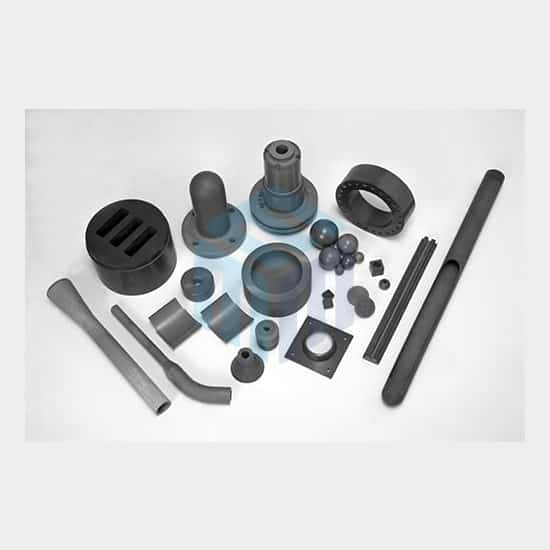
Silicon Carbide (SiC) is one of the most versatile advanced ceramics, valued for its exceptional hardness, high-temperature capability, and corrosion resistance. However, not all SiC is created equal—different manufacturing methods produce distinct grades with unique properties. The three most common forms—Reaction-Bonded SiC (RB-SiC), Sintered SiC (SSiC), and Recrystallized SiC (RSiC)—offer varying performance in terms of strength, density, thermal stability, and cost. Understanding these differences is essential for engineers, manufacturers, and procurement teams looking to select the right material for applications ranging from kiln furniture and mechanical seals to semiconductor processing and high-temperature furnace components. In this guide, we break down each type of SiC, compare their properties, and help you make an informed choice for your specific operational needs.
What Is Silicon Carbide (SiC)?
Silicon carbide (SiC) is a high-performance ceramic material known for its exceptional hardness, high thermal conductivity, excellent wear resistance, and ability to withstand extreme temperatures. Composed of silicon and carbon atoms, SiC is widely used in industries such as metallurgy, semiconductor manufacturing, chemical processing, aerospace, and heat treatment due to its outstanding mechanical and thermal properties.
Silicon carbide is available in several forms, including Reaction Bonded Silicon Carbide (RBSiC), Sintered Silicon Carbide (SSiC), Recrystallized Silicon Carbide (RSiC), and Nitride Bonded Silicon Carbide (NSiC). Each type is manufactured using a different process, resulting in unique characteristics suited for specific industrial applications.
Why Knowing SiC Forms Matters
When selecting a silicon carbide (SiC) ceramic for your application, knowing the differences between its various forms is essential. Variants like reaction-bonded SiC (RB-SiC), sintered SiC (SSiC), and recrystallised SiC (RSiC) each have unique properties that directly affect performance, durability, and cost.
By understanding the forms of silicon carbide, you can make informed choices that maximise efficiency and extend component lifespan—whether in high-temperature furnaces, mechanical seals, or corrosive chemical environments.
Different Forms of Silicon Carbide (SiC) and Their Properties
Silicon Carbide (SiC) is a high-performance ceramic material known for its exceptional hardness, thermal stability, and chemical resistance. It exists in multiple forms, each manufactured through different processes that influence its density, microstructure, and performance. The three main commercial types are Reaction-Bonded SiC (RB-SiC), Sintered SiC (SSiC), and Recrystallized SiC (RSiC).
-
RB-SiC contains residual free silicon, offering good thermal shock resistance at a lower cost.
-
SSiC is fully dense, with superior mechanical strength and wear resistance.
-
RSiC provides excellent high-temperature performance and oxidation resistance.
Understanding these differences is crucial for selecting the right SiC grade for your application.
Manufacturing Processes & Resulting Microstructures
- RBSiC:
Manufactured by forming a carbon-based shape, then infiltrating it with molten silicon. The resulting microstructure contains both SiC grains and residual silicon, offering good machinability and high thermal conductivity. - SSiC:
Produced via high-pressure sintering of ultra-pure SiC powder without additives. The result is a fully dense, fine-grained structure that delivers maximum hardness, strength, and chemical resistance. - RSiC:
Created by firing pure SiC grains at high temperatures, allowing them to bond without additives. This creates a porous yet strong structure, ideal for thermal shock resistance but with lower mechanical strength than SSiC.
Typical Applications of Each SiC Form
- RBSiC Applications: Pump parts, valve components, mechanical seals, heat exchangers, kiln furniture.
- SSiC Uses: High-performance seals, bearings, nozzles, semiconductor wafer handling, chemical processing equipment.
- RSiC Uses: Kiln furniture, rollers, furnace lining, burner nozzles—especially where rapid heating and cooling occur.
Quick Reference Table: SiC Forms Comparison
| Property | RBSiC | SSiC | RSiC |
|---|---|---|---|
| Density | High (with residual silicon) | Very high (fully dense) | Lower (porous) |
| Strength | Moderate | Excellent | Good |
| Wear Resistance | Good | Excellent | Fair |
| Thermal Shock Resistance | Good | Fair | Excellent |
| Chemical Resistance | Good | Excellent | Good |
| Typical Max Temp | ~1380 °C | ~1800 °C | ~1650 °C |
| Cost | Moderate | Higher | Moderate |
How to Choose the Right Silicon Carbide Type for Your Application
Selecting the correct SiC material involves evaluating the specific demands of your operating environment. Key factors to consider include:
-
Operating Temperature: RSiC is ideal for continuous exposure to extreme heat, while SSiC offers excellent stability up to high temperatures.
-
Mechanical Load: SSiC’s high density and strength make it suitable for high-stress, wear-intensive environments.
-
Thermal Shock Resistance: RB-SiC performs well where rapid temperature changes occur.
-
Corrosion and Chemical Resistance: SSiC and RSiC excel in chemically aggressive conditions.
By aligning material properties with application requirements, you can ensure optimal performance and service life.
Manufacturing Process and Types: Silicon Carbide (SiC) Ceramics
Reaction-bonded silicon carbide (RB-SiC), sintered silicon carbide (SSiC), and recrystallized silicon carbide (RSiC) are three different types of silicon carbide (SiC) ceramics , each with its unique manufacturing process and properties. Here’s a comparison of these types:
- Manufacturing Process:
- RB-SiC: This form of SiC is produced by infiltrating molten silicon into a porous carbon preform. The reaction between the silicon and carbon forms silicon carbide.
- SSiC: SSiC is created by sintering or densifying a mixture of silicon carbide powder and additives at high temperatures. The process forms a solid ceramic material.
- RSiC: RSiC is produced through a process known as chemical vapor infiltration. In this method, silicon carbide is deposited on a porous carbon preform using chemical reactions.
- Microstructure:
- RB-SiC: RB-SiC has a two-phase microstructure, consisting of silicon carbide and residual silicon.
- SSiC: SSiC has a homogeneous microstructure, with densely packed silicon carbide grains.
- RSiC: RSiC has a single-crystal or coarse-grained microstructure, depending on the manufacturing process.
- Density and Porosity:
- RB-SiC: RB-SiC generally has a higher porosity compared to SSiC and RSiC, resulting in lower density.
- SSiC: SSiC has higher density due to the densification process during sintering.
- RSiC: RSiC can have varying porosity levels depending on the desired application, but it is generally less porous compared to RB-SiC.
- Mechanical Properties:
- RB-SiC: RB-SiC exhibits good strength and thermal shock resistance but may have lower mechanical properties due to the presence of residual silicon.
- SSiC: SSiC offers excellent mechanical properties, including high strength, hardness, and wear resistance. It also has good thermal conductivity.
- RSiC: RSiC has good mechanical strength, high-temperature stability, and excellent oxidation resistance.
- Applications:
- RB-SiC: RB-SiC is commonly used in applications where thermal shock resistance is important, such as kiln furniture, burner nozzles, and heat exchangers.
- SSiC: SSiC is preferred in applications requiring high wear resistance and mechanical strength, including mechanical seals, bearings, and cutting tools.
- RSiC: RSiC is often used in applications requiring high-temperature stability and resistance to corrosive environments, such as semiconductor processing equipment and furnace components.
- Thermal Conductivity:
- RB-SiC: RB-SiC has relatively lower thermal conductivity compared to SSiC and RSiC, primarily due to the presence of residual silicon.
- SSiC: SSiC exhibits high thermal conductivity, making it suitable for applications requiring efficient heat transfer.
- RSiC: RSiC typically has moderate to high thermal conductivity, depending on the specific manufacturing process and porosity.
- Thermal Expansion:
- RB-SiC: RB-SiC has a lower coefficient of thermal expansion (CTE) compared to SSiC and RSiC.
- SSiC: SSiC has a relatively higher CTE compared to RB-SiC and RSiC.
- RSiC: RSiC exhibits a higher CTE compared to RB-SiC but generally lower than SSiC.
- Thermal Shock Resistance:
- RB-SiC: RB-SiC demonstrates good thermal shock resistance due to its lower thermal conductivity and higher porosity.
- SSiC: SSiC has good thermal shock resistance, allowing it to withstand rapid temperature changes.
- RSiC: RSiC also possesses good thermal shock resistance, making it suitable for high-temperature applications.
- Maximum Operating Temperature:
-
- RB-SiC: RB-SiC can typically withstand temperatures up to around 1500°C (2732°F).
- SSiC: SSiC has a higher maximum operating temperature compared to RB-SiC and can withstand temperatures up to approximately 1600°C (2912°F).
- RSiC: RSiC exhibits excellent high-temperature stability and can endure temperatures exceeding 1600°C (2912°F) depending on the specific grade.
It’s important to note that the specific properties and applications of RB-SiC, SSiC, and RSiC can vary depending on the specific manufacturing methods, variations in composition, and processing parameters used by different manufacturers. Therefore, it is advisable to consult M-Kube team for detailed specifications and recommendations based on your specific needs.
Factors That Affect Silicon Carbide Performance
The performance and service life of silicon carbide components depend on several operating and environmental factors. Understanding these factors helps ensure the right SiC material is selected for the intended application.
- Operating Temperature – Each type of silicon carbide has a recommended maximum operating temperature. Exceeding this limit can affect long-term performance.
- Thermal Shock – Frequent or rapid heating and cooling cycles can influence the material’s resistance to cracking, depending on the SiC grade.
- Chemical Exposure – Corrosive chemicals, acids, alkalis, and reactive gases may impact the durability of certain silicon carbide materials.
- Mechanical Load – High pressure, impact, or continuous mechanical stress can affect the structural integrity of SiC components.
- Wear and Abrasion – Applications involving abrasive particles require silicon carbide with high wear resistance.
- Material Purity and Manufacturing Process – Different manufacturing methods, such as reaction bonding or pressureless sintering, influence density, porosity, strength, and corrosion resistance.
- Operating Environment – Vacuum, inert gas, oxidizing, or reducing atmospheres can affect the long-term stability of silicon carbide.
- Proper Material Selection – Choosing the appropriate SiC grade based on application requirements is essential for maximizing performance and service life.
Considering these factors when selecting silicon carbide components helps improve reliability, reduce maintenance requirements, and ensure consistent performance in demanding industrial environments.
How to Choose the Right Silicon Carbide Type for Your Application
Selecting the correct SiC material involves evaluating the specific demands of your operating environment. Key factors to consider include:
-
Operating Temperature: RSiC is ideal for continuous exposure to extreme heat, while SSiC offers excellent stability up to high temperatures.
-
Mechanical Load: SSiC’s high density and strength make it suitable for high-stress, wear-intensive environments.
-
Thermal Shock Resistance: RB-SiC performs well where rapid temperature changes occur.
-
Corrosion and Chemical Resistance: SSiC and RSiC excel in chemically aggressive conditions.
By aligning material properties with application requirements, you can ensure optimal performance and service life.
Industrial Applications of RB-SiC, SSiC, and RSiC
Different silicon carbide grades are used across a wide range of industries:
-
Reaction-Bonded SiC (RB-SiC): Kiln furniture, heat exchanger components, burner nozzles, and wear parts in moderate stress environments.
-
Sintered SiC (SSiC): Mechanical seals, bearings, chemical pump components, and high-wear nozzles for abrasive media.
-
Recrystallized SiC (RSiC): Semiconductor furnace components, industrial heating elements, and high-temperature kiln supports.
These applications leverage SiC’s unique balance of thermal, mechanical, and chemical properties to achieve reliable, long-term performance in demanding conditions.
Common Mistakes When Choosing SiC Materials
Selecting the right silicon carbide (SiC) material is critical for performance, durability, and safety. However, engineers and buyers often make mistakes that lead to premature failure, higher costs, or poor results. Understanding these common errors can help you avoid costly issues.
1. Choosing the Wrong SiC Type for the Application
Many users select a SiC material based solely on cost or availability without considering its specific properties. For example:
-
RB‑SiC may not withstand extremely high temperatures compared to SSiC or RSiC.
-
Polytype mismatch (α‑SiC vs β‑SiC) can affect mechanical strength and thermal shock resistance.
2. Ignoring Microstructure and Porosity
SiC’s microstructure greatly influences strength, wear resistance, and chemical stability. High porosity may reduce durability, while overly dense materials may be brittle under thermal shock. Failing to consider microstructure can lead to cracking or premature wear.
3. Overlooking Thermal and Chemical Requirements
Different SiC grades perform differently under high temperature, corrosive chemicals, or oxidizing atmospheres. Choosing a grade without checking temperature limits, oxidation resistance, and chemical compatibility can cause catastrophic failures in furnaces, chemical reactors, or industrial processes.
4. Neglecting Manufacturer Quality and Tolerances
Even the same grade of SiC from different manufacturers can vary in purity, density, and consistency. Poor quality control can lead to inconsistent performance, cracking, or contamination in sensitive applications.
5. Focusing Solely on Cost
While low-cost SiC may seem attractive, it often comes at the expense of performance and lifespan. Choosing a slightly higher-grade material upfront can save maintenance, replacement, and downtime costs over time.
6. Not Considering Installation and Handling
SiC materials can be brittle, and improper handling or incorrect mounting may cause cracks, even in the right grade. Ensuring proper installation procedures and handling precautions is essential for reliable performance.
Key Takeaway:
Avoiding these mistakes ensures that your chosen SiC material delivers optimal mechanical, thermal, and chemical performance for your specific application, while minimizing downtime, maintenance, and replacement costs.
Conclusion – Selecting the Best Silicon Carbide Material for Performance Needs
Choosing between RB-SiC, SSiC, and RSiC depends on your operational priorities—whether it’s cost-effectiveness, mechanical strength, or extreme heat resistance. Each form of silicon carbide offers distinct advantages, and understanding these differences helps ensure optimal results in industrial, chemical, and high-temperature applications. For projects requiring precision and durability, partnering with a trusted silicon carbide supplier can provide the technical guidance and material quality needed to achieve superior performance and extended service life.
M-Kube Enterprise is an Australian company catering customized laboratory products, laboratory consumables and laboratory solutions in Australia, New Zealand, Singapore, Malaysia, South Korea, India, Dubai, Philippines, Indonesia and Vietnam. Our team of experts across different platforms can discuss and customize your requirements as per your needs.
Please reach out to us on info@mkube.com.au or call us on +61-478-594-746 to discuss your projects.