
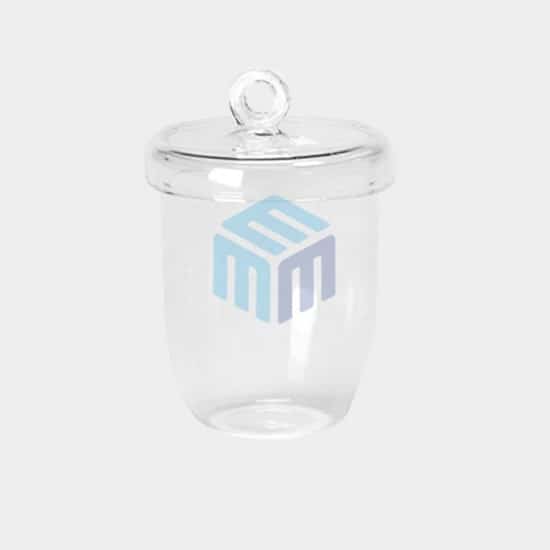
In the rapidly evolving worlds of semiconductors and solar photovoltaic (PV) technology, precision, purity, and reliability are non-negotiable. At the heart of these high-tech industries lies a critical component often overlooked by many: the high-purity quartz crucible. Renowned for its exceptional thermal stability, chemical inertness, and ultra-low contamination levels, high-purity quartz crucibles provide the ideal environment for melting, crystal growth, and material processing. Whether it’s the production of monocrystalline silicon ingots for solar cells or semiconductor wafers for electronics, these crucibles ensure that materials maintain their integrity and performance at every stage of manufacturing.
This blog explores the vital role of high-purity quartz crucibles, their unique properties, and why they are indispensable for achieving high-quality, defect-free semiconductors and solar PV products.
When it comes to high-precision, high-temperature processes in the semiconductor and solar photovoltaic (PV) industries, high-purity quartz crucibles are an indispensable component. Their unmatched purity, thermal resistance, and chemical stability make them the gold standard for crystal growth, wafer production, and silicon processing.
What Is a High-Purity Quartz Crucible?
A high-purity quartz crucible is a container made from fused quartz (SiO₂), with purity levels typically exceeding 99.99%. Fused quartz crucibles are designed to handle extremely high temperatures while maintaining a contaminant-free environment—critical in industries where material purity is non-negotiable.
Why Quartz Crucibles Are Essential in the Semiconductor Industry
In semiconductor fabrication, ultra-pure silicon crystals must be grown using the Czochralski (CZ) process. During this process, molten silicon is held in a quartz boat crucible while a seed crystal is slowly pulled from the melt.
Quartz is ideal for this due to:
- Minimal impurity levels that won’t dope or degrade the silicon
- High thermal endurance, resisting temperatures above 1400°C
- Dimensional consistency, ensuring predictable results
Without high-purity quartz crucibles, producing defect-free wafers for chips and processors would be virtually impossible.
Role of Quartz Crucibles in Solar Photovoltaic (PV) Applications
In the solar PV industry, mono-crystalline and polycrystalline silicon ingots are manufactured using fused quartz crucibles. These ingots are sliced into wafers, forming the base of most solar panels.
Key benefits in PV use:
- Cost-effective scalability
- Resistance to solar-grade silicon contaminants
- Reusable for multiple casting cycles (with care)
High-purity quartz crucibles directly contribute to higher energy yields and longer-lasting solar panels. Read also: Benefits and Uses of Quartz Crucibles
Comparing Quartz Grades: Fused Silica vs Synthetic vs High-Purity
Selecting the right quartz grade is critical for achieving optimal performance in semiconductor and solar PV manufacturing. While all quartz materials share high temperature resistance and chemical stability, their purity levels, production methods, and performance characteristics differ significantly.
Fused Silica
- Produced by melting natural quartz
- Good thermal shock resistance
- Moderate impurity levels (trace metal content possible)
- Cost-effective for general high-temperature applications
Best for: Standard industrial processes where ultra-low contamination is not critical.
Synthetic Quartz
- Manufactured from high-purity chemical precursors
- Extremely low metallic impurities
- High optical transparency and uniform structure
- Higher cost compared to fused silica
Best for: Semiconductor processes requiring tight contamination control and consistent material structure.
High-Purity Quartz
- Specially refined to achieve ultra-low impurity levels (very low ppm of Fe, Al, Na)
- Controlled OH content for optimized optical and thermal properties
- Superior chemical stability in high-temperature silicon melting
Best for: Semiconductor wafer production and high-efficiency solar PV crystal growth where contamination directly impacts yield and performance.
Key Takeaway
Fused silica offers cost efficiency, synthetic quartz delivers structural uniformity, and high-purity quartz provides the lowest contamination risk. The correct choice depends on the application’s tolerance for impurities, thermal demands, and production quality requirements.
High-Purity Quartz Crucible Comparison Table
Selecting the right quartz crucible depends on your application’s purity requirements, operating temperature, and manufacturing process. The table below compares common types of quartz crucibles used in semiconductor and solar PV industries.
| Feature | High-Purity Quartz Crucible | Synthetic Quartz Crucible | Standard Fused Quartz Crucible |
|---|---|---|---|
| Purity Level | Very High | Ultra-High | High |
| Contamination Risk | Very Low | Extremely Low | Moderate |
| Thermal Stability | Excellent | Excellent | Very Good |
| Chemical Resistance | Excellent | Excellent | Good |
| Bubble & Inclusion Content | Low | Very Low | Moderate |
| Typical Applications | Semiconductor crystal growth, Solar PV | Advanced semiconductor manufacturing | General laboratory and industrial applications |
| Cost | High | Highest | Moderate |
Summary: High-purity and synthetic quartz crucibles are preferred for semiconductor and solar PV manufacturing because they minimize contamination and provide consistent performance during high-temperature silicon processing.
Key Properties of High-Purity Quartz Crucibles
High-purity quartz crucibles offer excellent thermal stability, low thermal expansion, and high resistance to chemical corrosion. Their exceptional purity minimizes contamination, making them ideal for high-temperature applications like semiconductor and photovoltaic manufacturing.
High Thermal Resistance
Fused quartz crucibles can withstand temperatures over 1700°C, making them suitable for the extreme demands of crystal growth and metal melting.
Chemical Inertness
Quartz is resistant to most acids, alkalis, and fluxes, ensuring your melt remains pure throughout the process.
Dimensional Stability
Even under thermal cycling, quartz crucibles maintain shape, reducing stress points and increasing operational reliability.
These key properties make high-purity quartz crucibles indispensable for maintaining material integrity, ensuring precise processing, and achieving superior results in semiconductor and solar PV applications.
Benefits of Using Quartz Crucibles in High-Temperature Environments
Quartz crucibles provide excellent thermal shock resistance and can withstand high temperatures without deforming or contaminating the contents. Their transparency and chemical inertness make them ideal for precise, clean processes in high-temperature environments.
- Ultra-clean processing for semiconductors and PV materials
- Low thermal expansion, minimising risk of cracks or deformation
- Excellent insulation, reducing heat loss and improving efficiency
- Non-reactive and transparent, making visual monitoring possible
These qualities make quartz crucibles superior for both research and large-scale production.
Factors That Affect Quartz Crucible Performance
The performance and lifespan of a quartz crucible depend on several operating and material-related factors.
- Quartz Purity – Higher purity reduces contamination and improves crystal quality.
- Operating Temperature – Excessive temperatures can shorten crucible life and affect structural stability.
- Heating and Cooling Rates – Rapid temperature changes may cause thermal stress or cracking.
- Thermal Shock – Sudden heating or cooling can damage the crucible.
- Wall Thickness – Uniform wall thickness ensures even heat distribution and better durability.
- Chemical Exposure – Contact with reactive chemicals or impurities may reduce crucible performance.
- Silicon Melt Quality – Impurities in molten silicon can accelerate crucible wear.
- Handling Practices – Improper handling can introduce chips, cracks, or contamination.
Controlling these factors helps maximize crucible performance and improve production consistency.
Comparing Quartz Crucibles with Other Crucible Materials
When selecting a crucible for high-temperature applications, it’s important to understand how different materials perform under various conditions. Comparing quartz crucibles with alternatives like alumina, graphite, or ceramic helps determine the best fit for specific thermal, chemical, and purity requirements.
Quartz vs. Alumina
- Quartz offers higher purity and transparency; ideal for semiconductor processes.
- Alumina provides better mechanical strength but may introduce impurities in ultra-pure environments.
Quartz vs. Graphite
- Quartz is chemically inert; graphite is more thermally conductive but prone to oxidation.
- Graphite is better for metal casting, while quartz is preferred in silicon processing.
Quartz vs. Silicon Carbide
- SiC crucibles are stronger and last longer in metal foundries.
- Quartz crucibles excel where ultra-high purity is essential (e.g., crystal growth, photovoltaics).
| Crucible Material | Strengths | Limitations / Considerations | Best Applications |
|---|---|---|---|
| Quartz | Ultra-high purity, chemically inert, transparent | Lower mechanical strength, less thermally conductive than graphite or SiC | Semiconductor wafer growth, solar PV, crystal growth, ultra-pure lab processes |
| Alumina | High mechanical strength, stable at high temperatures | May introduce impurities in ultra-pure environments | High-temperature chemical processes, general lab furnaces |
| Graphite | Excellent thermal conductivity, strong under certain conditions | Prone to oxidation at high temps, reactive with some chemicals | Metal casting, high-temp furnaces where purity is less critical |
| Silicon Carbide (SiC) | Very strong, long-lasting, resistant to thermal shock | Higher cost, may not meet ultra-purity requirements | Metal foundries, high-temperature industrial processes, general refractory applications |
Key Takeaways:
-
Quartz is preferred where purity is critical, even if mechanical strength is lower.
-
Alumina works well when mechanical durability is prioritized over ultra-purity.
-
Graphite and SiC excel in metal and industrial high-temp applications but are less suitable for semiconductor or PV production.
Quartz Crucible Selection Criteria for Semiconductor & PV Industry
Selecting the right quartz crucible is critical for achieving high-quality silicon growth in semiconductor and solar photovoltaic (PV) manufacturing processes. The performance of the crucible directly influences crystal purity, defect density, and overall production yield.
Key selection criteria include:
- Purity level (SiO₂ content): High-purity quartz (>99.99%) is essential to minimize metallic contamination that can affect silicon crystal quality and electrical performance.
- OH (hydroxyl) content: Controlled OH levels help balance thermal stability and optical clarity while reducing unwanted reactions during high-temperature processing.
- Bubble and inclusion density: Low bubble content ensures uniform thermal behavior and reduces weak points that can lead to cracking or failure.
- Wall thickness and uniformity: Consistent thickness improves mechanical strength and ensures stable heat distribution during crystal growth.
- Thermal shock resistance: The crucible must withstand rapid temperature changes during heating and cooling cycles in the Czochralski process.
- Inner surface quality: A smooth and defect-free inner surface reduces contamination risk and improves melt stability.
- Compatibility with process conditions: The crucible must match furnace design, temperature range, and pulling speed requirements in semiconductor and PV applications.
Careful evaluation of these parameters ensures stable operation, higher crystal yield, and improved efficiency in both semiconductor wafer production and solar cell manufacturing.
Common Mistakes in Quartz Crucible Selection
Incorrect selection of quartz crucibles can lead to contamination issues, reduced crystal quality, and premature failure during semiconductor and solar PV manufacturing processes. Many of these problems arise from overlooking key material and process requirements.
Common mistakes include:
- Choosing based only on cost: Lower-grade crucibles may contain higher impurity levels, increasing the risk of silicon contamination and reduced wafer performance.
- Ignoring purity specifications: Failing to select high-purity (>99.99% SiO₂) crucibles can introduce metallic impurities that affect crystal growth stability.
- Overlooking OH content: Incorrect hydroxyl levels can negatively impact thermal behavior and increase susceptibility to defects during high-temperature operation.
- Using improper crucible size: A mismatch between crucible dimensions and furnace design can cause uneven heating and unstable melt conditions.
- Ignoring bubble and inclusion quality: High bubble density weakens structural integrity and increases the risk of cracking under thermal stress.
- Neglecting thermal cycle requirements: Selecting crucibles not suited for repeated heating and cooling cycles can significantly reduce service life.
- Overlooking application-specific needs: Using general-purpose quartz instead of semiconductor-grade material can reduce efficiency and yield.
Proper evaluation of material quality, purity, and process compatibility is essential for ensuring reliable performance and high-quality silicon production.
Common Problems with Quartz Crucibles and How to Prevent Them
Common challenges with quartz crucibles include thermal shock, contamination, and gradual degradation at high temperatures. To maintain them, avoid rapid temperature changes, handle with clean tools, and regularly inspect for cracks or residues to extend their lifespan and ensure consistent performance.
Challenges:
- Fragility under rapid thermal shock
- Silica layer degradation over multiple uses
- Risk of contamination from handling
Maintenance Tips:
- Preheat slowly to avoid thermal cracks
- Clean only with approved solvents and tools
- Avoid mechanical abrasion or scraping
Proper handling extends the crucible’s lifespan and maintains purity across batches.
When Should You Replace a Quartz Crucible?
Quartz crucibles should be replaced when signs of wear begin to affect process quality, safety, or production efficiency.
Replace the crucible if you observe:
- Visible Cracks or Fractures on the inner or outer surface.
- Severe Devitrification that reduces transparency or structural strength.
- Excessive Wall Thinning due to prolonged use.
- Heavy Surface Contamination that cannot be removed through cleaning.
- Bottom Wear or Deformation affecting stability.
- Large Chips Along the Rim that compromise safe handling.
- Declining Product Quality caused by contamination or crucible degradation.
- Manufacturer’s Recommended Service Life has been reached.
Timely replacement helps maintain consistent crystal growth, reduce contamination risks, and improve manufacturing efficiency.
Common Mistakes to Avoid When Using Quartz Crucibles
Avoiding common operational mistakes can significantly extend the service life of quartz crucibles and improve process reliability.
- Heating the Crucible Too Quickly – Rapid temperature increases can cause thermal stress.
- Cooling Too Rapidly – Sudden cooling may lead to cracking or structural damage.
- Handling Without Proper Care – Impacts and rough handling can chip or fracture the crucible.
- Using Contaminated Raw Materials – Impurities can reduce crucible life and affect product quality.
- Improper Cleaning Techniques – Abrasive tools or harsh chemicals may damage the quartz surface.
- Operating Beyond Recommended Temperatures – Excessive heat accelerates wear and devitrification.
- Skipping Routine Inspections – Minor defects can develop into major failures if left unnoticed.
- Using the Wrong Crucible for the Application – Selecting an unsuitable crucible can reduce performance and service life.
Following proper operating, handling, and maintenance practices helps maximize quartz crucible lifespan while ensuring consistent performance in semiconductor and solar PV manufacturing.
How to Extend the Life of a Quartz Crucible
Proper handling and storage of quartz crucibles is essential to maintain their purity, structural integrity, and thermal performance. Since quartz is highly sensitive to mechanical stress and contamination, even small mistakes can reduce its lifespan or cause failure during high-temperature use.
-
Wear clean gloves: Prevent oils, dust, and contamination.
-
Avoid impacts: Even small drops can cause micro-cracks.
-
Store in a clean, dry place: Keep away from dust and humidity.
-
Protect from chemicals: Avoid acids, alkalis, and corrosive fumes.
-
Don’t stack carelessly: Use separators if stacking is necessary.
-
Inspect before use: Check for cracks, chips, or contamination.
-
Use proper packaging: Protect during transport with cushioning.
👉 Key point: Careful handling and clean storage significantly extend crucible life and performance.
Industries That Rely on High-Purity Quartz Crucibles
High-purity quartz crucibles are essential in industries such as semiconductor manufacturing, solar photovoltaic production, and optical fiber fabrication. These sectors rely on their thermal stability and purity to ensure precise, contamination-free processing of sensitive materials.
Semiconductor Fabrication Plants
Used in CZ crystal growth, epitaxial deposition, and diffusion processes.
Solar Panel Manufacturing Units
Key to casting solar-grade silicon ingots with low contamination risk.
Optical Component Producers
Used in high-purity glass melting for lenses, waveguides, and fibre optics.
High-purity quartz crucibles are critical across industries, enabling precise material processing, high-quality production, and reliable performance in sectors like semiconductors, solar PV, and advanced materials.
Conclusion:
In conclusion, high-purity quartz crucibles play a critical role in enabling the precision and efficiency demanded by both the semiconductor and solar photovoltaic industries. Their exceptional thermal stability, chemical resistance, and ultra-low impurity levels make them indispensable for processes like silicon crystal growth, where even the slightest contamination can impact performance and yield. As global demand for advanced electronics and clean energy continues to rise, the importance of reliable, high-quality materials like quartz crucibles will only grow. Investing in superior crucible technology not only enhances production outcomes but also supports innovation and sustainability across these rapidly evolving sectors.