
In laboratory environments, precision, consistency, and reliability in thermal processes are non-negotiable. Convection ovens have become an indispensable tool for researchers, scientists, and quality control teams due to their ability to deliver uniform heating through advanced fan-assisted air circulation. Whether it’s drying samples, curing polymers, sterilizing instruments, or conducting controlled heat treatments, a well-engineered convection oven ensures reproducible results with minimal energy waste. Unlike conventional heating devices, laboratory-grade convection ovens offer precise temperature control, rapid heat recovery, and consistent airflow — making them ideal for applications that demand accuracy and repeatability. In this blog, we explore the core benefits, diverse applications, and essential features that make convection ovens a critical asset for modern laboratories.
What Is a Convection Oven?
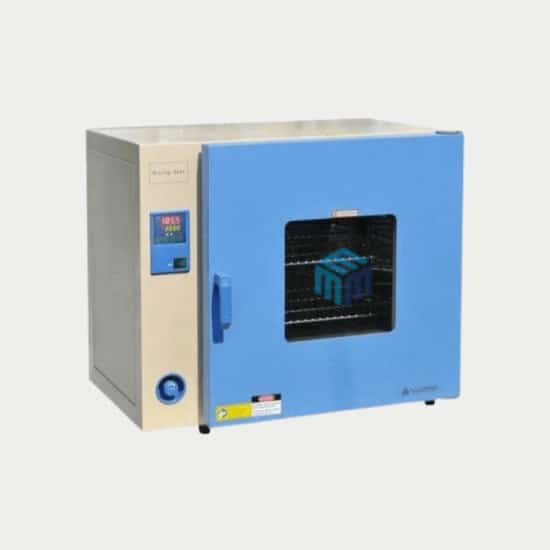
A convection oven is a thermal processing device that uses a built-in fan and exhaust system to circulate hot air uniformly around the chamber. This design eliminates temperature gradients and ensures that every part of the load is exposed to the same heat intensity. In laboratory-grade convection ovens, the airflow is precisely calibrated to maintain stable conditions for extended periods, reducing the risk of overheating or cold spots. This makes them ideal for processes like drying, curing, and sterilizing, where temperature accuracy directly impacts the quality and reliability of results. Compared to conventional static ovens, convection ovens achieve faster heat transfer, shorter process times, and improved energy efficiency.
Key Features of Lab-Grade Convection Ovens — Safety, Control & Energy Savings
Modern laboratory convection ovens are designed with features that go beyond basic heating. Key specifications include:
-
Digital PID Temperature Controllers for precise and stable heat regulation.
-
Over-Temperature Protection Systems to prevent sample or equipment damage.
-
Uniform Airflow Design to eliminate hot and cold zones.
-
Energy-Efficient Insulation to maintain chamber temperature with minimal power consumption.
-
Corrosion-Resistant Interiors to withstand repeated heating cycles and chemical exposure.
These features ensure that the oven not only performs consistently but also complies with laboratory safety standards and long-term operational reliability.
Benefits of a Convection Oven in Labs
Convection ovens offer significant advantages in laboratory environments where precision and consistency are crucial. Here are the benefits of a convection oven in labs:
- Uniform Heat Distribution:
- The built-in fan circulates hot air evenly, ensuring consistent temperatures throughout the chamber, which is critical for applications requiring precise, uniform heating.
- Reduced Drying Time:
- Convection ovens allow for faster drying times by moving heated air across samples. This benefit makes them efficient for drying, curing, and dehydration processes in labs.
- Temperature Stability and Control:
- Laboratory convection ovens are designed with precise temperature controls, allowing for stable, consistent heating. This is essential for repeatable results and minimizes errors in sensitive applications.
- Energy Efficiency:
- By reaching and maintaining desired temperatures quickly and consistently, convection ovens in labs are more energy-efficient than conventional ovens, saving time and resources.
- Enhanced Safety Features:
- Many lab-grade convection ovens include safety features such as over-temperature alarms, automatic shut-off, and heat-resistant doors, which help reduce the risk of accidents in laboratory environments.
Uses of Convection Ovens in Labs
Convection ovens are widely used in labs for drying glassware, curing materials, sterilizing instruments, and conducting thermal testing. Here are the uses of convection oven in labs:
- Drying and Dehydration:
- Convection ovens are widely used to dry samples, glassware, or equipment by evaporating moisture quickly and evenly, essential in preparing samples for weighing or further analysis.
- Curing and Polymerization:
- In material science and chemistry labs, convection ovens are used to cure polymers, adhesives, and coatings, which requires precise, consistent heat to achieve optimal material properties.
- Baking and Aging:
- Convection ovens help simulate aging by exposing materials to specific temperatures over time, useful in testing the durability and longevity of products such as rubber, plastics, and coatings.
- Sterilization:
- Used to sterilize non-flammable equipment, tools, and glassware by heating to temperatures that destroy microorganisms. Convection ovens are an alternative to autoclaves for items sensitive to moisture.
In the context of a convection oven, these processes refer to how the oven is used to alter the properties of materials through controlled heating and cooling. Here’s a quick breakdown:
- Annealing and Heat Treatment:
- Metals, ceramics, and alloys undergo annealing in convection ovens to relieve internal stress, enhance ductility, and alter mechanical properties, crucial for applications in metallurgy and materials research.
- Evaporation of Solvents:
- Labs use convection ovens to evaporate solvents safely from chemical mixtures. This is especially beneficial in preparing samples for qualitative and quantitative analysis.
- Moisture Content Analysis:
- Convection ovens are commonly used to measure moisture content in various materials. Samples are dried at controlled temperatures to constant weight, allowing accurate measurement of residual moisture.
- Sample Pre-Treatment:
- In analytical labs, convection ovens pre-treat samples by removing moisture, and stabilizing them for testing in procedures like chromatography, mass spectrometry, and elemental analysis.
When Not to Use Convection Ovens in Labs
Convection ovens may not be suitable for highly volatile materials or samples sensitive to oxidation due to the circulating air, which can encourage reactions. In such cases, vacuum ovens or inert gas purged systems are preferable.
In summary, laboratory convection ovens provide reliable, even heat for drying, curing, sterilizing, and other applications that require precise temperature control, making them indispensable for research, quality control, and analytical laboratories.
M-Kube Enterprise is an Australian company catering customized laboratory products, laboratory consumables, and laboratory solutions in India, Australia, the USA, New Zealand, Singapore, Malaysia, South Korea, Dubai, the Philippines, Indonesia, and Vietnam.
Why M-Kube Convection Ovens Stand Out — Uniform Heating & Global Laboratory Applications
M-Kube’s range of convection ovens is engineered for professional laboratory use, combining precision heating with robust construction. Their fan-assisted airflow design ensures uniform temperature distribution across every shelf, even under heavy loads. With temperature stability that meets stringent international lab standards, these ovens are trusted by research institutions, material testing labs, and industrial quality control facilities worldwide. M-Kube also offers customization options for chamber size, temperature range, and control interfaces, ensuring each unit is perfectly matched to the client’s specific process requirements.
Summary: Making Convection Ovens Integral to Lab Workflow — Efficiency, Precision, Versatility
Convection ovens have proven to be a cornerstone in laboratory thermal processing, offering unmatched consistency, faster turnaround times, and energy efficiency. By understanding their benefits, applications, and limitations, laboratories can integrate them into workflows to improve productivity and ensure repeatable results. M-Kube’s lab-grade convection ovens combine technical precision with operational safety, making them an essential investment for research and industrial environments seeking reliable heat treatment solutions.