

In today’s advanced thermal processing industries, maintaining consistent high temperatures with reliability and efficiency is non-negotiable. This is where molybdenum disilicide (MoSi₂) heating elements prove their exceptional value. Known for their remarkable ability to operate in temperatures up to 2623 °C, excellent oxidation resistance, and long service life, MoSi₂ heating elements have become a preferred choice in a wide range of furnace applications. From sintering ceramics and heat treating metals to processing glass and specialty materials, these elements enable precise, stable heating even under demanding conditions. In this blog, we’ll explore the diverse applications and key advantages of molybdenum disilicide heating elements, and why they continue to be a cornerstone in modern high-temperature furnace technology.
Applications of Molybdenum Disilicide Heating Elements:
Molybdenum disilicide (MoSi₂) heating elements are widely used in high-temperature furnaces for sintering ceramics, firing glass, and heat treating specialty alloys. Their ability to maintain stable temperatures in oxidizing atmospheres makes them ideal for industries requiring precise, reliable, and energy-efficient thermal processing.
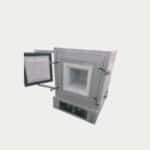
- High-Temperature Furnaces: MoSi2 heating elements are extensively used in high-temperature industrial furnaces, including those for heat treatment, sintering, annealing, and ceramics firing, where temperatures can range from 1,200°C to 2623°C (2,192°F to 3,272°F).
- Heat Treatment of Metals: These heating elements are used in the heat treatment of various metals, including steel and alloys, to improve their mechanical properties, such as hardness and strength.
- Ceramics and Glass Manufacturing: MoSi2 heating elements are applied in the production of ceramics and glass, ensuring uniform and precise heating during the firing and annealing processes.
- Semiconductor Processing: In semiconductor manufacturing, MoSi2 heating elements are used for high-temperature processes such as oxidation, annealing, and diffusion of silicon wafers.
- Research and Laboratory Furnaces: They are employed in laboratory and research furnaces for experiments and material testing that require high-temperature and precise temperature control.
Advantages of Molybdenum Disilicide Heating Elements
MoSi₂ heating elements offer exceptional oxidation resistance and can operate continuously at temperatures up to 2623 °C, ensuring long service life and stable performance. They also provide rapid heat-up rates and energy efficiency, making them a cost-effective choice for demanding high-temperature applications.
- High-Temperature Capability: MoSi2 heating elements can operate at extremely high temperatures, making them suitable for applications where heating to very high levels is required.
- Rapid Heating and Cooling: They offer excellent thermal responsiveness, allowing for quick heating and cooling cycles, which can enhance process efficiency.
- Long Service Life: MoSi2 heating elements have a long operational lifespan, resulting in less frequent replacements and reduced downtime.
- Uniform Heating: These elements provide even and consistent heat distribution, ensuring materials are heated uniformly and preventing hot spots within the furnace.
- High Radiant Efficiency: MoSi2 heating elements emit radiant heat, which is energy-efficient and can provide direct and rapid heating to materials.
- Low Thermal Mass: MoSi2 elements have a low thermal mass, which allows for precise and efficient temperature control, reducing overshooting and undershooting of set temperatures.
- Resistance to Oxidation: MoSi2 heating elements form a protective layer of silicon dioxide (SiO2) upon oxidation, which protects the underlying material from further degradation. This self-healing property is particularly advantageous.
- Chemical Inertness: They are chemically inert and can operate in various atmospheres, including reducing, oxidizing, and inert gases.
- Low Maintenance: MoSi2 heating elements require minimal maintenance, which reduces operating costs and minimizes downtime.
- Compatibility with Different Atmospheres: They can operate in a range of atmospheres, including air, nitrogen, argon, and vacuum, making them versatile for various applications.
- Good Mechanical Strength: MoSi2 heating elements have good mechanical strength and can withstand mechanical shocks and vibrations.
In summary, Molybdenum Disilicide heating elements are crucial components in high-temperature industrial and laboratory furnaces. Their exceptional temperature resistance, longevity, uniform heating, chemical inertness, and low thermal mass make them well-suited for a wide range of applications in various industries where precise and high-temperature heating is required.
Conclusion:
Molybdenum disilicide (MoSi₂) heating elements have become essential to modern high-temperature furnace operations, thanks to their unique combination of durability, exceptional oxidation resistance, and ability to perform reliably at temperatures reaching 2623 °C. From sintering advanced ceramics to processing glass and specialty metals, their applications span industries that demand both precision and efficiency. By leveraging the advantages of MoSi₂ heating elements, manufacturers can achieve superior product quality, reduced maintenance costs, and long-term energy savings—making them a smart investment for any facility aiming to excel in high-temperature processing.