
In industries where precision, purity, and performance are non-negotiable, Original Equipment Manufacturers (OEMs) are shifting from traditional glass materials to customized quartz products. The move toward custom quartz fabrication isn’t just a trend—it’s a technological evolution that supports greater design flexibility, higher thermal tolerance, and long-term durability.
From semiconductor fabrication to analytical instrumentation applications, custom quartz components offer unparalleled benefits. Let’s explore why OEMs are increasingly choosing quartz over standard glass and how partnering with a reliable Customized Quartz Products Supplier can make a world of difference.
Understanding the Superiority of Quartz Over Standard Glass
Before diving into the advantages of customization, it’s essential to understand why quartz stands out compared to ordinary glass.
Thermal and Mechanical Advantages
Quartz, especially fused silica, has an exceptionally low coefficient of thermal expansion, meaning it can withstand extreme temperature fluctuations without cracking or deforming. In contrast, standard borosilicate or soda-lime glass struggles with sudden temperature changes, leading to stress fractures and breakage.
This makes custom quartz tubes and custom quartz rods ideal for high-temperature furnaces, semiconductor wafer processing, and analytical equipment that require both transparency and stability.
Superior Chemical and Optical Purity
Quartz exhibits outstanding chemical inertness, resisting corrosion from acids and alkalis that would typically degrade glass components. Furthermore, its high optical transmittance in ultraviolet (U.V) and infrared (IR) ranges makes it suitable for applications in optics, photonics, and spectroscopy.
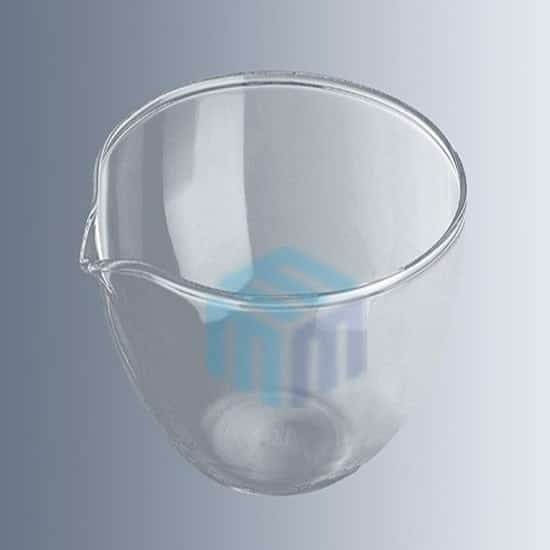
These unique properties make custom quartz plates and custom quartz crucibles essential in industries where purity and precision directly affect performance
Benefits of Custom Quartz Solutions for OEM Applications
When OEMs opt for Customized Quartz Products over off-the-shelf glass components, they gain access to performance-driven engineering tailored to their exact operational needs.
- Precision Engineering and Dimensional Control
Custom quartz fabrication allows for micron-level dimensional accuracy—critical for applications such as semiconductor wafer carriers, optical cells, and diffusion tubes. Manufacturers can specify the shape, size, and tolerance levels required for seamless integration into OEM equipment.
Modern custom quartz components are fabricated using CNC machining, laser cutting, and flame polishing, ensuring perfect consistency across large production batches.
- Material Customization for Performance Optimization
Not all quartz materials are identical. Depending on the application, OEMs can choose from various quartz grades—like GE214, JGS2, and JGS3—each offering different levels of purity, UV transmission, and structural properties.
By working with customized quartz tube suppliers, manufacturers can ensure that the selected grade aligns with specific process environments—whether for UV curing systems, vacuum chambers, or analytical instruments.
- Enhanced Durability and Reduced Maintenance Costs
Custom quartz designs provide longer component life cycles compared to standard glass parts. With better resistance to heat, shock, and chemical attack, OEMs experience fewer breakdowns and maintenance intervals, leading to improved operational uptime and cost savings.
Additionally, the durability of Silicon dioxide-based quartz ensures reduced contamination risk, an essential factor for cleanroom and high-vacuum applications.
- Design Flexibility for Complex Geometries
Unlike standard glass, which often comes in fixed shapes and sizes, custom quartz fabrication enables intricate geometries, drilled holes, and specialized surface finishes. This level of flexibility allows OEMs to create innovative designs without compromising material strength or optical clarity.
From custom quartz crucibles used in crystal growth to precision-ground quartz plates in analytical equipment, design customization empowers engineers to meet exact technical requirements.
- Compatibility with Advanced Manufacturing Processes
As industries adopt automation, AI-based quality control, and cleanroom manufacturing, the need for high-precision quartz products grows. Custom quartz components are manufactured under controlled environments to meet ISO and ASTM standards, ensuring compatibility with these modern systems.
OEMs benefit from superior consistency and traceability when sourcing from certified Customized Quartz Products Suppliers—a factor that enhances both product reliability and compliance with global quality regulations.
Applications of Customized Quartz Components Across Industries
Different sectors benefit uniquely from custom quartz solutions, thanks to their mechanical strength, purity, and adaptability.
Semiconductor Manufacturing
In semiconductor fabs, quartz is the material of choice for diffusion tubes, wafer boats, and furnace liners. Its high melting point (over 1700°C) ensures consistent performance under high thermal loads.
Optical and Photonics Equipment
Custom quartz rods and quartz lenses are used in UV curing systems, spectroscopy, and optical sensors for their exceptional light transmission and minimal distortion.
Chemical and Analytical Laboratories
Quartz components resist corrosion and contamination, making them ideal for reaction vessels, sample holders, and crucibles in laboratory applications.
Why OEMs Partner with Reliable Quartz Suppliers
Choosing a trusted Customized Quartz Products Supplier ensures consistent quality, traceability, and technical support throughout the fabrication process. Reliable suppliers like M-Kube offer:
- End-to-end design consultation for custom applications.
- High-purity quartz materials sourced from certified manufacturers.
- Precision fabrication and polishing services.
- Quality assurance and documentation to meet international standards.
When OEMs collaborate with specialists, they can confidently integrate custom quartz components that align with evolving industry requirements and regulatory expectations.
Conclusion
In today’s fast-evolving manufacturing landscape, Original Equipment Manufacturers (OEMs) are under constant pressure to improve performance, increase reliability, and reduce downtime—often while working with increasingly complex systems. As a result, many OEMs are moving away from traditional glass components and turning instead to custom-engineered quartz solutions. Far from being a simple material swap, this shift reflects deeper industry priorities: superior thermal stability, enhanced durability, cleaner manufacturing environments, and the ability to tailor components to exact specifications. In this article, we’ll explore why custom quartz is quickly becoming the material of choice for OEMs seeking higher precision and long-term efficiency, and what advantages it offers over off-the-shelf glass alternatives.
Elevate your manufacturing standards with M-Kube’s Customized Quartz Solutions—tailored to your exact specifications.
Explore our range of custom quartz components at www.mkube.com.au
Call +61-478-594-746 | Email info@mkube.com.au for expert consultation and quotes across Australia.