
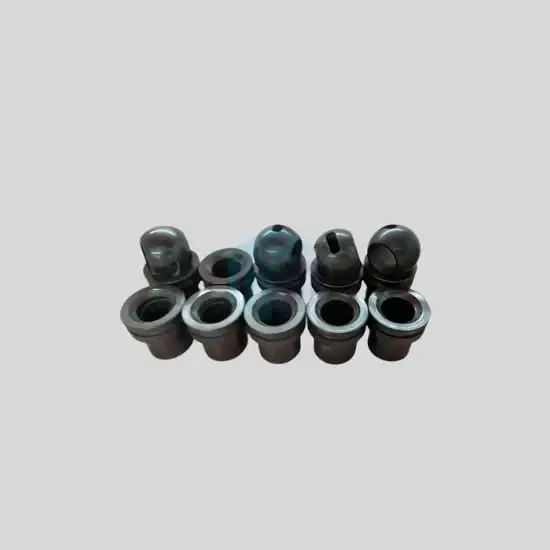
If your operation in Australia is plagued by regular crucible replacements, downtime and cost creep, it’s time to look closer at silicon nitride crucibles (also referred to as Si₃N₄ crucibles, silicon nitride ceramic crucibles, etc.). In this blog we’ll explore why switching to silicon nitride could dramatically improve performance, longevity and ROI—and how to evaluate a good silicon nitride crucible supplier.
Why Frequent Crucible Replacement Happens
Many operations experience recurring issues with crucibles: wear, cracking, contamination, thermal shock, chemical attack. This leads to:
- Unplanned downtime while replacing crucibles
- Increased maintenance and labour cost
- Potential contamination of melts or experiments
- Higher total cost of ownership
Often, the culprit is using a crucible material that isn’t optimized for your process temperature, chemical environment or thermal cycling profile. For example, standard alumina or graphite crucibles might fail prematurely when used in high-temperature melting, aggressive chemical environments or rapid heating/cooling cycles.
High wear-resistance & mechanical strength
Silicon nitride (Si₃N₄) is a technical ceramic known for exceptional mechanical, thermal and chemical performance. According to material datasheets, Si₃N₄ crucibles offer high hardness, wear resistance and structural integrity under extreme conditions.
For example, one manufacturer lists Si₃N₄ crucibles as having:
- Hardness up to ~15-16 GPa (gas‐pressure sintered)
- Compressive strength ~2,500-3,000 MPa
- Fracture toughness ~5-8 MPa·m½
Such properties translate to longer life under abrasion, impact and thermal cycling.
Excellent thermal shock & high-temperature performance
Si₃N₄ ceramics are especially good at handling rapid heating and cooling due to their low thermal expansion coefficient and high thermal conductivity.
One supplier mentions a Si₃N₄ crucible can operate in oxidising atmospheres up to ~1200 °C and resist molten metals. For Aussie labs or industrial sites doing high-temp melts, that means fewer failures due to cracking or spalling.
Chemical corrosion & contamination resistance
In labs and foundries, crucible material interacting with the melt or reagents is a serious risk. Si₃N₄ is reported to be resistant to many acids/alkalis and molten metals: “Withstands aggressive acids … Compatible with molten metals, including zinc, gold, silver …”
That means less risk of crucible material contaminating the melt, and less crucible degradation due to chemical attack.
Wear-resistant life cycle
Several product pages emphasise wear resistance: e.g., a manufacturer states “high hardness and good wear resistance, can be used for a long time without wear failure” for Si₃N₄ crucibles.
Longer life means fewer replacements, less downtime, better ROI.
How to Choose the Right Silicon Nitride Crucible Supplier & For Sale Options
When looking for a Silicon Nitride Crucible Supplier here are critical evaluation criteria:
- Material Purity & Specification – What is the Si₃N₄ purity? What additives? What sintering method? Check the datasheet.
- Mechanical & Thermal Properties – Hardness, fracture toughness, strength, thermal shock resistance, operating temperature range.
- Chemical Compatibility – Will the crucible resist your melt or chemical environment?
- Size, Shape & Customisation – Standard or custom dimensions, with lids, special shapes, tolerances.
- Supply Chain & Lead Time for Australia – Shipping, import duties, supplier support, local inventory.
- Cost vs Life Cycle – Evaluate not just purchase price but expected lifetime, replacement downtime, contamination risk.
- Supplier Reputation & Technical Support – A good supplier can help you select correct geometry, handle installation, advise on use and maintenance.
When you find a good supplier listing “Silicon Nitride Crucibles” or “Si₃N₄ Ceramic Crucible Lab Supplier”, compare across these criteria to ensure you’re optimising for ROI, not just upfront cost.
Conclusion
If you’re tired of frequent crucible replacements, unpredictable downtime and creeping cost, it’s time to evaluate silicon nitride crucibles (Si₃N₄) as a serious upgrade. Their wear-resistant, thermally robust and chemically stable nature makes them ideal for demanding Australian laboratory and industrial environments. Choose a reliable silicon nitride crucible supplier, evaluate lifecycle cost (not just purchase price) and match the specifications to your process. The right crucible can unlock longer service life, fewer interruptions and stronger return on investment.
References:
1) Corrosion Resistance of Wear Resistant Silicon Nitride Ceramics in Various Aqueous Solutions (Research Gate)
2) Microstructure and abrasive wear in silicon nitride ceramics (Research Gate)