
The rapid growth of the electric vehicle (EV) industry and renewable energy storage solutions has heightened the importance of selecting the right cathode chemistry for lithium-ion cells. Whether you are working with 18650 cells or 21700 cylindrical cells, understanding the differences between NMC, LFP, and NCA chemistries is essential for optimal performance, safety, and longevity. Proper cylindrical cell preparation and the right cylindrical cell lab equipment are crucial for ensuring the quality and consistency of battery cells.
Overview of Cylindrical Lithium-Ion Cells
Cylindrical cells are one of the most widely used lithium-ion cell formats, known for their durability, cost-effectiveness, and ease of assembly.
Why Cylindrical Cells Are Popular
- Versatile size options: 18650 and 21700 cells are standard sizes used in EVs, consumer electronics, and energy storage systems.
- Robust design: Cylindrical shape offers mechanical stability and improved thermal management.
- Ease of assembly: Compatible with various cylindrical cell assembly equipment and battery cell preparation tools, ensuring efficient production workflows.
Selecting the right cathode chemistry for these cells is critical to maximize energy density, cycle life, and safety.
18650 vs 21700 Cylindrical Battery Cells: What’s the Difference?
Energy density is one of the most critical factors when comparing lithium-ion battery chemistries, especially for 18650 and 21700 cylindrical cells. It determines how much energy a battery can store relative to its weight or volume, directly influencing range, runtime, and pack size.
Below is a clear comparison of NMC, LFP, and NCA cathode chemistries based on practical energy density performance.
1. NMC (Nickel Manganese Cobalt)
NMC is widely used in both 18650 and 21700 cylindrical cells due to its balance between energy density, lifespan, and safety.
Advantages:
- High energy density, making it ideal for EV applications.
- Balanced performance across power and energy output.
- Good thermal stability compared to NCA.
Considerations:
- Slightly higher cost due to cobalt content.
- Requires careful cylindrical cell preparation to ensure uniform mixing and coating in lab-scale assembly.
2. LFP (Lithium Iron Phosphate or Lithium Ferrous Phosphate)
LFP is becoming increasingly popular in large-scale energy storage due to its excellent safety profile and cycle life.
Advantages:
- Superior thermal stability, making cells safer under abuse conditions.
- Long cycle life, suitable for stationary storage and EV fleets.
- Lower cost due to iron-based chemistry.
Considerations:
- Lower energy density compared to NMC and NCA.
- Slightly heavier, which may impact energy-to-weight ratio in automotive applications.
- Proper handling using battery cell preparation equipment ensures consistent electrode thickness and capacity during assembly.
3. NCA (Nickel Cobalt Aluminum)
NCA chemistry is known for its very high energy density, commonly used in high-performance EVs.
Advantages:
- Highest energy density among the three chemistries.
- Good cycle life when properly managed.
Considerations:
- Higher thermal sensitivity; requires precision during cylindrical cell assembly.
- More expensive due to cobalt content.
- Requires stringent quality control and lab equipment calibration to prevent safety hazards.
Typical Energy Density Values of NMC, LFP, and NCA by Chemistry
| Cathode Chemistry | Gravimetric Energy Density (Wh/kg) | Key Characteristics |
|---|---|---|
| NCA | ~240–260 Wh/kg | Highest energy density, lightweight |
| NMC | ~180–250 Wh/kg | Balanced performance, widely used |
| LFP | ~140–160 Wh/kg | Lower energy density, high stability |
These values vary depending on cell design, manufacturer, and format (18650 vs 21700).
Key Factors in Cylindrical Cell Preparation
Proper cylindrical cell preparation is essential for producing high-performance 18650 and 21700 cells. The choice of cathode chemistry directly impacts the preparation process and the type of cylindrical cell assembly equipment required.
- Electrode Coating and Drying
- Uniform coating thickness ensures consistent capacity and voltage across cells.
- Drying parameters must be adjusted according to chemistry; LFP tolerates higher temperatures, while NCA requires controlled heating to maintain stability.
- Cell Winding and Stacking
- Precise alignment of electrodes prevents internal short circuits.
- Use of automated cylindrical cell assembly equipment improves efficiency and reproducibility.
- Electrolyte Filling and Sealing
- Electrolyte choice and injection must match cathode chemistry to optimize ionic conductivity.
- Proper sealing techniques reduce the risk of leaks and contamination, critical in high-energy NMC and NCA cells.
- Formation and Testing
- Formation cycles activate the electrodes and stabilize the SEI layer.
- Different chemistries require tailored formation protocols, particularly in laboratory cylindrical cell preparation setups.
Choosing the Right Equipment for Lab-Scale and Industrial Cylindrical Cell Preparation
High-quality cylindrical cell lab equipment ensures reproducible results and safe handling of lithium-ion chemistries.
Recommended Equipment
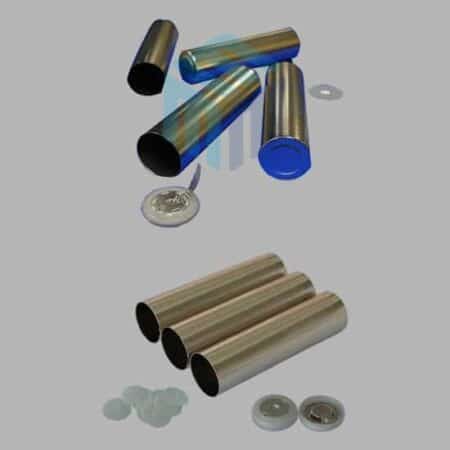
- 18650 cell assembly equipment for smaller-scale, high-precision assembly.
- 21700 cylindrical cell preparation tools for larger capacity cells.
- Battery cell preparation equipment such as electrode coating machines, automated winding systems, electrolyte injection stations, and sealing machines.
- Quality control instruments including capacity testers, impedance analyzers, and thermal chambers.
Investing in reliable lab equipment helps Australian manufacturers maintain product consistency and meet international safety standards.
18650 vs 21700 Format — What Changes With Size?
When selecting lithium-ion cylindrical cells, the cell format plays a critical role in performance, energy density, thermal management, and application suitability. The two most common formats today are 18650 (18 mm diameter × 65 mm length) and 21700 (21 mm diameter × 70 mm length). Understanding the differences helps engineers, battery pack designers, and consumers choose the right cell for their application.
Physical Size and Capacity
The 21700 cell is larger than the 18650, which allows it to store more energy per cell:
| Cell Format | Diameter | Length | Typical Capacity (Ah) |
|---|---|---|---|
| 18650 | 18 mm | 65 mm | 2.5–3.5 Ah |
| 21700 | 21 mm | 70 mm | 4.0–5.0 Ah |
Key takeaway: The larger volume of 21700 cells enables higher capacity, reducing the number of cells required for a given pack energy.
Energy Density Considerations
While both formats use similar chemistry (NMC, LFP, NCA), the 21700 format often achieves slightly higher volumetric and gravimetric energy density:
-
More active material per cell
-
Less packaging overhead per unit of energy
-
Better heat dissipation in high-current applications
For EVs and high-performance energy storage systems, 21700 cells are becoming the preferred choice due to these advantages.
Which Battery Chemistry Is Best: NMC, LFP, or NCA?
There is no single best choice among NMC, LFP, and NCA—each chemistry is optimized for different needs.
- NMC: Best overall balance of energy density, cost, and performance. Common in EVs and portable electronics.
- LFP: Best for safety, long cycle life, and low cost. Ideal for energy storage systems and entry-level EVs.
- NCA: Best for high energy density and long range. Used in premium EVs and high-performance applications.
Key takeaway
- Choose NMC for balanced performance
- Choose LFP for safety and durability
- Choose NCA for maximum energy density
When to Use NMC vs LFP vs NCA Batteries
- NMC: Use when you need a balanced solution for EVs, tools, and general applications.
- LFP: Use for solar storage, backup power, and applications where safety and long life matter most.
- NCA: Use for high-end EVs and systems requiring maximum range and energy output.
Key takeaway
- NMC = balanced performance
- LFP = safest and longest life
- NCA = highest energy density
Applications of NMC, LFP, and NCA: EVs, Grid Storage, Consumer Electronics
The choice of battery cathode chemistry directly affects performance, safety, and longevity across different applications. Understanding the strengths and limitations of NMC, LFP, and NCA cells helps engineers and manufacturers select the right solution for each use case.
1. Electric Vehicles (EVs)
- NMC (Nickel Manganese Cobalt) and NCA (Nickel Cobalt Aluminum) cells are preferred for EVs due to their high energy density, which allows longer driving ranges without increasing pack weight.
- Trade-offs: These chemistries are more sensitive to thermal stress and require sophisticated battery management systems (BMS) to maintain safety.
- LFP (Lithium Iron Phosphate) is increasingly used in low- to mid-range EVs because of its superior thermal stability, longer cycle life, and safer chemistry, though with slightly lower energy density.
2. Grid Energy Storage
- LFP cells dominate grid and stationary storage applications due to their exceptional cycle life, safety, and thermal stability.
- High-current applications and frequent charge/discharge cycles are common in grid storage, making LFP ideal despite its lower energy density compared to NMC/NCA.
- Cost-effectiveness and sustainability also make LFP the preferred choice for utility-scale energy storage.
3. Consumer Electronics
- Compact devices, such as laptops, cameras, and power tools, require high energy density in small form factors, favoring NMC and NCA chemistries.
- LFP cells are less common in small electronics due to their lower volumetric energy density, but they may be used in rugged, high-cycle devices where safety and longevity are critical.
- Selection also depends on charging rates and device power requirements, ensuring balance between energy output and thermal management.
Key Takeaways:
- NMC/NCA: High energy density → best for EVs and portable electronics.
- LFP: Long cycle life, safe, thermally stable → best for grid storage and high-cycle devices.
- Understanding application-specific requirements is essential when designing battery packs for different use cases.
How Cylindrical Cell Size Influences Chemistry Efficiency & Thermal Behavior
The physical size of a cylindrical cell such as 18650 or 21700 directly affects energy density, heat dissipation, internal resistance, and overall performance. Cell geometry is not just a packaging choice; it influences how efficiently a given cathode chemistry operates.
Energy Density & Packing Efficiency
Larger cylindrical cells (e.g., 21700 vs 18650) typically offer:
- Higher volumetric energy density
- Reduced inactive materials (fewer casings and tabs per kWh)
- Improved pack-level efficiency
Because fewer cells are needed to achieve the same capacity, system complexity and connection losses decrease. However, the chemistry inside the cell must support stable operation at larger formats.
Thermal Behavior & Heat Dissipation
Cell diameter significantly impacts thermal management:
- Smaller cells dissipate heat more easily due to a higher surface-area-to-volume ratio.
- Larger cells generate more heat internally and may experience temperature gradients from core to surface.
High-energy chemistries such as high-nickel NMC or NCA are more sensitive to heat buildup, making thermal design critical in larger formats. LFP, with its better thermal stability, can be more forgiving in high-capacity cells.
Internal Resistance & Current Distribution
As cell size increases:
- Current paths become longer
- Internal resistance distribution must be carefully controlled
- Electrode uniformity becomes more critical
Advanced manufacturing methods (e.g., improved tab design and optimized electrode coatings) are often required to maintain consistent performance in larger cylindrical formats.
Chemistry Compatibility with Format
Different chemistries respond differently to scaling:
- High-energy chemistries (NMC/NCA) benefit from larger formats for EV range but require robust cooling systems.
- LFP performs well in larger cells due to inherent thermal stability and long cycle life.
- Emerging chemistries must account for structural and thermal stress when adapting to 21700 or next-generation cylindrical designs.
Key Takeaway
Cell size and chemistry must be engineered together. Larger cylindrical cells improve energy density and cost efficiency at the pack level, but they demand optimized thermal management and electrode design to ensure safety, performance, and longevity.
Choosing the Right Cathode Chemistry for Your Project
| Factor | 18650 | 21700 |
|---|---|---|
| Energy density per cell | Moderate | Higher |
| Thermal management | Easier | Needs attention |
| Pack complexity | Higher (more cells) | Lower (fewer cells) |
| Current capability | Moderate | Higher |
| Popular applications | Laptops, smaller batteries | EVs, high-capacity storage |
Summary:
-
Choose 18650 for compact devices, moderate current, and proven cost efficiency.
-
Choose 21700 for high-energy, high-power applications like EVs and stationary storage, where fewer cells simplify the pack design.
Common Mistakes When Selecting Battery Chemistry
Choosing the wrong battery chemistry can affect product performance, safety, lifespan, and overall operating costs. Before selecting NMC, LFP, or NCA battery cells, consider the following common mistakes:
- Focusing Only on Energy Density – High energy density is important, but factors such as safety, cycle life, and thermal stability should also be evaluated.
- Ignoring Application Requirements – Different applications require different battery chemistries. For example, LFP is ideal for stationary energy storage, while NMC and NCA are commonly used in electric vehicles.
- Overlooking Safety Considerations – Selecting a battery without considering thermal stability and operating conditions can increase safety risks.
- Not Considering Cycle Life – For applications requiring frequent charging and discharging, choosing a chemistry with a longer cycle life can reduce replacement costs.
- Choosing Based Only on Cost – Lower-cost batteries may not provide the performance or lifespan needed for demanding applications.
- Ignoring Operating Temperature – Battery performance varies with temperature, so select a chemistry suitable for the intended environment.
- Overlooking Charging Requirements – Fast-charging capabilities differ among battery chemistries and should match application needs.
- Not Evaluating Cell Format – Choosing between 18650 and 21700 cylindrical cells should be based on space, capacity, thermal management, and energy requirements.
- Ignoring Material Quality and Testing – Poor-quality cathode materials can reduce battery performance and reliability. Proper material characterization and quality control are essential during manufacturing.
- Failing to Consider Future Scalability – Choose a battery chemistry that supports future production, performance upgrades, and evolving application requirements.
Selecting the appropriate battery chemistry based on performance, safety, lifecycle, cost, and application requirements helps maximize battery efficiency, improve reliability, and ensure long-term value for electric vehicles, energy storage systems, and portable electronic devices.
Future Trends in Lithium-Ion Battery Cathode Materials
The development of lithium-ion battery cathode materials is focused on improving energy density, safety, lifespan, and sustainability. As demand for electric vehicles, renewable energy storage, and portable electronics continues to grow, manufacturers are investing in advanced cathode technologies to enhance battery performance while reducing costs.
Key trends include the adoption of high-nickel cathodes, which offer greater energy density, and low-cobalt formulations that help reduce reliance on expensive and limited raw materials. Lithium Iron Phosphate (LFP) technology is also gaining popularity due to its excellent safety and long cycle life, particularly in electric vehicles and energy storage systems.
Looking ahead, innovations such as solid-state batteries, advanced cathode coatings, and next-generation lithium-ion chemistries are expected to deliver improved efficiency, faster charging capabilities, and enhanced thermal stability. These advancements will play a crucial role in meeting the growing global demand for high-performance and sustainable energy storage solutions.
Conclusion
Selecting the right cathode chemistry—NMC, LFP, or NCA—for 18650 and 21700 cylindrical cells is a balance between energy density, safety, cycle life, and cost. Coupled with precise cylindrical lithium-ion cell preparation and reliable battery cell preparation equipment, laboratories and manufacturers in Australia can achieve consistent, high-quality results. Proper understanding of cathode chemistries ensures safer operations, higher performance, and longer-lasting cells.
Enhance your cylindrical cell assembly process with M-Kube’s advanced cylindrical cell lab equipment.
Explore our range of 18650 and 21700 assembly tools at www.mkube.com.au or
Call +61-478-594-746 | Email info@mkube.com.au for expert guidance and a customised quote.