
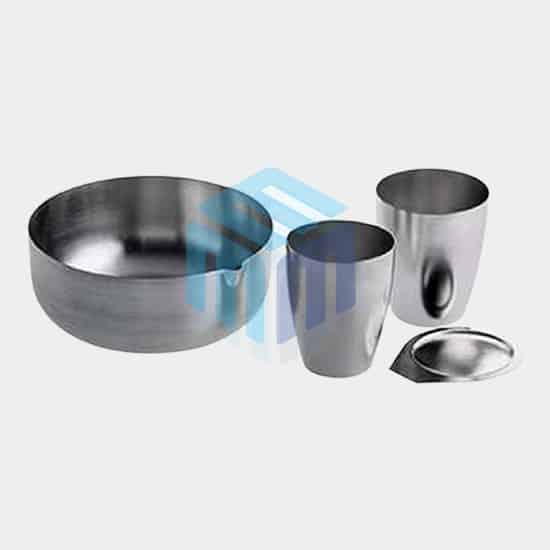
In industries that demand ultra-high purity, extreme heat resistance, and exceptional corrosion tolerance, tantalum crucibles are the go-to solution. As a refractory metal with a melting point of over 3000°C, tantalum is ideal for critical thermal, chemical, and material processing applications.
From semiconductors, several industries rely on tantalum crucibles to achieve performance standards where other materials fail. In this article, we’ll explore the top 5 industries that depend on tantalum crucibles for their most demanding processes — and why they’re worth the investment.
Key Properties of Tantalum Crucibles
Tantalum crucibles are widely used in high-temperature and high-purity applications because of their excellent physical and chemical properties. These characteristics make them ideal for semiconductor manufacturing, laboratory research, and chemical processing.
Key properties include:
-
High melting point: Tantalum has a melting point of about 3017 °C, allowing crucibles to withstand extremely high temperatures.
-
Excellent corrosion resistance: Tantalum resists many acids and aggressive chemicals, ensuring long service life in harsh environments.
-
High purity: The material has very low impurity levels, which helps prevent contamination during sensitive experiments and material processing.
-
Thermal stability: Tantalum crucibles maintain their strength and shape even under repeated heating and cooling cycles.
-
Good ductility: Tantalum can be easily fabricated into various crucible shapes and custom sizes for specialized applications.
-
Vacuum compatibility: These crucibles perform well in vacuum or inert gas environments used in advanced materials research.
Because of these properties, tantalum crucibles are considered a reliable choice for high-temperature and high-precision industrial processes.
1. Semiconductor & Electronics Industry
In the semiconductor and electronics industry, tantalum crucibles play a critical role in high-purity material processing due to their exceptional high-temperature stability, corrosion resistance, and inertness.
Purity & Precision at the Atomic Level
The semiconductor industry depends heavily on materials that can handle ultra-high temperatures while maintaining exceptional purity. Tantalum crucibles play a critical role in:
- Crystal growth (e.g., gallium arsenide, silicon carbide)
- Thin-film deposition (via evaporation or sputtering)
- Chemical vapour deposition (CVD)
Because tantalum is chemically inert and has minimal contamination risk, it supports the production of microchips, LEDs, and laser diodes.
Key Benefits
- Ultra-low contamination — maintains material purity during processing
- Excellent thermal conductivity — promotes uniform heating
- Resistance to reactive gases — ideal for vacuum and inert gas environments
High-Temperature Reliability for Critical Components
Certain industries require materials that can endure extreme temperatures, corrosive atmospheres, and mechanical stress. Tantalum crucibles are used in the manufacturing of:
- Superalloys for turbine blades
- Coatings for rocket nozzles
- High-temperature thermal barrier components
These processes often involve vacuum induction melting or electron beam melting, both of which are ideal for tantalum’s properties.
Why Tantalum?
- Withstands temperatures exceeding 3000°C
- Corrosion-resistant in high-performance alloys
- Maintains mechanical strength under thermal cycling
2. Chemical & Petrochemical Processing
In chemical and petrochemical processing, tantalum crucibles are highly valued for their exceptional resistance to corrosion and chemical attack, even when exposed to aggressive acids, alkalis, and molten salts.
Corrosion Resistance in Aggressive Environments
Tantalum crucibles excel in chemical industries where strong acids, reactive compounds, or corrosive gases are involved. They’re widely used in:
- Hydrofluoric acid (HF) handling
- Sulfuric acid vaporisation
- Catalyst development & testing
- Oxidation-reduction reactions
Compared to platinum or graphite, tantalum provides better cost-efficiency in many corrosive process applications due to its inertness and long service life.
Benefits
- Resists corrosion from strong acids, including HF and HCl
- Suitable for high-pressure reactors
- Reduces risk of metal contamination in analytical chemistry
3. Materials Science & Research Laboratories
In materials science and research laboratories, tantalum crucibles are indispensable for high-temperature experiments, alloy development, and crystal growth studies due to their excellent thermal stability and chemical inertness. They allow researchers to handle reactive metals, rare earth elements, and molten compounds without contamination, ensuring precise experimental results.
Versatility for Experimental Thermal Applications
Tantalum crucibles are indispensable in R&D labs, especially in fields like materials science, ceramics, metallurgy, and advanced composites. They’re commonly used in:
- Thermal analysis
- High-temperature synthesis
- Metal oxide reduction reactions
- Sintering and alloy testing
Labs value tantalum for its resistance to reaction with samples, making it ideal for producing accurate, repeatable results.
Why Researchers Choose Tantalum:
- Exceptional performance in vacuum and inert gas furnaces
- Compatible with sensitive materials that might react with graphite or alumina
- Available in small volumes and customised crucible shapes
4. Medical & Pharmaceutical Manufacturing
In medical and pharmaceutical manufacturing, tantalum crucibles are crucial for high-purity material processing and precise compound synthesis. Their chemical inertness, corrosion resistance, and high-temperature stability make them ideal for handling active pharmaceutical ingredients, specialty chemicals, and biocompatible materials without risk of contamination. Tantalum crucibles ensure consistent quality, reliability, and safety in critical processes such as drug formulation, implantable material production, and advanced biomaterials research, supporting stringent regulatory standards and maintaining the integrity of pharmaceutical products.
Precision for Biocompatible Materials
While not as widely known, medical and pharmaceutical industries also utilise tantalum crucibles in manufacturing implant-grade alloys and specialty chemicals. Applications include:
- Titanium-tantalum alloy production for orthopedic implants
- Melting and casting of biocompatible materials
- High-purity compound synthesis
Due to tantalum’s non-toxic, non-reactive, and biocompatible nature, it’s ideal for producing components that must meet stringent FDA and ISO standards.
Advantages
- Zero contamination risk in biocompatible alloy synthesis
- Tolerates sterile and cleanroom environments
- Supports precise thermal and chemical control
Factors to Consider When Choosing a Tantalum Crucible
Selecting the right tantalum crucible is important for ensuring efficient performance in high-temperature and high-purity applications. Several factors should be considered before choosing a crucible for laboratory or industrial processes.
Key factors include:
- Purity of Tantalum: High-purity tantalum reduces the risk of contamination during sensitive processes such as semiconductor manufacturing or materials research.
- Temperature Requirements: Ensure the crucible can handle the operating temperature of your furnace or experiment. Tantalum crucibles are ideal for very high-temperature environments.
- Crucible Size and Shape: Choose the appropriate dimensions and design based on the material volume and type of process being performed.
- Chemical Compatibility: Consider the chemicals or materials being processed to ensure they do not react with tantalum at high temperatures.
- Wall Thickness and Durability: Thicker crucibles generally offer better durability and longer service life in demanding applications.
- Application Environment: Determine whether the crucible will be used in vacuum furnaces, inert gas atmospheres, or controlled laboratory environments.
By evaluating these factors, researchers and engineers can select a tantalum crucible that provides reliable performance, durability, and accurate results in high-temperature applications.
You can consult info@mkube.com.au to get expert advice on custom tantalum crucibles for your specific use case.
Conclusion
Tantalum crucibles may not be the most commonly discussed lab equipment — but in the industries that demand the highest performance, they’re often irreplaceable. Their ability to withstand extreme temperatures, resist corrosion, and preserve sample purity makes them essential in Semiconductors, Chemical Processing, Research & Academia and Medical Manufacturing
Whether you’re performing critical R&D or running production-scale furnaces, investing in the right crucible can save time, prevent contamination, and improve outcomes.
Ready to upgrade your thermal process? Browse www.mkube.com.au or request a quote