
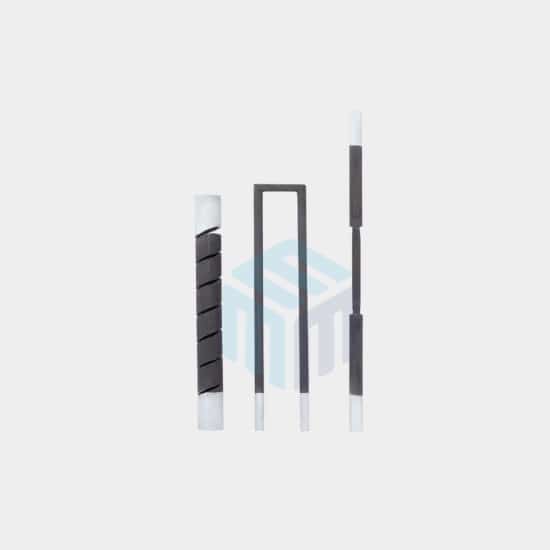
In high-temperature industrial applications, reliability and efficiency are non-negotiable. This is where silicon carbide (SiC) heating elements come into play. Known for their exceptional thermal stability, chemical resistance, and energy efficiency, SiC heating elements are essential in a wide range of industries.
In this blog, we explore the top five industries where silicon carbide heating elements make a measurable difference — in both performance and cost savings.
1. Ceramics & Glass Manufacturing
Why SiC Heating Elements Are Ideal?
The ceramics industry depends on electric furnace elements that can withstand extreme temperatures without compromising quality. Silicon carbide heating elements offer uniform heat distribution and resistance to thermal shock, making them ideal for:
- Firing ceramic tiles and sanitaryware
- Sintering advanced ceramics
- Annealing glass products
These industries require kilns and furnaces to operate between 1200°C and 1600°C, which is well within the operational range of SiC elements.
Benefits
- Long operational life under oxidising conditions
- Fast heat-up times reduce cycle times
- Low maintenance requirements
Looking for heating solutions? Explore our range of sic heating elements built for high-efficiency kilns.
2. Metallurgy & Heat Treatment
Application Areas
From annealing, hardening, to sintering metal parts, the metallurgical industry requires resistance heating elements that can endure aggressive environments and sustain consistent performance.
SiC elements are widely used in:
- Vacuum and atmosphere furnaces
- Sintering of powder metals
- Brazing and stress-relieving processes
Benefits
- High power density
- Stable resistance over time
- Can operate continuously at temperatures up to 1600°C
Why SiC Outperforms Metal-Based Heaters?
Unlike metallic heaters, SiC heating elements do not oxidise or scale easily and can maintain their shape and integrity over extended periods, even in harsh furnace environments.
3. Semiconductor & Electronics Manufacturing
Precision Heating for High-Tech Applications
The semiconductor industry demands precise temperature control, cleanliness, and minimal contamination. SiC elements are used in:
- Diffusion furnaces
- Annealing and oxidation chambers
- Crystal growing furnaces
Silicon carbide’s ability to function in cleanroom environments with low outgassing and high thermal conductivity makes it invaluable.
Benefits
- Minimal contamination risk
- Excellent control in temperature-critical processes
- Rapid thermal cycling capability
In a sector where a single impurity can affect chip quality, SiC heating elements help ensure process reliability and product consistency.
4. Chemical & Petrochemical Processing
Resilience in Corrosive Environments
Industries dealing with chemical processing, refining, and sulfur recovery often expose equipment to corrosive vapors and gases. Traditional metal elements may corrode or degrade quickly, leading to costly downtimes.
Silicon carbide heating elements offer:
- High chemical resistance
- Consistent performance in oxidising and reducing atmospheres
- Compatibility with quartz and ceramic reactor chambers
Applications include:
- Gas-phase reactors
- Fluidised bed reactors
- Desulfurisation processes
SiC elements are also commonly found in lab-scale reactors and pilot plants where precision and chemical resistance are required.
5. Research & Development / Laboratory Use
Versatile Heating for Scientific Applications
In university labs, government research facilities, and materials science centres, flexibility and precision are crucial. SiC elements are used in:
- Muffle furnaces
- Tube furnaces
- Thermogravimetric analysis (TGA) systems
- High-temperature sintering experiments
Benefits
- Broad compatibility with various furnace types
- Fast thermal response
- Ease of replacement and setup
For researchers exploring new materials or working with sensitive samples, SiC elements provide a stable and controllable heating environment.
Read also: Applications and Advantages of Silicon Carbide Heating Elements in Furnaces
Conclusion
From ceramics and metallurgy to semiconductor and chemical industries, silicon carbide heating elements are shaping the future of industrial heating. Their unmatched performance, durability, and efficiency make them the go-to solution for operations that demand high temperature and precision.
Whether you manage a full-scale manufacturing facility or a cutting-edge research lab, upgrading to SiC heating elements can help improve your energy efficiency, reduce maintenance costs, and ensure process reliability.
Interested in upgrading your heating system? Contact info@mkube.com.au for expert guidance and product recommendations tailored to your application.