
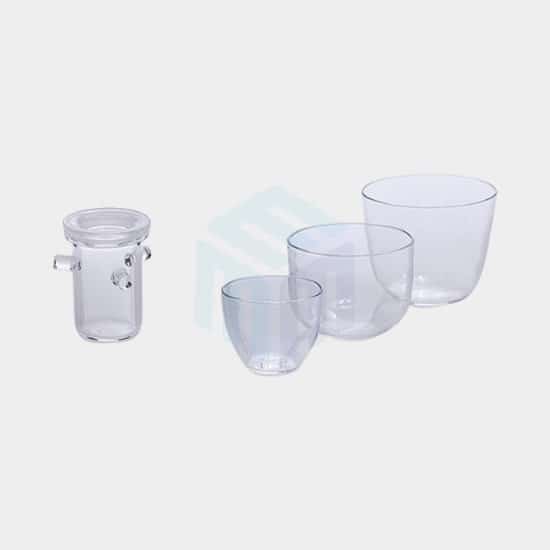
Determining the maximum heating rate for a quartz crucible is essential to prevent thermal shock, cracking, and premature failure. By carefully considering factors such as quartz purity, wall thickness, crucible shape, and the thermal profile of your furnace, laboratories can safely optimize heating schedules without compromising sample integrity. Adhering to controlled ramp rates, gradual temperature increases, and proper preheating protocols not only extends the crucible’s lifespan but also ensures accurate, reproducible analytical results, making precise thermal management a critical aspect of successful high-temperature operations.
Factors Affecting the Maximum Heating Rate for Quartz Crucibles
The maximum heating rate for a quartz crucible depends on various factors, including the size and thickness of the crucible, the quality of the quartz material, and the specific application or process you are using it for. However, there are some general guidelines to consider:
- Gradual Heating: It’s generally recommended to heat quartz crucibles slowly and gradually, especially during the initial stages of heating. A common practice is to limit the heating rate to around 100-200°C (180-360°F) per hour during the early stages of heating to prevent thermal shock, which can lead to cracks or breakage.
- Annealing Process: If you are working with a new or freshly cleaned quartz crucible, it’s advisable to perform an annealing process before subjecting it to rapid heating. Annealing involves slowly heating the crucible to a specific temperature (usually around 800-1000°C or 1472-1832°F) and then gradually cooling it to relieve internal stresses and ensure uniform thermal expansion.
- Temperature Uniformity: Quartz is sensitive to thermal gradients, so it’s essential to ensure that the heating is uniform across the crucible to prevent localized stress and potential cracking. Use a heating method that provides good temperature distribution, such as a furnace with a controlled heating profile.
- Crucible Thickness: Thicker quartz crucibles can typically handle higher heating rates than thinner ones because they have better thermal stability. Thinner crucibles are more susceptible to thermal shock.
- Application Considerations: The specific application or process you are using the crucible for can also influence the maximum heating rate. Some processes may require slower heating rates to ensure precise control or to avoid reactions with the quartz material.
- Manufacturer’s Recommendations: Always consult the manufacturer’s guidelines and recommendations for the specific type and brand of quartz crucible you are using. They may provide maximum heating rate specifications and other important information.
By understanding how size, thickness, and quartz quality influence the maximum heating rate, you can optimize furnace operations, prevent thermal damage, and ensure consistent, reliable performance from your crucibles.
How to Calculate the Maximum Heating Rate for a Quartz Crucible
Determining the maximum heating rate for a quartz crucible is essential to prevent thermal shock and extend its lifespan. Since quartz is highly resistant to temperature but sensitive to rapid temperature changes, the heating rate must be carefully controlled.
Key Principle: Thermal Stress
When a quartz crucible is heated too quickly, the outer surface expands faster than the inner core. This creates internal stress, which can lead to cracking or failure. The goal is to minimize the temperature difference between different parts of the crucible.
Basic Calculation Concept
The heating rate depends on three main factors:
- Thermal expansion coefficient of quartz
- Temperature gradient across the crucible wall
- Mechanical strength (stress tolerance) of the material
A simplified engineering relationship is:
σ=E⋅α⋅ΔT
Where:
- σ = thermal stress
- E = Young’s modulus of quartz
- α = coefficient of thermal expansion
- ΔT = temperature difference
👉 To avoid cracking, the generated thermal stress (σ) must stay below the material’s strength limit.
Practical Method to Estimate Quartz Crucible Heating Rate
Instead of complex calculations, engineers typically use a practical approach:
- Start with manufacturer guidelines
These provide safe baseline heating rates. - Consider crucible thickness
- Thin walls → faster heating allowed
- Thick walls → slower heating required
- Control temperature gradients
Keep ΔT low by increasing temperature gradually. - Apply staged heating
Break the heating process into temperature zones:- Low temperature → slow heating
- Mid-range → moderate heating
- High temperature → controlled ramp
Rule of Thumb
- Increase temperature gradually, especially below 800°C
- Avoid sudden jumps in furnace temperature
- Always allow uniform heat distribution
Example
If a quartz crucible is heated from room temperature to 1000°C:
- Start at 50–100°C per hour up to 200°C
- Increase to 150–200°C per hour up to 800°C
- Slow down again beyond 800°C to reduce stress
Why This Matters
Proper calculation and control of heating rate:
- Prevents cracks and breakage
- Extends crucible life
- Ensures consistent process results
- Reduces material and operational costs
Here’s a clean, SEO-optimized section for Point 2 that you can directly insert into your blog:
Recommended Heating Rate Table for Quartz Crucibles
To safely heat a quartz crucible without causing thermal stress or cracking, it’s important to follow controlled heating rates across different temperature ranges. Since quartz responds differently at various temperatures, a staged heating approach is recommended.
Standard Heating Rate Guidelines
The table below provides commonly accepted heating rates used in industrial and laboratory settings:
| Temperature Range | Recommended Heating Rate |
|---|---|
| 25°C – 200°C | 50 – 100°C per hour |
| 200°C – 800°C | 100 – 200°C per hour |
| 800°C – 1100°C | 150 – 250°C per hour |
| 1100°C – 1600°C | 50 – 100°C per hour |
How to Use This Table
- Start slow at lower temperatures
This removes moisture and reduces initial thermal stress. - Increase gradually in the mid-range
Quartz can tolerate faster heating once temperature stabilizes. - Slow down again at high temperatures
Above ~1100°C, the risk of deformation and stress increases.
Important Considerations
- Crucible thickness matters
Thicker crucibles require slower heating rates than thinner ones. - Furnace uniformity plays a role
Uneven heating can cause localized stress even within safe rates. - Application-specific adjustments may be needed
Processes involving chemicals or rapid phase changes may require more conservative heating.
Pro Tip
If you’re unsure, always choose the lower end of the heating rate range. Slower heating significantly reduces the risk of thermal shock and extends the service life of the quartz crucible.
Why This Table Is Important
Using a structured heating rate table helps:
- Maintain uniform temperature distribution
- Prevent sudden thermal expansion
- Improve process consistency
- Reduce costly crucible failures
Preheating and Annealing Guidelines Before Using a Quartz Crucible
Proper preheating and annealing are essential steps before using a quartz crucible. These processes help eliminate moisture, reduce internal stress, and prepare the material for high-temperature applications.
Why Preheating Is Important
Quartz crucibles can absorb moisture from the environment during storage. If heated too quickly, this moisture can expand rapidly and cause cracking or even breakage.
Benefits of preheating:
- Removes absorbed moisture
- Minimizes thermal shock
- Stabilizes the crucible structure
- Improves durability during operation
Recommended Preheating Process
Follow a gradual preheating schedule before exposing the crucible to high temperatures:
- Initial drying phase
Heat slowly to around 100–150°C and hold for 30–60 minutes to remove moisture. - Intermediate heating phase
Increase temperature gradually to 300–500°C at a controlled rate. - Stabilization phase
Hold at this temperature to ensure uniform heat distribution throughout the crucible.
Annealing Guidelines
Annealing helps relieve internal stresses that may have developed during manufacturing or previous use.
Typical annealing process:
- Heat the crucible to 800–1000°C
- Maintain this temperature for a specific holding time
- Allow slow and controlled cooling inside the furnace
Cooling Is Just as Important
Rapid cooling can create the same level of stress as rapid heating.
Best practices:
- Avoid removing the crucible immediately from a hot furnace
- Let it cool gradually inside the furnace
- Prevent exposure to cold air or drafts
Common Mistakes to Avoid
- Skipping the preheating stage
- Heating directly to high temperatures
- Uneven heating due to poor furnace setup
- Rapid cooling after annealing
Pro Tip
Always treat preheating and annealing as part of the standard operating procedure, not optional steps. Proper preparation significantly increases the service life and reliability of quartz crucibles.
Why This Matters
By following correct preheating and annealing practices, you can:
- Reduce the risk of cracks and failures
- Improve thermal stability
- Extend crucible lifespan
- Ensure consistent performance in high-temperature processes
Conclusion:
Determining the maximum heating rate for a quartz crucible is crucial to maintaining its structural integrity and ensuring reliable experimental results. By taking into account factors such as crucible size, wall thickness, material purity, and the specific process requirements, laboratories can establish safe heating protocols that minimize the risk of thermal shock or cracking. Following gradual ramp-up procedures, proper preheating, and adherence to manufacturer guidelines not only extends the life of the crucible but also enhances accuracy, reproducibility, and safety in high-temperature applications.
Our team of experts across different platforms can discuss and customize your requirements as per your needs.
Please reach out to us on info@mkube.com.au or call us on +61478594746 to discuss your projects.