
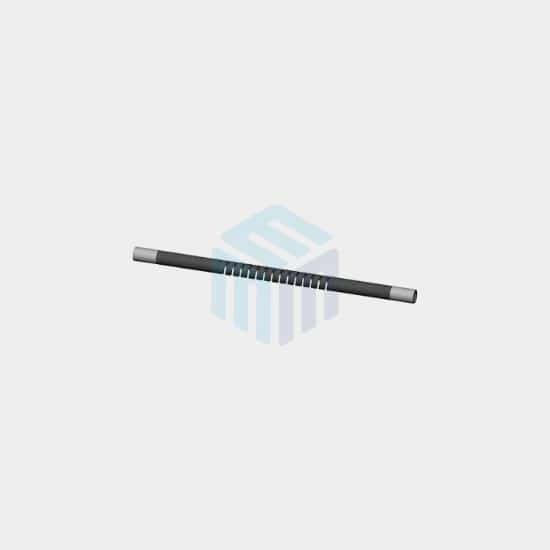
Selecting the right heating element is crucial for achieving consistent performance, energy efficiency, and long equipment life in high-temperature processes. Among the most popular choices for industrial furnaces and laboratory kilns are molybdenum disilicide (MoSi₂) heating elements and silicon carbide (SiC) heating elements. While both are designed to withstand extreme temperatures and harsh environments, they differ significantly in their operating ranges, oxidation behavior, and cost-effectiveness. This blog will guide you through the key differences, advantages, and considerations to help you decide whether MoSi₂ or SiC heating elements are best suited for your specific application.
Why Choosing the Right Heating Element Matters
Selecting the correct heating element is critical for furnace performance, energy efficiency, and operational safety. The wrong choice can lead to premature failure, inconsistent temperatures, higher energy costs, and even safety hazards.
Heating elements are the heart of high-temperature systems, so their material properties, temperature limits, and compatibility with the furnace environment directly affect the quality of heating, product outcomes, and maintenance requirements.
Key reasons why proper selection matters:
-
Temperature Performance: Each element type has a specific operating range. Exceeding this can cause rapid degradation.
-
Lifespan & Reliability: Correct material choice ensures longer service life and fewer shutdowns.
-
Energy Efficiency: Efficient elements reduce power consumption and operating costs.
-
Environmental Compatibility: Some elements resist oxidation or perform better in vacuum, inert, or oxidizing atmospheres.
-
Safety & Maintenance: Using the right element minimizes risk of overheating, thermal shock, and costly replacements.
Choosing the right heating element ensures consistent high-temperature operation, lower operational costs, and safer lab or industrial processes.
Key Factors: MoSi₂ vs SiC Heating Elements
Choosing between Molybdenum Disilicide (MoSi2) and Silicon Carbide (SiC) heating elements depends on various factors, including the specific requirements of your application. Here are some considerations to help you make an informed decision:
- Temperature Range:
- MoSi2 heating elements are suitable for temperatures up to around 1,800°C (3,272°F).
- SiC heating elements can handle even higher temperatures, typically up to 2,000°C (3,632°F) and, in some cases, even higher.
- Operating Environment:
- MoSi2 elements are more susceptible to oxidation in the presence of air or oxygen at high temperatures. They can form a protective SiO2 layer but may eventually degrade.
- SiC elements are more oxidation-resistant and can perform well in oxidizing atmospheres, making them suitable for applications where air or oxygen exposure is likely.
- Atmosphere:
- Consider the type of atmosphere in your furnace. SiC elements are versatile and can operate in air, inert gases, and vacuum, while MoSi2 elements may be better suited for inert or reducing atmospheres.
- Temperature Control:
- MoSi2 elements have a lower thermal mass and are often preferred for applications that require rapid temperature changes and precise temperature control.
- SiC elements also offer good temperature control but have a slightly higher thermal mass.
- Energy Efficiency:
- Both MoSi2 and SiC elements emit radiant heat, which can provide efficient direct heating. However, the choice between them may depend on your specific furnace design and control system.
- Maintenance:
- Both types of elements generally require low maintenance. MoSi2 elements may require more care to protect against oxidation in certain atmospheres.
- Heating Element Lifespan:
- MoSi2 elements are known for their long lifespan and stability but may degrade faster in oxygen-rich environments.
- SiC elements also have a long lifespan and are more oxidation-resistant, making them suitable for a wider range of applications.
- Application-Specific Requirements:
- Consider the specific needs of your application, such as the materials being processed, the desired heating rate, uniformity of heating, and the environmental conditions inside the furnace.
- Budget:
- Cost considerations may also play a role in your decision. MoSi2 elements are generally more cost-effective, while SiC elements may have a higher upfront cost.
- Expertise and Support:
- Evaluate the availability of technical support and expertise in the installation and maintenance of MoSi2 or SiC elements, as this can affect your decision.
The choice between Molybdenum Disilicide (MoSi2) and Silicon Carbide (SiC) heating elements should be based on the specific requirements of your furnace and the conditions in which they will operate. Consider factors like temperature range, atmosphere, oxidation resistance, temperature control, energy efficiency, maintenance, and budget when making your decision. It may also be helpful to consult with a heating element manufacturer or specialist to determine the best fit for your application.
Applications & Typical Use Cases — Selecting MoSi₂ vs SiC for Specific Processes
Molybdenum Disilicide (MoSi₂) Heating Elements are preferred in:
-
Advanced Ceramic Sintering: High-purity alumina, zirconia, and mullite sintering where temperatures exceed 1650°C and dimensional stability is critical.
-
Glass Melting and Refining: Specialty glass production, including quartz and optical glass, requiring uniform high-temperature performance without contamination.
-
Powder Metallurgy & Refractory Metals Processing: Tungsten, molybdenum, and tantalum sintering in controlled oxidizing or neutral atmospheres.
-
Laboratory Research Furnaces: Long-duration high-temp testing for material phase studies or thermal shock analysis.
Silicon Carbide (SiC) Heating Elements excel in:
-
Heat Treatment of Metals: Hardening, annealing, and tempering steels at sub-1600°C.
-
Ceramic Biscuit Firing: Firing of tiles, pottery, and technical ceramics where cost efficiency is important.
-
Non-Ferrous Metal Melting: Aluminum, brass, and copper melting in reducing or neutral atmospheres.
-
Kilns for Glass Slumping and Fusing: Where mechanical shock resistance and frequent cycling are necessary.
Best Heating Element for Oxidizing, Inert, and Reducing Atmospheres
Selecting the right heating element depends heavily on the furnace atmosphere, as different materials react differently to oxygen levels, gases, and temperature conditions. Both molybdenum disilicide (MoSi₂) and silicon carbide (SiC) perform well, but their suitability varies based on the environment.
Oxidizing Atmospheres (Air, Oxygen-Rich Conditions)
- Best Choice: MoSi₂ (Molybdenum Disilicide)
- MoSi₂ performs exceptionally well in oxidizing environments because it forms a protective silica (SiO₂) layer on its surface.
- This layer acts as a barrier, preventing further oxidation and allowing stable operation at very high temperatures (up to ~1800°C).
- It is ideal for applications requiring long life and consistent performance in air.
👉 SiC Performance:
- SiC also forms a silica layer, but it gradually degrades over time.
- At high temperatures, the protective layer can volatilize, leading to material loss and reduced lifespan.
Inert Atmospheres (Argon, Nitrogen)
- Best Choice: Depends on Temperature and Stability Needs
- MoSi₂:
- Performs well but may experience material degradation at very high temperatures in low-oxygen conditions because the protective oxide layer is less stable.
- SiC:
- Suitable for moderate to high temperatures.
- Maintains structural integrity but may suffer from resistance changes over time (aging effect).
👉 Recommendation:
- Use MoSi₂ for higher temperature stability
- Use SiC for cost-effective, moderate-temperature operations
Reducing Atmospheres (Hydrogen, Carbon Monoxide)
- Best Choice: SiC (Silicon Carbide)
- In reducing environments, the protective oxide layer on MoSi₂ can break down, exposing the base material and causing rapid degradation or failure.
- SiC Advantages:
- More stable in reducing conditions
- Better resistance to chemical attack from reactive gases
- Longer lifespan compared to MoSi₂ in these environments
👉 MoSi₂ Limitation:
- Not recommended for strongly reducing atmospheres due to loss of oxidation protection and accelerated wear
Summary Comparison
| Atmosphere Type | Best Heating Element | Key Reason |
|---|---|---|
| Oxidizing | MoSi₂ | Strong protective oxide layer |
| Inert | MoSi₂ / SiC | Depends on temperature & cost |
| Reducing | SiC | Better chemical stability |
There is no one-size-fits-all solution. The best heating element depends on how the material interacts with the surrounding gases:
- Choose MoSi₂ for high-temperature oxidizing environments where durability is critical
- Choose SiC for reducing atmospheres and cost-sensitive applications
- Evaluate temperature, atmosphere, and lifecycle cost together for the best decision
Understanding these differences helps ensure longer heating element life, improved efficiency, and reduced operational costs.
Decision Guide — How to Choose Between MoSi₂ and SiC for Your Furnace
When deciding between MoSi₂ and SiC heating elements, consider:
-
Operating Temperature:
-
Above 1650°C → MoSi₂ is the better choice.
-
Below 1600°C → SiC offers a cost-efficient solution.
-
-
Atmosphere Compatibility:
-
Oxidizing/neutral → MoSi₂ maintains performance longer.
-
Reducing → SiC handles chemical exposure better.
-
-
Cycle Frequency:
-
Continuous long cycles → MoSi₂ resists degradation over time.
-
Frequent on/off cycles → SiC’s mechanical durability excels.
-
-
Budget vs. Longevity:
-
Lower initial cost → SiC.
-
Lower long-term replacement rate → MoSi₂.
-
-
Maintenance Access:
-
Hard-to-access furnaces → MoSi₂ reduces replacement downtime.
-
Easy-access setups → SiC replacements are faster and cheaper.
-
Ultimately, choosing between MoSi₂ and SiC heating elements depends on your temperature requirements, furnace atmosphere, and longevity needs, ensuring optimal performance, efficiency, and reliability for your specific high-temperature applications.
Quick Comparison Table: MoSi₂ vs SiC at a Glance
To help simplify your decision-making, this quick comparison table highlights the key differences between MoSi₂ and SiC heating elements. By comparing factors like operating temperature, lifespan, and application suitability, you can quickly identify which material best fits your furnace requirements.
| Feature | MoSi₂ (Molybdenum Disilicide) | SiC (Silicon Carbide) |
|---|---|---|
| Max Operating Temp | Up to ~1700 °C (1700–1 800 °C) | Up to ~1 600 °C |
| Oxidation Resistance | Forms protective SiO₂ layer; good in oxidising atmospheres | Highly oxidation-resistant; robust in aggressive atmospheres |
| Thermal Response & Control | Low thermal mass; excellent for rapid ramp and precise control | Moderate thermal mass; still good but less agile than MoSi₂ |
| Thermal Shock Resistance | Good—less prone to cracking under cycles | Better—superior resistance to thermal shock |
| Electrical Conductivity | Higher—efficient for direct heating | Lower—better for indirect or infrared heating systems |
| Cost Consideration | Higher upfront, longer lifespan possible | Lower initial cost, but shorter life in extreme conditions |
Limitations of MoSi₂ and SiC Heating Elements
While MoSi₂ and SiC heating elements offer exceptional high-temperature performance, they are not without limitations. Understanding their operational constraints, environmental sensitivities, and potential failure modes is crucial for selecting the right element and preventing costly downtime in furnace operations.
Common Challenges with MoSi₂ Heating Elements
- Brittleness: Increased risk of cracking under mechanical stress.
- Oxidation: Requires careful management in air to prevent performance degradation
Common Challenges with SiC Heating Elements
- Thermal Shock Sensitivity: While more resistant than MoSi₂, still susceptible to damage from rapid temperature changes.
- Lower High-Temperature Limit: Not suitable for applications exceeding 1650°C
By acknowledging these limitations, operators can implement proper safeguards, maintenance routines, and material choices to maximize efficiency, extend element lifespan, and ensure safe, reliable furnace performance.
How to Choose MoSi₂ vs SiC: Application-Based Recommendations
Selecting the right heating element goes beyond basic specifications—it requires a clear understanding of your specific application, temperature range, and operational environment. By aligning these factors with the strengths of MoSi₂ and SiC, you can make informed choices that optimize performance, efficiency, and longevity.
- Ultra-High-Temperature, Oxidising Applications
Choose MoSi₂ for operations above ~1700 °C—great for advanced ceramics, glass, semiconductor processing. The silica passivation protects it in oxygen-rich environments, and its rapid thermal response enhances cycle efficiency. - Processes Requiring Thermal Shock Resistance or Running in Aggressive Atmospheres
SiC shines for applications with rapid temperature cycling and exposure to harsh or corrosive gases. Its robust structure handles stress well, making it ideal for ceramics kilns, batch heat treatment, and oxidising furnace atmospheres. - Fast Ramp, Precise Temperature Control Needs
MoSi₂’s low thermal mass and precise response make it ideal for process control where timing and stability matter—like research labs or advanced sintering setups. - Budget-Conscious Operations with Moderate Temperature Requirements
SiC, with its lower cost, is a smart choice for moderate-temperature operations when extreme temperature resilience is not essential.
By following application-based recommendations, you can confidently choose between MoSi₂ and SiC heating elements, ensuring optimal furnace performance, energy efficiency, and long-term reliability for your high-temperature processes.
Safety, Failure Modes & Maintenance Tips
Selecting the right heating element is only part of ensuring reliable furnace operation. Understanding safety considerations, common failure modes, and proper maintenance practices is critical to maximizing performance, extending service life, and preventing costly downtime when using molybdenum disilicide (MoSi₂) and silicon carbide (SiC) heating elements.
Safety Considerations for High-Temperature Heating Elements
Both MoSi₂ and SiC heating elements operate at extremely high temperatures, making installation and handling safety essential.
-
Electrical safety: Always ensure power is isolated before inspection or replacement. SiC elements increase in resistance over time, which can lead to uneven heating and electrical overload if not monitored.
-
Thermal shock risk: Rapid heating or cooling can cause cracking, particularly in SiC elements. Controlled ramp-up and cool-down rates are essential for safe operation.
-
Oxidation awareness: MoSi₂ forms a protective silica layer at high temperatures, but operation in the PEST temperature range (typically 400–600°C) can lead to oxidation damage if not managed properly.
-
Personal protective equipment (PPE): Use heat-resistant gloves, eye protection, and proper insulation when working near active or recently powered elements.
Common Failure Modes of MoSi₂ and SiC Heating Elements
Understanding how and why heating elements fail helps operators prevent unexpected breakdowns.
Molybdenum Disilicide (MoSi₂) Failure Modes
-
PEST oxidation: Prolonged operation in low-temperature oxidation zones can cause rapid degradation and powdering of the element.
-
Mechanical brittleness: MoSi₂ elements are relatively brittle at room temperature and can fracture during handling or installation.
-
Atmospheric sensitivity: Contaminants such as sulfur or halogens can attack the protective oxide layer and shorten lifespan.
Silicon Carbide (SiC) Failure Modes
-
Resistance aging: SiC elements gradually increase in electrical resistance, leading to reduced power output over time.
-
Thermal shock cracking: Sudden temperature changes can cause fractures, especially during startup or shutdown.
-
Hot spotting: Uneven aging can create localized overheating, accelerating element failure.
Maintenance Best Practices to Extend Element Lifespan
Proper maintenance significantly improves heating element reliability and operating efficiency.
-
Monitor electrical resistance: Regular resistance checks help detect SiC element aging early and prevent uneven furnace performance.
-
Use matched element sets: Replacing SiC elements in matched groups ensures uniform heating and reduces electrical imbalance.
-
Control temperature ramps: Gradual heating and cooling cycles minimize thermal stress and reduce cracking risk.
-
Avoid contamination: Keep furnace atmospheres clean and avoid exposure to corrosive gases that degrade element materials.
-
Inspect supports and terminals: Loose or damaged connections can cause overheating, arcing, or premature element failure.
Preventive Maintenance Tips for Long-Term Reliability
-
Schedule routine visual inspections for cracks, deformation, or oxidation buildup.
-
Maintain proper furnace atmosphere control, especially for MoSi₂ elements.
-
Replace elements before complete failure to avoid collateral damage to insulation or furnace linings.
-
Keep detailed maintenance logs to track element lifespan, resistance changes, and performance trends.
Conclusion:
Choosing between molybdenum disilicide (MoSi₂) and silicon carbide (SiC) heating elements ultimately depends on your process requirements, including operating temperature, atmosphere, budget, and desired lifespan. MoSi₂ elements excel in ultra-high temperature applications and oxidizing atmospheres, while SiC elements are often preferred for their durability, cost-effectiveness, and performance in medium to high-temperature ranges. By carefully weighing these factors, you can ensure optimal furnace performance, lower maintenance costs, and longer equipment life. Take the time to consult with experts and suppliers to select the best solution tailored to your specific needs — your process efficiency and product quality depend on it.
References:
1) Heating Elements: Molybdenum Disilicide vs. Silicon Carbide (RefractoryMetal)
2) What are the disadvantages of MoSi2 heating elements? Key Challenges and Alternatives (KintekFurnace)