

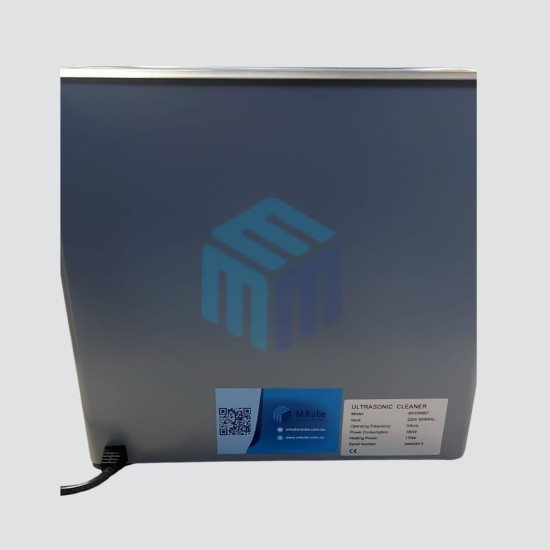
Ultrasonic cleaners are widely used for precision cleaning in industries like healthcare, jewellery, manufacturing, and electronics because they can remove contaminants from intricate surfaces with minimal manual effort. However, like any piece of equipment, their performance can decline over time due to wear, improper use, or lack of maintenance.
When an ultrasonic cleaner is working properly, it delivers consistent cavitation throughout the tank, producing fast and thorough cleaning results. When it isn’t, the difference can be subtle at first—longer cleaning times, uneven results, or items coming out less clean than expected. These early warning signs are often overlooked until the machine stops performing altogether.
This guide will help you understand how to check whether your ultrasonic cleaner is operating at peak performance. You’ll learn how to recognise common warning signs, run simple performance tests, and apply practical maintenance tips to keep your machine working efficiently. Whether you’re troubleshooting an issue or simply looking to maintain consistent results, these insights will help you get the most out of your ultrasonic cleaner.
What Is Ultrasonic Cleaner Performance and Why Does It Matter?
Ultrasonic cleaner performance refers to how effectively a device removes dirt and contaminants using high-frequency sound waves. These waves create tiny bubbles in a liquid that collapse and gently lift debris from surfaces, even in hard-to-reach areas. Performance depends on factors like frequency, power, cleaning solution, and temperature, which together determine how fast and thoroughly items are cleaned.
Testing ultrasonic cleaner performance ensures the device is working efficiently and delivering consistent cleaning results. Regular testing helps identify issues like uneven cavitation, reduced power, or equipment wear before they affect cleaning quality. It also ensures reliability, saves time, and maintains proper standards—especially in industries where precision and hygiene are critical.
10 Ways to Test Ultrasonic Cleaner Performance
Whether you’re using an ultrasonic cleaner in a laboratory, dental clinic, workshop, or jewellery store, ensuring it operates at peak performance is essential. In Australia, where precision and efficiency are highly valued across industries, routine checks on your ultrasonic cleaner can save time, improve cleaning outcomes, and extend equipment life. In this guide, we’ll share practical tips for checking the performance of your ultrasonic cleaner so you can maintain the highest standards in your work environment.
- Foil Test:
- Method: Submerge a piece of aluminum foil into the tank with the cleaning solution and run the ultrasonic cleaner for a few minutes.
- Observation: The foil should develop an even pattern of tiny holes or indentations. Uneven patterns or large areas without holes may indicate issues with the transducers or the distribution of ultrasonic energy.
- Glass Slide Test:
- Method: Apply a thin layer of pencil lead or a similar substance on a glass slide and submerge it in the tank.
- Observation: After running the cleaner, the lead should be evenly removed. Incomplete or uneven removal may indicate performance issues.
- Cavitation Meter:
- Method: Use a cavitation meter designed to measure ultrasonic activity within the tank.
- Observation: The meter will provide a quantitative reading of the ultrasonic energy, allowing you to compare it against the manufacturer’s specifications.
- Degassing Check:
- Method: Observe the degassing process when you first fill the tank with a new cleaning solution.
- Observation: You should see bubbles rising to the surface, indicating that the cleaner is effectively removing dissolved gases. If there are few or no bubbles, cavitation might be insufficient.
- Temperature Consistency:
- Method: If your cleaner has a heating function, check the temperature consistency with a thermometer.
- Observation: Ensure the temperature matches the set value and remains stable throughout the cleaning cycle.
- Bubble Observation:
- Method: Simply observe the tank while the cleaner is running.
- Observation: You should see a consistent stream of small bubbles throughout the tank. Large bubbles or uneven distribution might indicate a problem.
- Cleaning Efficacy Test:
- Method: Test the cleaner with known contaminated items (e.g., greasy or dirty tools).
- Observation: After cleaning, the items should be free of contaminants. If they are not thoroughly cleaned, the ultrasonic cleaner might not be performing optimally.
- Transducer Function Test:
- Method: Use an ultrasonic transducer tester if available.
- Observation: This will provide detailed information about the performance and condition of each transducer, helping identify any faulty ones.
- Sound Test:
- Method: Listen to the sound of the ultrasonic cleaner while it is operating.
- Observation: A consistent buzzing or humming sound is normal. Any unusual noises, such as clicking or rattling, could indicate mechanical issues.
- Regular Maintenance:
- Method: Perform routine maintenance as per the manufacturer’s guidelines.
- Observation: Ensure that all components are in good condition, and replace any parts showing wear and tear.
By regularly performing these tests and observations, you can ensure your ultrasonic cleaner is operating at its best, providing effective and efficient cleaning for your items
Read also: Types of Ultrasonic Cleaners
What Causes Ultrasonic Cleaner Performance to Decline?
Even the highest-quality ultrasonic cleaners can experience a gradual reduction in performance over time. Identifying the underlying causes early can help prevent inconsistent cleaning results, equipment downtime, and costly repairs.
Worn or Damaged Transducers
Transducers are responsible for converting electrical energy into ultrasonic vibrations that create cavitation bubbles. As transducers age, their efficiency can decrease, resulting in weaker cavitation and reduced cleaning effectiveness. Physical damage, excessive operating hours, or poor maintenance can accelerate transducer wear.
Generator or Power Supply Issues
The ultrasonic generator provides the electrical power needed to drive the transducers. Faulty components, unstable power output, or electrical failures can cause reduced ultrasonic intensity and inconsistent cleaning performance. Regular inspections can help detect generator problems before they impact productivity.
Incorrect Cleaning Solution
Using the wrong cleaning solution can significantly affect cleaning results. Some contaminants require specialised detergents or surfactants to break down effectively. Solutions that are too diluted, contaminated, or incompatible with the cleaning application may reduce cavitation efficiency and overall cleaning performance.
Improper Operating Temperature
Ultrasonic cleaning relies on an optimal balance between temperature and cavitation activity. If the solution temperature is too low, cleaning efficiency may decrease. Excessively high temperatures can also reduce cavitation intensity. Maintaining the recommended operating temperature for your application is essential for consistent results.
Overloading the Tank
Placing too many items in the cleaning basket or positioning parts too closely together can obstruct ultrasonic wave distribution. This creates shadowing effects and reduces cleaning effectiveness in certain areas. Following manufacturer loading guidelines helps ensure even cavitation throughout the tank.
Poor Tank Maintenance
Residue, sludge, and contaminants that accumulate in the tank can absorb ultrasonic energy and interfere with cavitation. Regular draining, cleaning, and replacement of cleaning solutions help maintain optimal performance and extend equipment life.
Insufficient Degassing
Fresh cleaning solutions contain dissolved gases that can interfere with cavitation. If a solution has not been properly degassed before use, cleaning performance may be noticeably reduced. Running a degassing cycle before cleaning helps maximise ultrasonic efficiency.
By understanding these common causes of performance decline, operators can take proactive steps to maintain cleaning quality and minimise equipment issues.
7 Signs Your Ultrasonic Cleaner Is Losing Performance
An ultrasonic cleaner should produce consistent, high-frequency cleaning action that removes dirt and debris efficiently. When it starts malfunctioning, performance drops quickly and can affect cleaning results without being immediately obvious. Here are the most common signs that your ultrasonic cleaner may not be working as it should.
1. Weak or no visible cavitation activity
If you don’t see fine movement or “fizzing” action in the cleaning solution, the ultrasonic waves may not be generating properly. This is often one of the earliest signs of failure.
2. Items are still dirty after a full cycle
When objects come out with residue still attached, even after using the correct solution and cycle time, the machine may be losing power or not distributing ultrasonic energy evenly.
3. Unusual or reduced noise/vibration
Ultrasonic cleaners typically produce a steady high-frequency hum. If the sound becomes noticeably quieter, inconsistent, or changes tone, it may indicate a failing transducer or power issue.
4. Cleaner heats up but doesn’t clean effectively
Heating alone doesn’t mean the ultrasonic function is working. If the unit gets warm but cleaning performance is poor, the ultrasonic generator may be malfunctioning.
5. Visible hot spots or uneven cleaning results
Items may come out partially clean in some areas but untouched in others, suggesting uneven wave distribution or failing transducers.
6. Cycle runs but no agitation in the tank
If the machine appears to operate normally (lights, timer, heating) but the solution remains still, the ultrasonic system is likely not functioning.
7. Increased cleaning time needed for the same results
A gradual decline in efficiency often signals weakening ultrasonic output before complete failure occurs.
If you notice one or more of these signs, it may be time to inspect the transducers, check the cleaning solution, or consider professional servicing or replacement.
Ultrasonic Cleaner Troubleshooting Guide
If your ultrasonic cleaner is not delivering the expected cleaning results, a systematic troubleshooting approach can help identify the issue quickly.
Cleaner Has Power but No Cavitation
If the unit powers on but fails to generate cavitation, the issue may be related to faulty transducers, generator failure, loose electrical connections, or incorrect operating settings. Performing a foil test can help confirm whether cavitation is occurring inside the tank.
Poor Cleaning Results
When parts remain dirty after a cleaning cycle, check the condition of the cleaning solution, operating temperature, cycle duration, and loading arrangement. Old or contaminated solutions often reduce cleaning effectiveness, while overcrowded baskets can prevent ultrasonic energy from reaching all surfaces.
Uneven Cleaning Performance
If some areas of the tank clean effectively while others do not, there may be dead zones caused by failing transducers or poor load placement. Testing multiple areas of the tank using a foil test can help identify inconsistencies in cavitation distribution.
Excessive Noise or Vibration
Unusual sounds, rattling, or excessive vibration may indicate loose components, damaged transducers, or generator issues. Any abnormal operating noise should be investigated promptly to prevent further equipment damage.
Solution Not Heating Properly
For heated ultrasonic cleaners, insufficient temperature can negatively impact cleaning performance. Check heating elements, temperature controls, and thermostat settings to ensure the solution reaches the recommended operating range.
Frequent Equipment Downtime
Repeated failures or inconsistent operation may indicate ageing components nearing the end of their service life. In these cases, professional servicing or equipment replacement may provide a more cost-effective long-term solution.
Regular performance testing and preventative maintenance can help identify these issues before they affect cleaning quality or production schedules.
When to Replace or Upgrade Your Ultrasonic Cleaner
Even a well-maintained ultrasonic cleaner won’t last forever. Over time, performance declines, parts wear out, and newer models may offer better efficiency or features. Knowing when to repair, replace, or upgrade can save time, money, and ensure consistently effective cleaning results.
1. Cleaning performance has steadily declined
If items take longer to clean or never come out fully spotless despite correct usage, the machine may be losing ultrasonic power due to worn transducers or aging components.
2. Frequent breakdowns or recurring faults
Occasional maintenance is normal, but repeated issues—such as inconsistent operation, overheating, or cycle failures—often indicate that replacement is more cost-effective than ongoing repairs.
3. Visible wear and corrosion in the tank
Stainless steel tanks can degrade over time, especially with harsh chemicals or poor maintenance. Pitting, rust spots, or surface damage can reduce cleaning efficiency and contaminate solutions.
4. Outdated technology or lack of features
Older units may lack modern improvements like degassing modes, digital timers, adjustable frequency settings, or temperature control. Upgrading can significantly improve cleaning precision and speed.
5. Inconsistent ultrasonic output
If cavitation appears uneven or weak across the tank, even after troubleshooting, internal transducers may be failing beyond practical repair.
6. Increased operating costs
Older machines often consume more energy or require longer cycles to achieve the same results. A newer model can reduce electricity usage and improve efficiency.
7. Repair costs approaching replacement value
If servicing or parts replacement costs are close to the price of a new unit, upgrading is usually the better long-term investment.
8. Changing cleaning needs
If your workload has increased or you now need to clean more complex items, a larger capacity or higher-powered model may be necessary to keep up with demand.
Upgrading your ultrasonic cleaner isn’t just about fixing problems—it can also improve consistency, reduce downtime, and enhance overall cleaning quality.
Best Practices for Maintaining Ultrasonic Cleaner Performance
Routine maintenance is essential for achieving consistent cleaning results and maximising the lifespan of your ultrasonic cleaning equipment. Implementing the following best practices can help maintain optimal performance.
Use the Correct Cleaning Solution
Select a cleaning solution specifically formulated for the contaminants being removed and the materials being cleaned. Using the appropriate chemistry improves cleaning efficiency and reduces the risk of part damage.
Replace Cleaning Solutions Regularly
Over time, cleaning solutions become saturated with contaminants and lose effectiveness. Establish a regular replacement schedule based on usage levels and application requirements to maintain consistent cleaning performance.
Perform Routine Cavitation Testing
Periodic performance testing using methods such as foil tests or cavitation meters can help verify that the ultrasonic system is operating correctly. Early detection of performance issues allows corrective action before cleaning quality declines.
Maintain Proper Operating Temperatures
Monitor and maintain the recommended solution temperature for your cleaning application. Consistent temperature control helps maximise cavitation activity and cleaning effectiveness.
Avoid Overloading the Tank
Ensure parts are properly spaced and do not exceed the recommended load capacity. Adequate spacing allows ultrasonic waves to reach all surfaces and promotes uniform cleaning results.
Inspect Equipment Components Regularly
Conduct routine inspections of transducers, generators, heaters, baskets, and electrical connections. Identifying wear or damage early can prevent unexpected failures and costly downtime.
Follow Manufacturer Maintenance Recommendations
Each ultrasonic cleaner has specific maintenance requirements. Following the manufacturer’s service schedules and operational guidelines helps protect your investment and maintain peak performance.
Keep the Tank Clean
Remove debris, sludge, and residues from the tank regularly. A clean tank promotes efficient energy transfer, stronger cavitation, and more reliable cleaning outcomes.
By combining routine testing, preventative maintenance, and proper operating procedures, businesses can maximise ultrasonic cleaner performance while extending equipment service life and reducing operating costs.
Conclusion:
Regularly checking the performance of your ultrasonic cleaner is crucial for maintaining its efficiency, prolonging its lifespan, and ensuring optimal cleaning results. By incorporating simple yet effective tips—such as performing a foil test, monitoring solution temperature and clarity, using proper cleaning agents, and inspecting for wear or irregularities—you can identify issues early and prevent costly downtime. Remember, a well-maintained ultrasonic cleaner doesn’t just improve cleaning quality; it also protects your investment and upholds the standards of your lab or facility. Make performance checks a routine part of your maintenance schedule to keep your ultrasonic cleaner running at its best.